
CEO turnover reached a new high in 2025, with 234 chief executives stepping down, a 16% increase from 2024 and 21% above the eight-year average. It marks the second consecutive year of record departures.
Alongside leadership upheavals across major markets, senior talent continues to move more frequently across industries and geographies.
In an environment where leadership mobility, competitive intelligence, and stakeholder evaluation are more active than ever, executives are assessed across multiple touchpoints, including their digital footprints.
When someone views your LinkedIn profile, it often reflects a decision cycle you have entered. For executives, the notification ‘someone viewed your profile’ means more than curiosity, indicating:
- Competitive positioning
- Executive brand perception
- Market or recruiter interest
- Talent and investor reconnaissance
- Demand mapping or partnership curiosity
When interpreted correctly, profile visits become a valuable layer of intelligence. They can help you understand how the market perceives you, where interest is emerging, and which opportunities may be forming.
This article explains how to interpret these signals, use profile insights to your strategic advantage, and align your LinkedIn presence with executive priorities.
How to Check Who Viewed Your Profile
On LinkedIn:
- Log in to LinkedIn.
- Click Me → View Profile
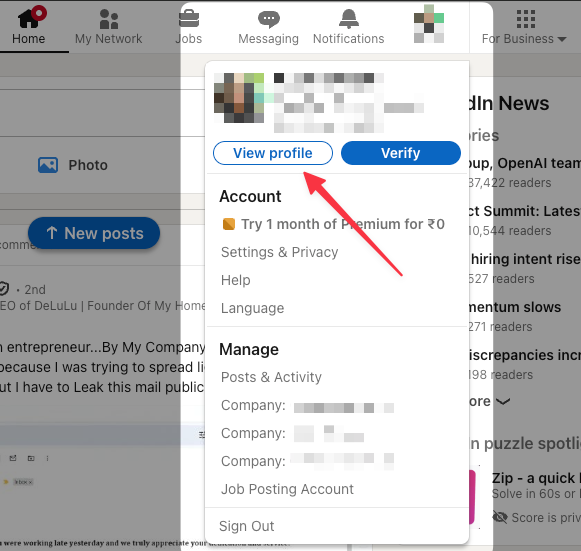
- Select “Discover who’s viewed your profile.” (under Analytics)
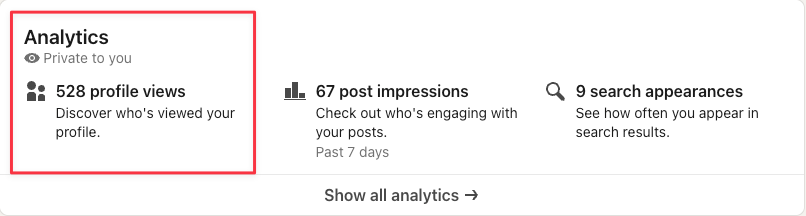
Free accounts show limited viewer data. LinkedIn Premium provides expanded insights, including trends, industry distribution, and seniority levels.
The raw viewer list matters less than the patterns over time.
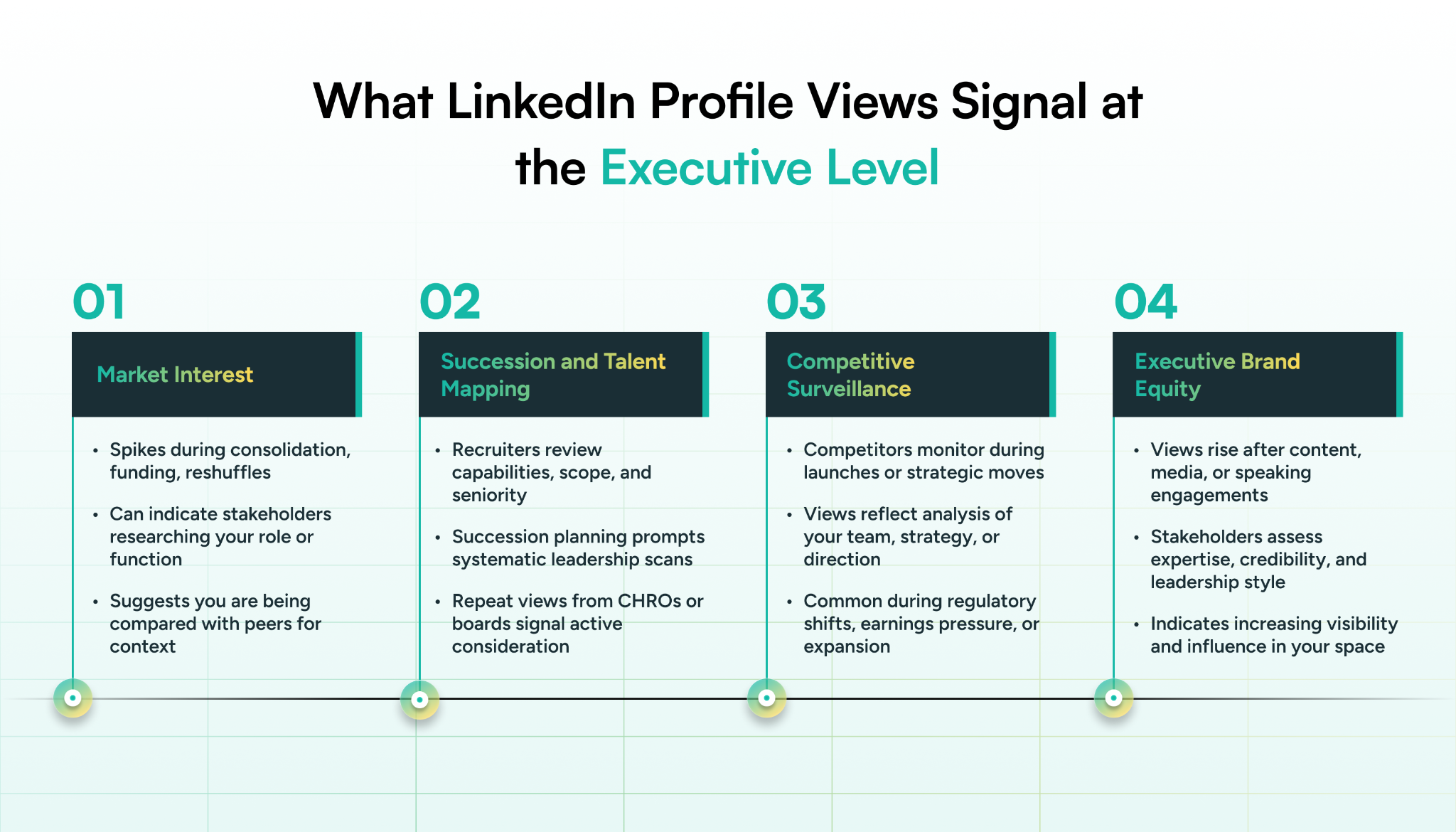
What Profile Views Actually Signal at the Executive Level
1. Market Interest in Your Mandate
If you lead transformation, growth, digital, AI, M&A, or international expansion, profile views often spike during:
- Industry consolidation cycles
- Funding rounds
- Leadership reshuffles
- Public announcements
- Earnings seasons
These patterns align with broader executive mobility trends. When churn increases, so do background checks and leadership benchmarking, which often appear as profile visits.
2. Talent Intelligence & Succession Mapping
Recruiters don’t only view candidates. They also benchmark leadership profiles to map compensation, capability clusters, and succession options.
Furthermore, according to a Gartner survey, 42% of C-suite leaders out of 900 report not having a viable succession plan in place.
When succession planning intensifies, executive profile reconnaissance increases. If CHROs, executive recruiters, or board members are repeatedly viewing your profile, it’s rarely coincidental.
3. Competitive Surveillance
Executives monitor peers, especially during events like market expansion, product launches, earnings misses and regulatory exposure. Profile views from competitors can indicate:
- Strategic interest
- Talent poaching intent
- Partnership exploration
- Market defense planning
This is not a sign of paranoia; it’s modern intelligence gathering in a transparent networked ecosystem.
4. Executive Brand Equity
Your LinkedIn presence influences perception long before a board conversation begins. Executives with visible thought leadership are perceived as more credible and forward-looking.
When profile views increase after publishing insights, media appearances, or keynote talks, you’re witnessing brand amplification in real time.
What the LinkedIn Analytics Data Actually Tells You
LinkedIn shows you:
- Viewer job titles
- Industries they represent
- Geographic locations
- Discovery sources (search, post, connection, etc.)
This is not trivial metadata; it’s positioning feedback.
If most viewers are:
- Investors → Your narrative is being evaluated for capital credibility
- Recruiters → You are being mapped for mobility
- Peers → You are being benchmarked
- Subordinates or functional leaders → You are being researched internally
The insight is in the patterns, not the individual visits. It is recommended to focus on recurring clusters rather than one-off views.
Privacy: Strategic Transparency vs. Strategic Anonymity
On LinkedIn, you can choose how you appear when viewing profiles:
- Public viewing (your full identity is visible)
- Semi-private viewing (only your title is shown)
- Anonymous viewing (no identifying information)
Privacy settings work both ways. If you browse in private mode, you lose access to detailed insights about who views your own profile.
For executives, each mode sends a subtle signal.
Public viewing can indicate strategic openness or a willingness to initiate a conversation.
Anonymous viewing often signals evaluation, due diligence, or competitive research.
Increasing Executive-Level Profile Views (Without Looking Promotional)
Most online advice focuses on driving volume. Senior leaders should focus on attracting qualified views that reflect genuine interest.
When someone visits your profile, they form an impression within seconds. A profile that looks like an outdated resume signals stagnation. A profile that communicates clarity, relevance, and authority keeps people on the page and encourages deeper engagement.
The following actions help draw the right viewers and make them stay.
1. Clarify Strategic Positioning
Your headline on LinkedIn should communicate the value you bring and to whom, not just your title.
Example improvement:
“Chief Operating Officer”
→
“COO | Scaling Multi-Market Operations | EBITDA Expansion | Digital Transformation”
Clear positioning improves the relevance of the people who discover your profile.
2. Publish Insight, Not Updates
Executives who share substantive thinking see stronger engagement and higher-quality profile views.
Examples include:
- Market or industry analysis
- Capital allocation or growth perspectives
- Operating model and execution insights
- Risk, governance, or resilience commentary
These attract investors, operators, and decision-makers far more effectively than announcements or internal updates.
3. Align with Industry Inflection Points
Profile views increase when your commentary intersects with broader market movement, such as:
- Regulatory shifts
- AI and technology adoption cycles
- Industry consolidation and M&A
- Earnings season trends
- Macroeconomic or geopolitical developments
Strategic timing matters more than mere posting frequency.
.png)
What to Remove From Your Thinking
Profile views are not:
- A popularity score
- A validation metric
- A substitute for real-world performance
They are directional indicators of interest.
Executives should treat them like early-stage radar and not applause.
Final Takeaway
Your LinkedIn profile is the most accessible public representation of your leadership strength.
Every profile view represents one of four possibilities:
- Opportunity
- Competition
- Capital
- Talent
The question is not “Who viewed me?”
The question is:
“What triggered the visit, and what does it reveal about my market position?”
When you interpret profile views through that lens, LinkedIn shifts from a social platform to an intelligence surface.
If you want a sharper leadership narrative, stronger positioning, or a profile that reflects your true authority, GrowedIn can help. We work with executives and founders to refine their voice, build their credibility, and turn their LinkedIn presence into a valuable asset. If you would like to start your LinkedIn growth journey, let’s talk.

Frequently Asked Questions
Can you see exactly who viewed your LinkedIn profile?
Yes, but with limitations. On LinkedIn, free accounts show a limited list of recent viewers. Premium accounts provide expanded visibility, including trends and more detailed viewer insights. However, if someone views your profile anonymously, their identity will not be revealed.
What does it mean when a recruiter or board member views your profile?
It typically signals evaluation, not plain curiosity. For executives, repeated views from recruiters, CHROs, or board members often indicate succession mapping, benchmarking, or exploratory outreach preparation, particularly during leadership transitions.
How should executives interpret spikes in profile views?
Spikes often correlate with decision cycles such as funding rounds, earnings releases, restructuring announcements, market expansion, or media visibility. The signal is rarely the individual view; it’s the pattern over time and the cluster of viewer types.
Is LinkedIn Premium worth it for senior leaders?
It depends on intent. Premium becomes strategically useful when:
- Exploring board or advisory roles
- Entering new markets
- Fundraising
- Anticipating succession discussions
- Hiring senior leadership
If you’re not in an active decision cycle, the free analytics may be sufficient.
Can competitors see when you view their profiles?
Yes, unless you switch to private mode. LinkedIn offers three viewing settings: public, semi-private, and anonymous. However, anonymity is reciprocal: if you browse privately, you lose access to detailed insights into who views your profile.
What kind of profile views matter most at the C-suite level?
High-signal viewers include:
- Investors
- Executive recruiters
- Board members
- Direct competitors
- Senior functional leaders
These audiences typically indicate capital, talent, governance, or competitive implications.
How can executives increase high-quality profile views without appearing self-promotional?
Focus on signal quality, not volume:
- Clarify your strategic mandate in your headline
- Publish insight (not only updates or announcements)
- Align commentary with industry inflection points
- Engage around regulatory, AI, M&A, and macro shifts
How to See Who Viewed Your Profile on LinkedIn
- In an active leadership mobility environment, LinkedIn profile views often reflect active decision cycles instead of passive curiosity.
- For executives, profile views may signal competitive positioning, brand perception shifts, talent mapping, investor interest, or demand signals.
- Accessing viewer analytics on LinkedIn is straightforward, but the strategic value lies in identifying patterns over time.
- Spikes in views frequently align with industry events such as funding rounds, earnings announcements, leadership reshuffles, and regulatory shifts.
- Repeated views from recruiters, CHROs, or board members may indicate succession benchmarking or exploratory search activity.
- Viewer metadata (job titles, industries, location, discovery source) provides positioning feedback, particularly when analysed in clusters.
- Privacy settings influence both transparency and intelligence access; anonymity protects identity but limits reciprocal insight.
- Profile views are not vanity metrics; they are directional indicators of opportunity, competition, capital, and talent.
- When interpreted strategically, LinkedIn becomes an executive intelligence surface rather than a social platform.


Insights Hub
The Best Time To Post on LinkedIn In 2026
Personal Branding vs. PR: What Should Executives Prioritize?
How to Maintain a LinkedIn Presence with Limited Time
Want to explore how this applies to your brand?
Let’s talk.
