
Collaborative Posts Are Coming to LinkedIn. What Changes?

What You’ll Learn in this Issue
- Multiple contributors can now share ownership of one post instead of relying on tags, mentions, or reshares.
- The format can work particularly well for launches, partnerships, events, reports, and team achievements.
- For executives, it creates opportunities to share credibility and reach while making company stories feel more collective.
LinkedIn has officially started rolling out a new feature called Collaborative Posts, with more users gradually getting access to it.
People familiar with Instagram may already know how a feature like this works. But seeing such a creator-first feature arrive on a platform built primarily for professional networking makes it particularly interesting.
In this issue of North Star, let’s explore how it works and what it could mean for company and executive branding.

How Do Collaborative Posts Work?
Collaborative Posts will allow multiple people to publish a single post together.
Once published, all collaborators will appear on the top line of the post, sharing ownership instead of simply being tagged.
Instead of one person publishing an announcement and everyone else resharing it or being mentioned in the comments, multiple contributors become part of the original post itself.
It is a relatively small change to how posts are published, but it opens up some interesting possibilities for how companies and executives tell shared stories.

Easier to Share Credibility
This feature makes the most sense for moments that genuinely belong to more than one person.
Product launches, report releases, event announcements, partnership updates, milestones, or team achievements can now be published jointly by founders, company pages, employees, partners, or collaborators.
What would normally be a founder tagging their team or giving credit in the post can now become a genuinely shared announcement.
Not only does this better reflect how the work was actually done, but it also allows the post to reach multiple audiences while giving visible credit to every contributor.
A launch feels much stronger when it's presented by the people behind it rather than only through a company page.

What Does This Mean for Executive Branding?
Employer branding and employee branding have worked extremely well on LinkedIn over the past few years.
Collaborative Posts introduce another way to strengthen that relationship.
Instead of every announcement revolving around one executive or one company page, launches, reports, events, anniversaries, and major achievements can now become shared stories.
For executives, this is another opportunity to build authority while also elevating the people around them.
There is another side worth considering.
Collaborative Posts are common on creator platforms like Instagram, where they help people publish together and share audiences. Bringing the same mechanic to LinkedIn raises a larger question about where the platform is heading.
LinkedIn has increasingly adopted creator-style features. While these can make the platform more engaging, its value still comes from being a professional network first.
The question is whether LinkedIn can adopt creator-style features without losing what makes it different as a professional network.
Executive Spotlight
Abhishek Singh is building Just What Works, a science-first wellness brand that challenges conventional health trends with a research-driven approach.
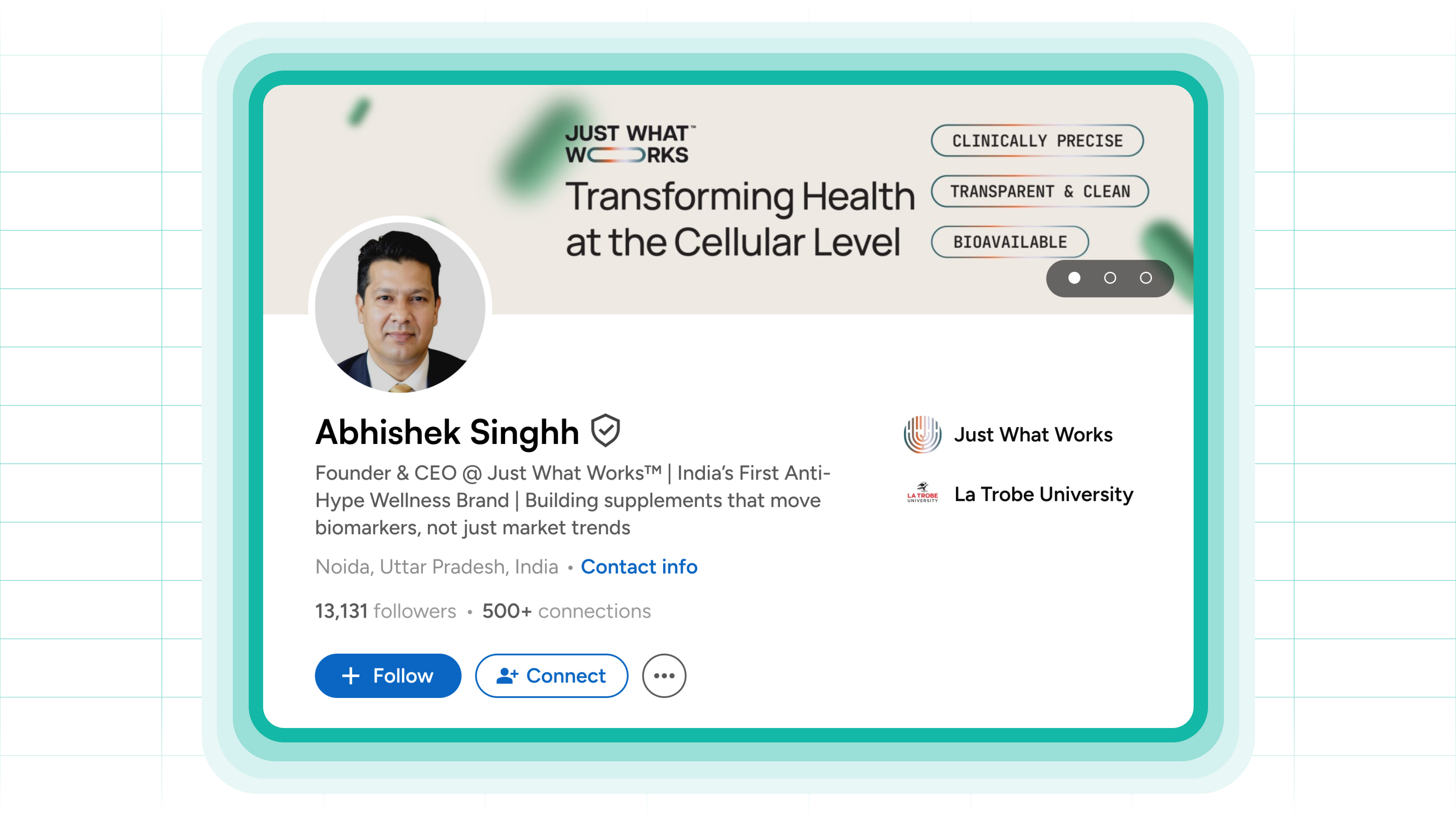
On LinkedIn, he documents the realities of building a company, sharing lessons on branding, entrepreneurship, and long-term thinking. In one post, he recounts how an established founder offered to buy his brand before it had even launched, validating two years of painstaking work behind the scenes.
His profile is a great example of how consistently documenting your journey can build credibility and attract opportunities long before your product reaches the market.

Resource of the Week
Spark Mail is an email app designed to help you manage your inbox more efficiently.
Its Smart Inbox automatically prioritizes important emails, while features like Send Later, Snooze, Reminders, and AI writing assistance help you stay on top of conversations.
It's a great choice for professionals who want a cleaner, more organized inbox.

Coming Up Next…
Beyond executive personal branding, it’s becoming increasingly important for HR teams and hiring systems to be deeply familiar with LinkedIn.
In the next issue of North Star, we’ll explore why every modern HR team should be LinkedIn-ready.
Till then, go further together.


