

A Dead Simple Hack for Effortless Content Creation

What You’ll Learn in this Issue
- Why your everyday knowledge is more valuable than you think
- Simple ways to turn your experiences into LinkedIn content
- How sharing what you know can attract opportunities and help others
We all possess unique skills, knowledge, and experiences.
Unfortunately, most of us believe our knowledge, skills, and experience are as common as making a sandwich.
This belief is far from accurate.
In reality, just because something comes naturally to you doesn't mean the person next to you knows anything about it.
We often become so accustomed to our own expertise that we overlook opportunities to help others by sharing. Let's call this oversight a "knowledge blindspot."
If sharing your knowledge feels challenging because you don't consider yourself an expert just yet, you're not alone.
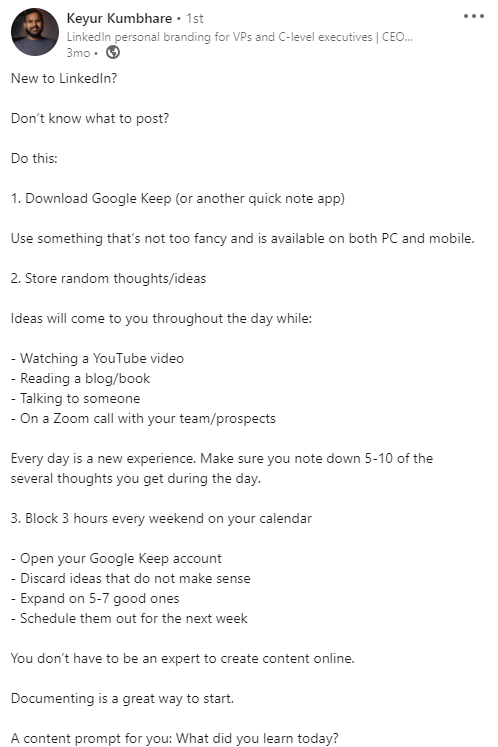
When struggling to create content on LinkedIn, choose one of these questions and share your answer as a post.
1. What problems do you solve at work?
List down the specific problems you encountered in your field or industry.
Pick any one problem. Dissect it. Recall the solution you came up with.
Explain the challenges and share how you went about solving them.
No matter how small you believe the problem you solved is, people love learning how to practically accomplish something they've always wanted to do.
2. Can you recall a learning experience?
Share a personal anecdote about how you learned the skills or gained the knowledge you now possess.
Discuss the challenges you faced, the lessons you learned, and the milestones you achieved.
Your story is more valuable than you think.

3. What learning resource would you recommend to a friend?
The resources you can recall at your fingertips might be hidden gems for someone just starting.
Share the resources that you found valuable in acquiring your skills or knowledge.
This could include books, online courses, websites, YouTube videos, or mentors.

4. Can you walk me through your problem-solving process?
You solve the problem you solve almost every day. It’s a cakewalk for you. To someone on the outside, it’s like seeing a mad scientist create their magic formula.
Break down your problem-solving process step by step.

This can be valuable for those looking to understand practical applications of the skills or knowledge you possess.
5. When did you last mess things up – and how did you fix them?
People love it when you share your mistakes and save them from committing the same errors.
Discussing your failures and the lessons you learned not only humanises you but also provides valuable insights for others to avoid similar pitfalls.
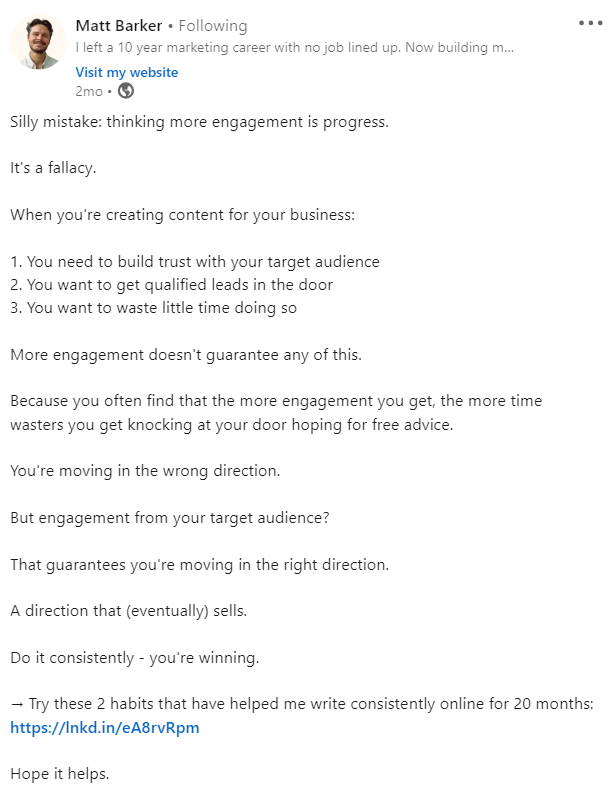
The skills and experience you take for granted could be exactly what your next client is searching for.
Your common knowledge is not so common.


