
How to Personalize LinkedIn Requests (Without Sounding Generic)

What You’ll Learn in this Issue
- Most connection requests fail because they lack real intent, even when they try to “personalize”
- Strong connections start before the message, by identifying genuine mutual value
- A good message feels human: clear context, real proof of interest, and a low-pressure close
Most connection requests on LinkedIn fall into three categories: a pre-generated template, an AI-written message that feels artificial, or a request without any note at all.
But getting a request accepted is more than adding another connection. It opens the door to conversations, visibility, opportunities, and relationships that may grow over time.
Ironically, people who try to personalize their messages often end up doing the opposite.
Take this example:

The sender knew personalization improves acceptance rates, but didn’t know how to do it well, and the attempt backfired.
Being sincere is one thing. Translating that sincerity into the right words is another. You can be genuine and still come across like a bot.
So in today’s newsletter, we’ll break down how to write connection requests that actually feel human.
The Right People to Connect With
The last thing you want is to connect mindlessly just to grow a number.
Rule #1 - Only connect with people where there's mutual value. They should be useful to your network, and you to theirs.
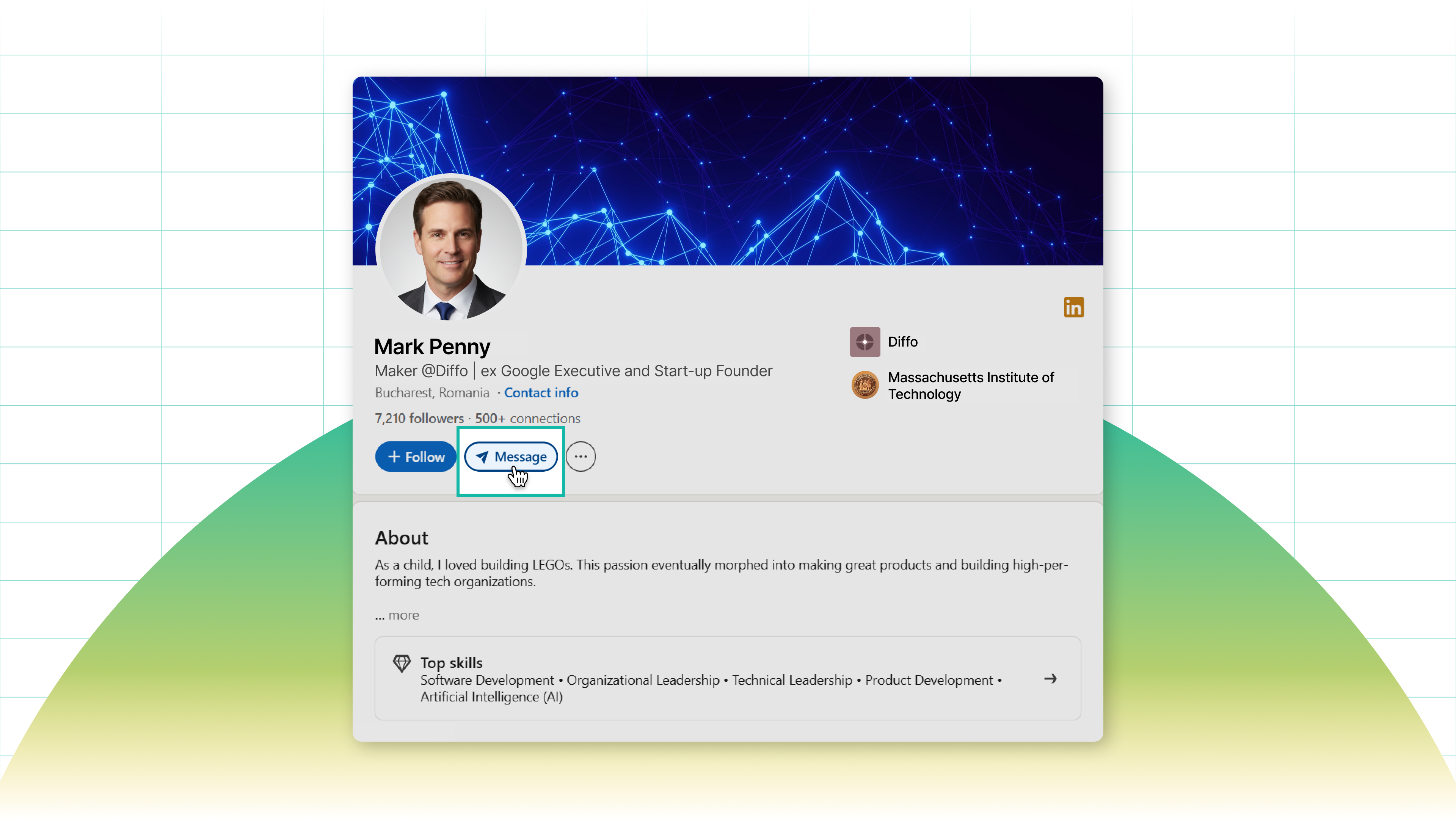
Take Keyur and Mark (anonymized).
Mark fits Keyur's ideal client profile, while he is also someone who made career switches that Keyur genuinely relates to. From Mark's side, Keyur builds LinkedIn brands for executives, which isn't irrelevant to him either. This is what a genuinely motivated connection looks like, before a single word is even typed.

Anatomy of a Message That Works
1. The subject line: "Your Medium Article"
Mark knows instantly this isn't a template. It signals I found something of yours before he's even opened it.
2. The opener: "Medium decided to show me your article."
He didn't say, "I was browsing your profile." He explained the exact context of how he landed on Mark’s work. That one line kills the stalker effect immediately.
3. Proof that he actually read it: "I've shared it with a couple of friends as well."
Anyone can say, "I enjoyed your article." Sharing it is an action. Actions are harder to fake than words.
4. The personal connection: He brings up his own story without making it about himself only because it genuinely mirrors Mark’s. It's not a pitch. It's a "I've been where you've been" moment. This line builds human-to-human trust.
5. The close: low pressure and no ask. No "I'd love to hop on a call." Just follow, support, and stay in touch. He makes it easy to say yes because he's asking for almost nothing.
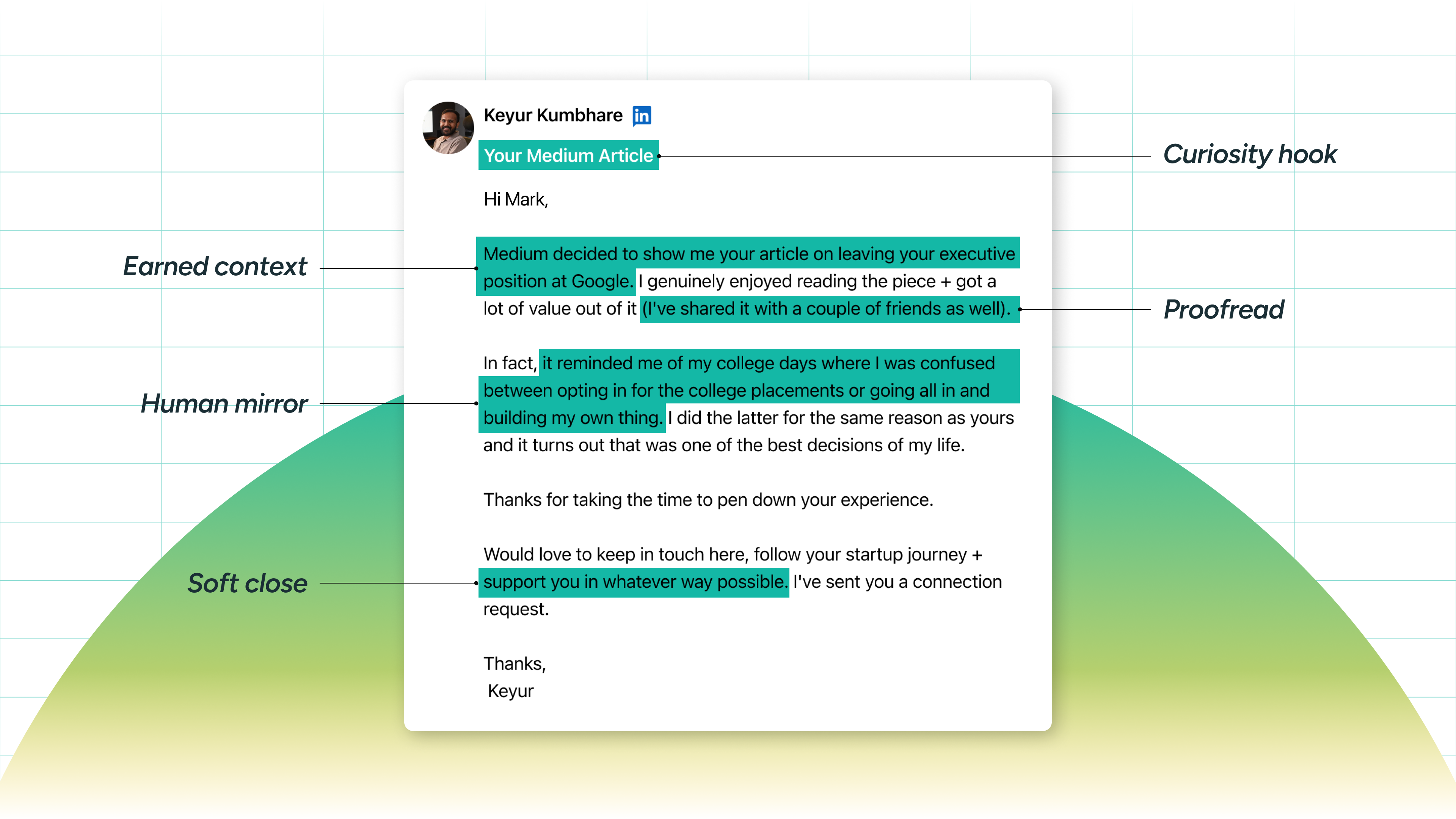
Not every personalised message needs to follow this exact structure. But it needs 5 things:
→ a subject line that sparks curiosity
→ an opener that validates your sincerity
→ proof that you're not there randomly
→ something that builds a human connection
→ a close that is warm but asks for little.
Get those right, and the rest writes itself.
Executive Spotlight
Arpita Khadria is a brand strategist and entrepreneur with 20+ years of experience. As Founder & CEO of Barefoot Brand Consultancy. She is known for helping leaders find clarity through sharper questions.
On LinkedIn, Arpita’s presence is defined by restraint. Her posts often combine strong visuals with minimal, reflective copy, allowing insight to land without overexplanation.
%20(1).png)
In a recent post about Taj Hotels Maldives, she used the shift from buffet to à la carte dining as a metaphor for the evolution of luxury, consumer psychology, and sustainability. What starts as a travel moment becomes a lesson in modern branding.

Arpita writes for leaders who value precision, perspective, and thoughtful brand decisions over noise.
Resource of the Week
Medium is for anyone who can write, regardless of whether you are an executive with years of experience or a beginner figuring out your writing career.
It’s a great place to build in public, share ideas, and document your thinking over time. As your articles gain traction, you can also earn through Medium’s Partner Program.
One of the best parts about Medium is how it prioritizes organic content. Good writing tends to surface naturally, which makes it rewarding for people who focus on quality.
There is a small subscription fee, but if you enjoy reading and writing regularly, it’s absolutely worth it.
GrowedIn News
The Fall edition of The State of LinkedIn Report focused on a simple idea that human behaviour is shaping the algorithm, not the other way around.
In just six months, that direction has only deepened.
In the Spring edition, we explore how these shifts are translating in practice, especially as personalization becomes stronger with AI playing a central role.
Launching this April. Stay tuned for updates.

Coming Up Next…
We’ve been noticing certain patterns that consistently work for micro-niche executive profiles on LinkedIn.
In the next issue, we’ll break down what these profiles do differently, the challenges they face with reach and engagement, and the strategies that help them build meaningful visibility despite a smaller audience.
Till then, send the message you'd want to receive.


