
How Technical Is Too Technical on LinkedIn?

What You’ll Learn in this Issue
- Why overly technical content fails when it ignores how people actually consume information on LinkedIn
- What real depth looks like, focusing on experience, insight, and clarity instead of jargon
- How to balance expertise and simplicity to make your content both credible and easy to engage with
There is a misconception about LinkedIn that many experienced operators and founders fall into.
They believe that if they are not showing the full complexity of their work, they are undermining their credibility.
So they post dense breakdowns, detailed models, and long frameworks from their domain. Then they are surprised when those posts underperform.
The reason they underperform is not the depth. It is that the content is not adapted to how people actually consume information on LinkedIn.
Let’s look at what “too technical” really means on this platform, and how to avoid overloading your content with industry jargon.
How People Actually Read on LinkedIn
Even highly qualified professionals do not read LinkedIn like a white paper.
They are scrolling between meetings, during commutes, or during their breaks. They are not there to decode a research abstract. They are there to identify value quickly.
The goal of a LinkedIn post is not just to prove your qualifications. It is to make the right readers feel seen, understood, or even a little excited about what is possible.
And that happens in the first 10 to 15 seconds.
Depth Is Not Jargon
Long paragraphs, formulas, or complex frameworks do not automatically signal depth. Depth comes from:
→ Speaking from lived experience, not theory
→ Calling out uncomfortable truths others avoid
→ Sharing perspectives that only come from time in the field
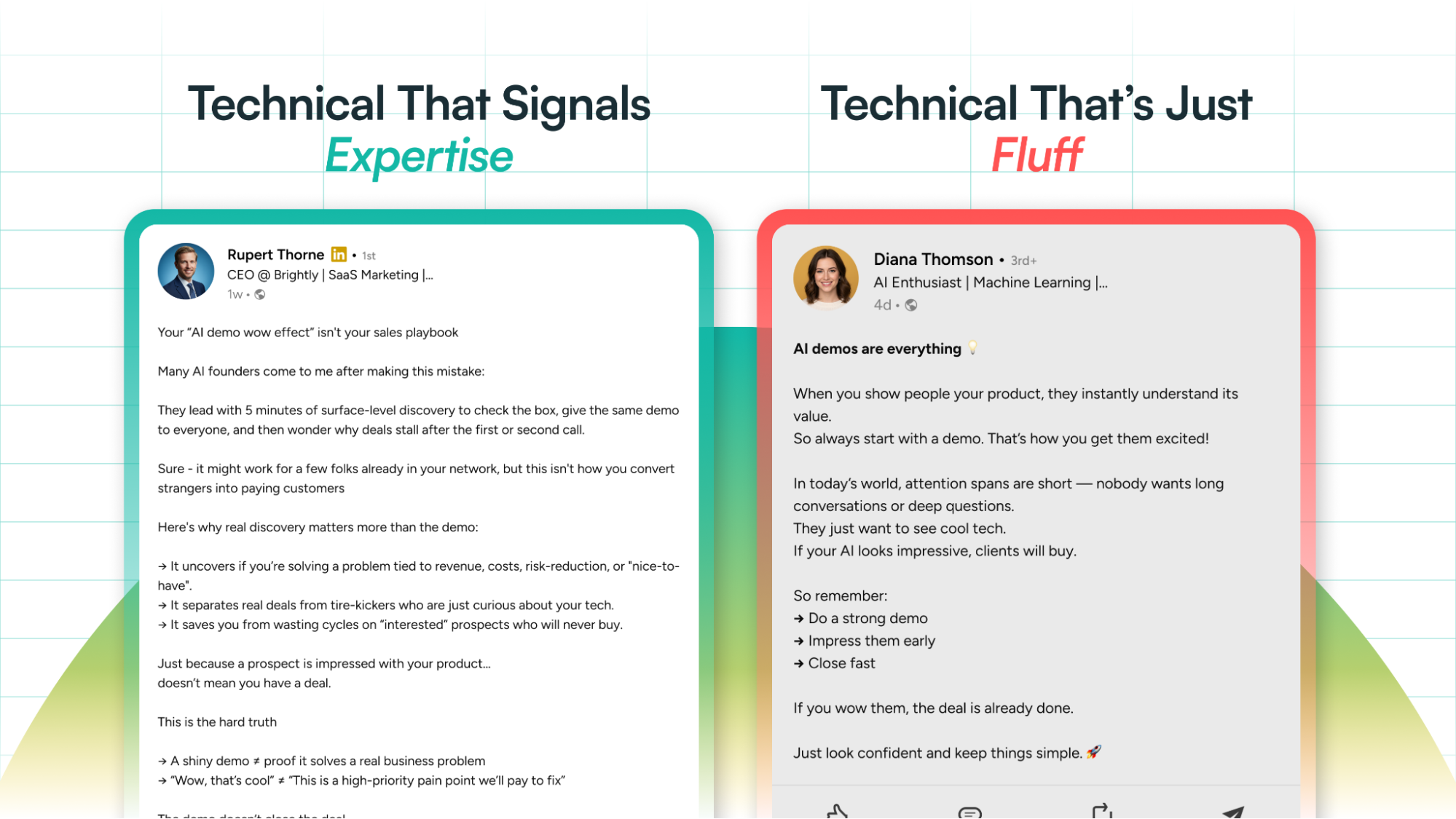
Over time, your audience can tell the difference between experience and performance. They recognise what comes from doing the work, what is borrowed language, and what is simply noise.
Choose the Right Medium for Your Message
Pouring all your domain knowledge into a LinkedIn post, out of fear of sounding too simple, often works against you.
LinkedIn is not where you publish the entire manual. It is where you signal that the manual exists, that you know how to write it, and what you are actively learning from writing it.
The bottom line is simple.
Do not post content that is so domain-heavy that it flies over the heads of even the people who would care. But do not water everything down just to chase vanity metrics either.
Your job is to strike a balance. Share content that feels expert enough to signal credibility, yet clear enough to understand without effort.
Learn where your audience’s threshold is, what they consider insightful and practical versus complex and exhausting. That line is where authority is built.
Executive Spotlight
Prathap Suthan is one of the rare advertising minds who speaks about the industry without pretending it is glamorous. His voice is grounded in over 37 years of practice.
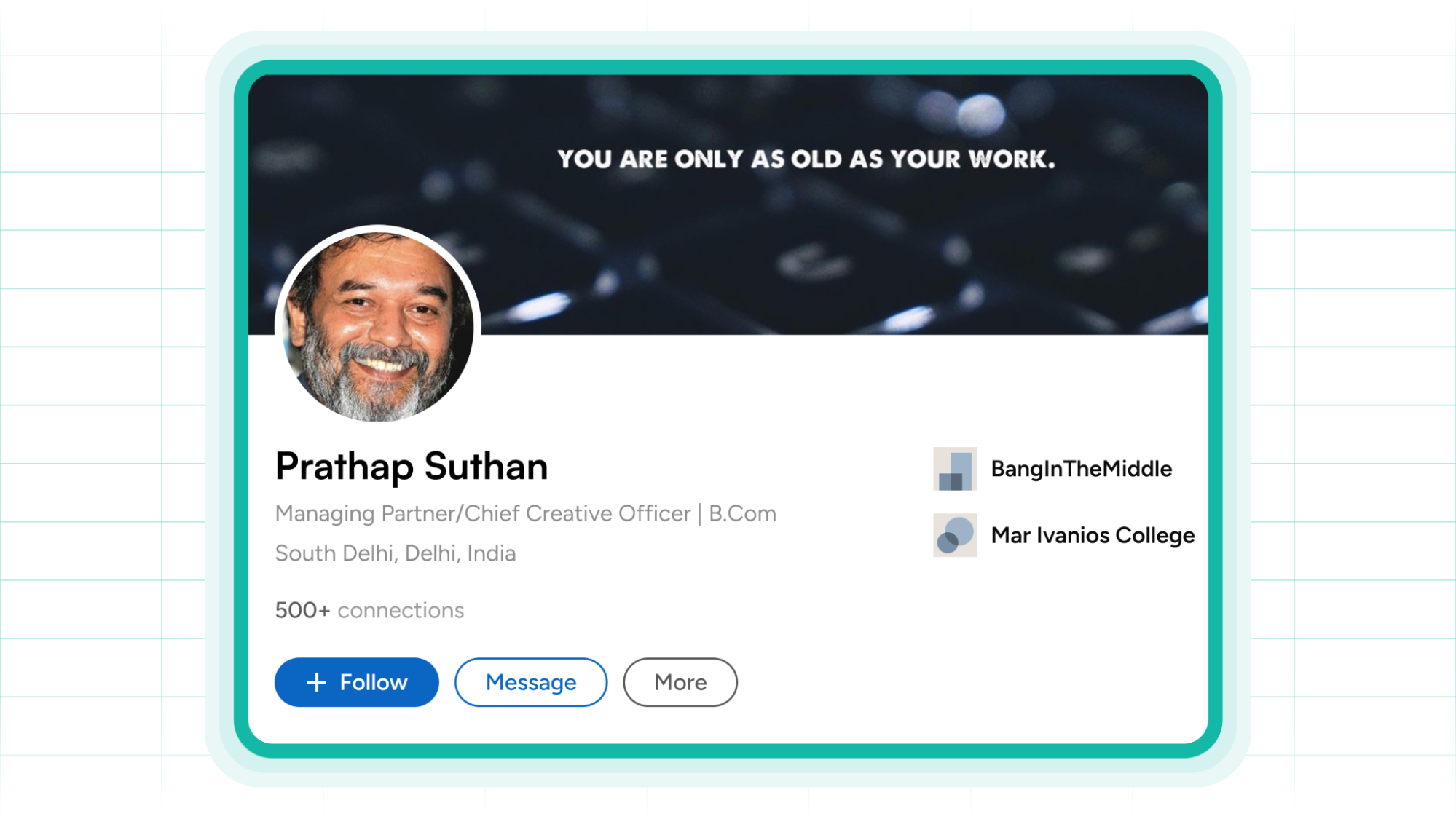
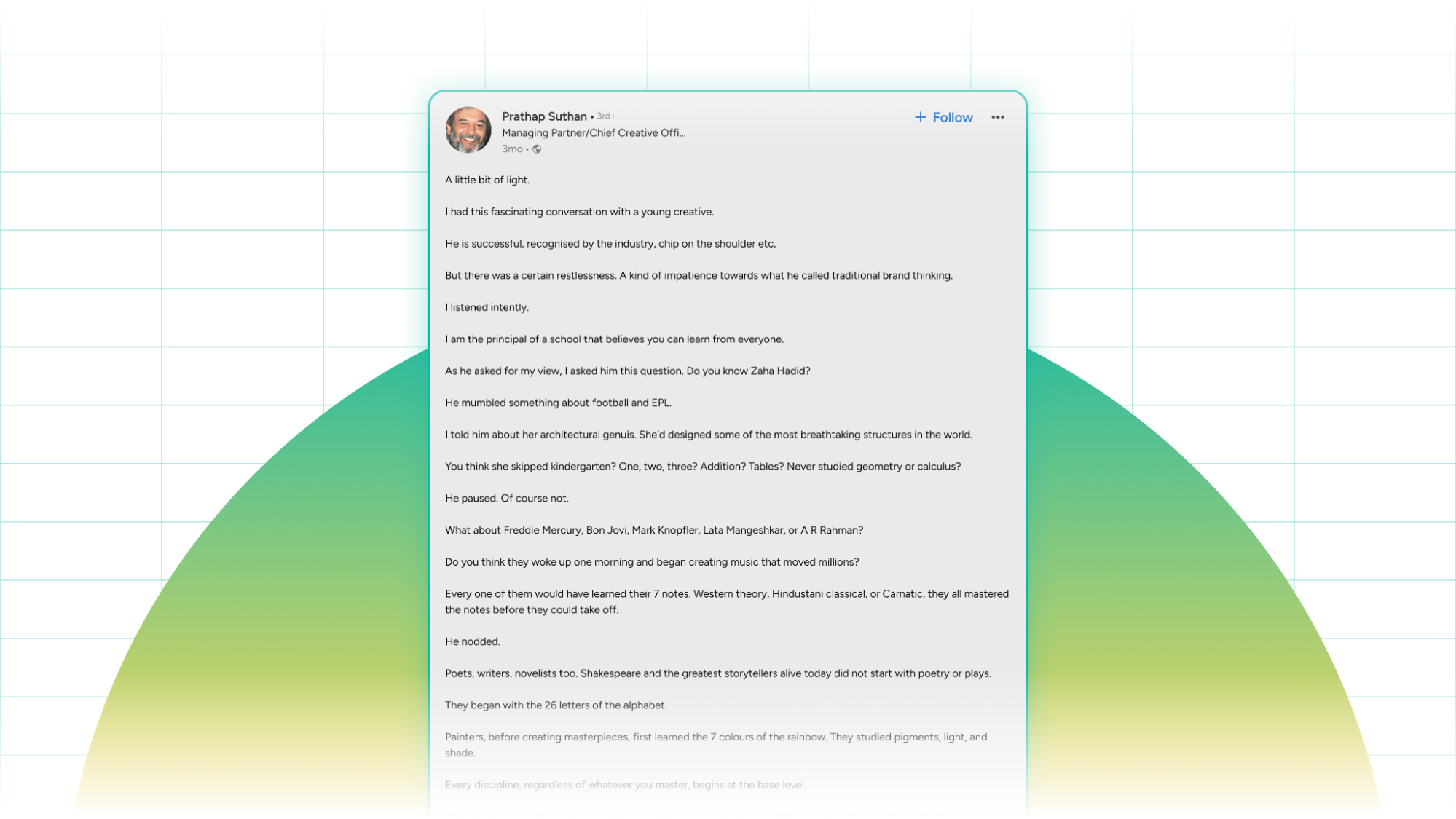
On LinkedIn, he consistently reminds people that real creativity comes from fundamentals, discipline, and observation. This post, where he recounts a conversation with a young creative, is a great example of how he thinks.
If you are looking for a thought leader who cuts through jargon and teaches advertising in a modern yet grounded way, Prathap is a good one to follow.
Resource of the Week
In this video, Lucy Guo, the world’s youngest self-made woman billionaire, shares a few lessons from her journey.
It is especially worth watching if you are young, experimenting, and questioning what “success” should look like for you.

Coming Up Next
What is the ROI of investing so much in LinkedIn presence?
We get that question often.
It usually comes from the fact that ROI is harder to see before you invest, but impossible to miss after.
In next week’s issue, we will break down the hidden ROI of executive visibility.
Till then, get technical. Just not too much. :)


