
How LinkedIn Is Rewriting Executive Visibility in 2026

What You’ll Learn in this Issue
- LinkedIn is evolving into a high-leverage layer for credibility, decision-making, and B2B visibility
- Content advantage now comes from clarity, specificity, and real thinking, not volume or polish
- Executives need to shift from passive presence to intentional positioning across profile, content, and engagement
LinkedIn has changed more in the last few years than most people realize.
It’s not just a professional network anymore. And it doesn’t behave like a typical social platform either.
It’s slowly turning into something far more useful: a high-leverage layer where B2B decisions, credibility, and visibility start to compound.
But many executives are still treating it like a static CV, an occasional announcement board, or a place to simply “be present.” That way of thinking is already getting outdated.
Because the same forces reshaping technology, leadership, and visibility are now playing out on LinkedIn as well.
Let’s see how.
Where the Ground Is Moving
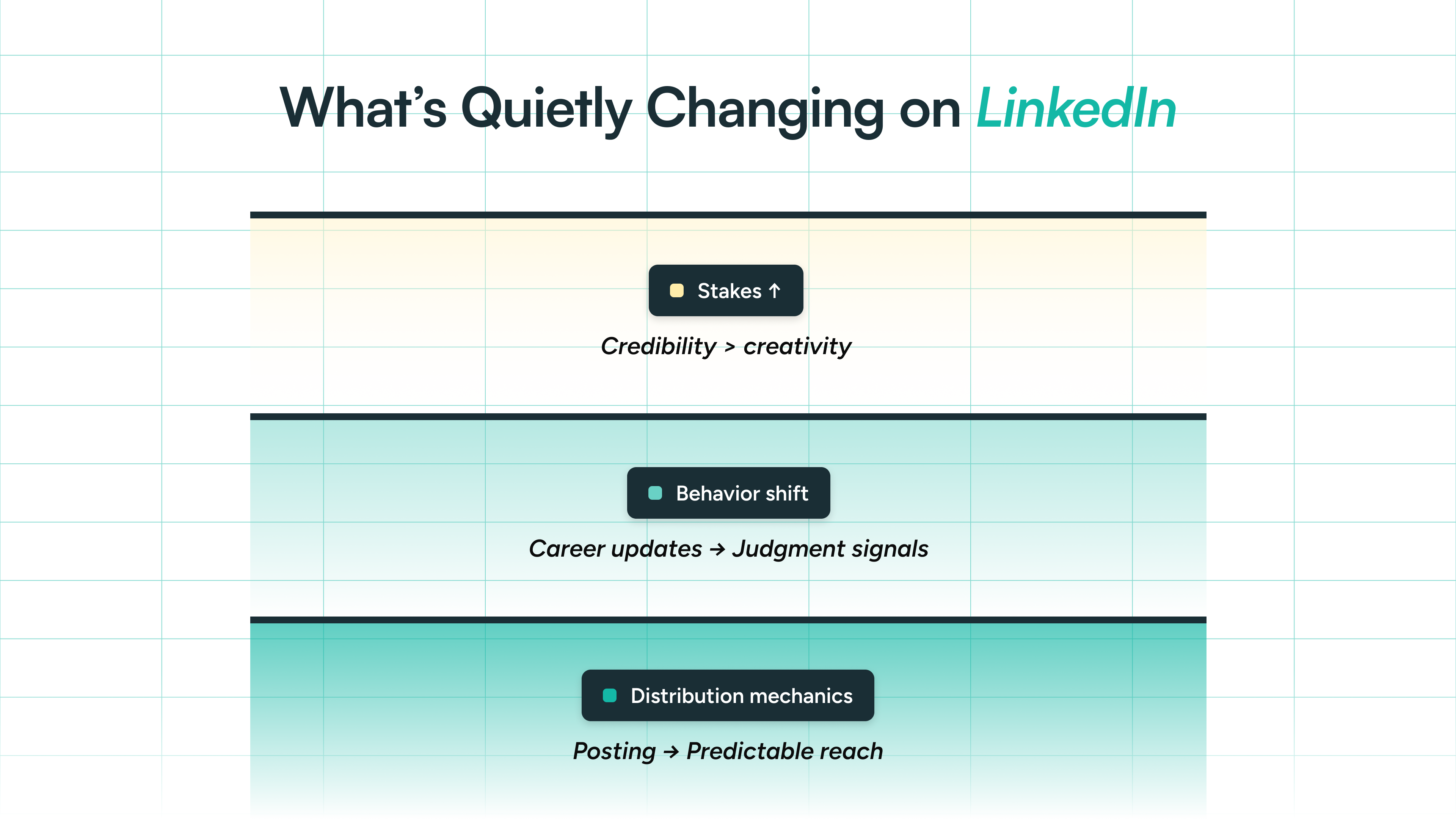
First, the quality bar for content is dropping, even as the stakes rise.
Compared to Instagram or TikTok, LinkedIn remains under-competitive. The platform is crowded with polish, but short on originality, point of view, and lived experience.
This creates an unusual dynamic. Credibility matters more than creativity, and specificity beats production value.
Second, LinkedIn is shifting from career-driven to socially driven behavior.
People don’t come just to update roles. They come now to observe how leaders think, decide, and respond to uncertainty. The feed now rewards narrative, opinion, and judgment, not just announcements.
Third, distribution is becoming more predictable.
Posting alone is no longer the lever. Early engagement, intentional connections, and repeatable formats increasingly determine who sees what. Attention is less random than it appears.
What’s Compounding
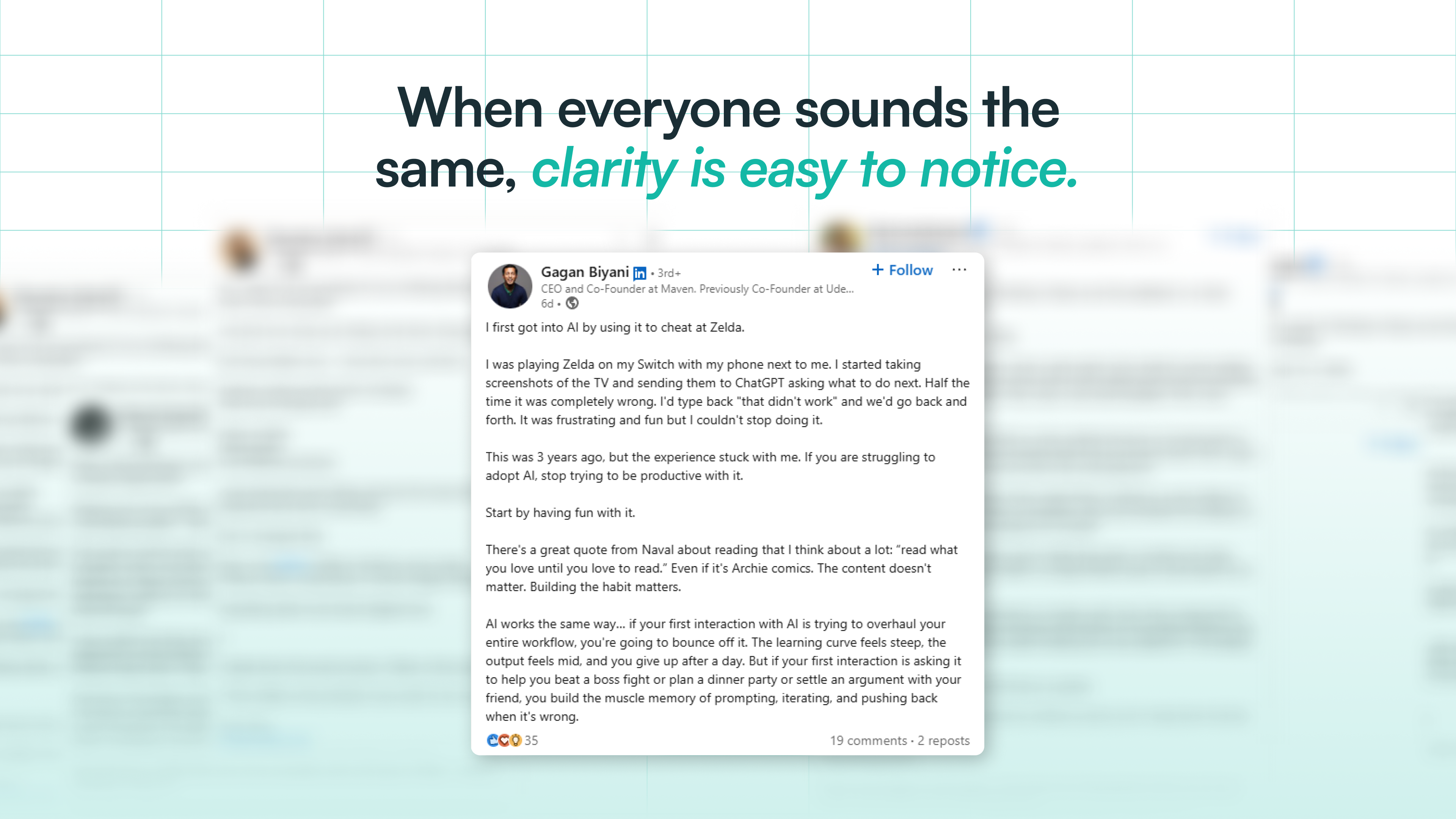
AI is accelerating content creation, but flattening differentiation.
As writing becomes easier, thinking becomes the bottleneck. Generic insight will disappear into the noise. Executives who sound like everyone else will be indistinguishable from everyone else.
Meanwhile, attention windows are compressing. You don’t get time to build context anymore. Hooks, framing, and relevance must be a default, just to be legible.
What Executives Should Prepare for
In 2026, LinkedIn won’t reward activity. It will reward intentional presence.
That means:
• Treating your profile as positioning, not biography
• Treating engagement as distribution, not networking
• Treating authenticity as a strategic asset, not a personality trait
• Treating content as a way to make sense of ideas, not just market them
The leaders who win here will be the ones who use LinkedIn to do what good leadership already requires. Reduce ambiguity, articulate trade-offs, and help others see what matters next.
LinkedIn is becoming important because it’s where clarity now compounds.
And clarity, in 2026, will be one of the rarest advantages left.
Executive Spotlight
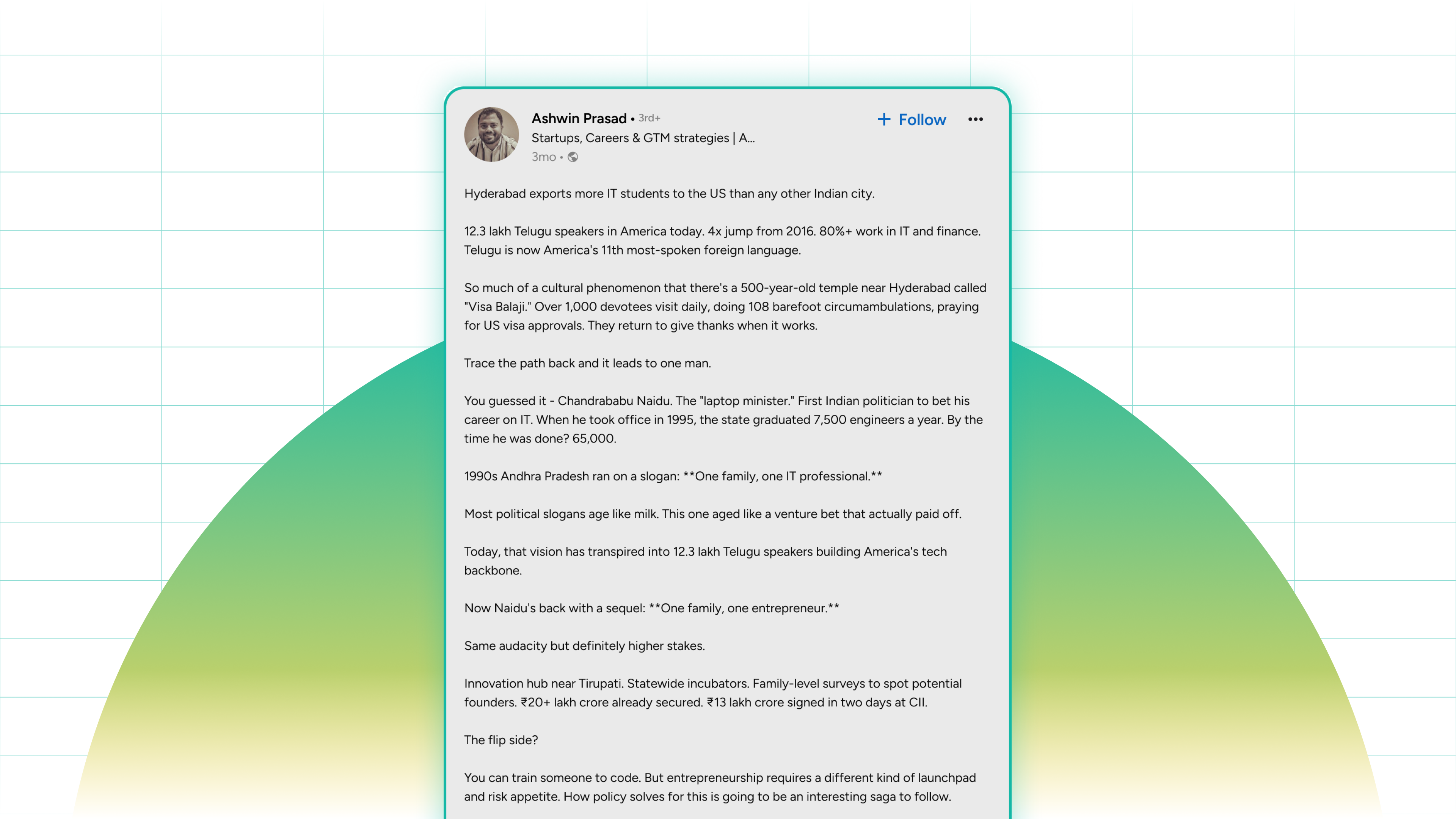
Ashwin Prasad works at the intersection of platforms, policy, and scale within India’s agri ecosystem. At Samunnati, he has led zero-to-one and scale initiatives across product, GTM, and the CEO’s office.
.png)
On LinkedIn, his writing stands out for its ability to zoom out, spot patterns, and ask second-order questions, especially as India shifts from “one family, one IT professional” to “one family, one entrepreneur.”
In a post, Ashwin traced Hyderabad’s influence on the US tech workforce back to a single long-term policy bet by Chandrababu Naidu, connecting data, culture, and education to show how ecosystems compound over decades.
He writes for those interested in startups, GTM, careers, and ecosystem design, balancing execution with long-term vision.
Resource of the Week
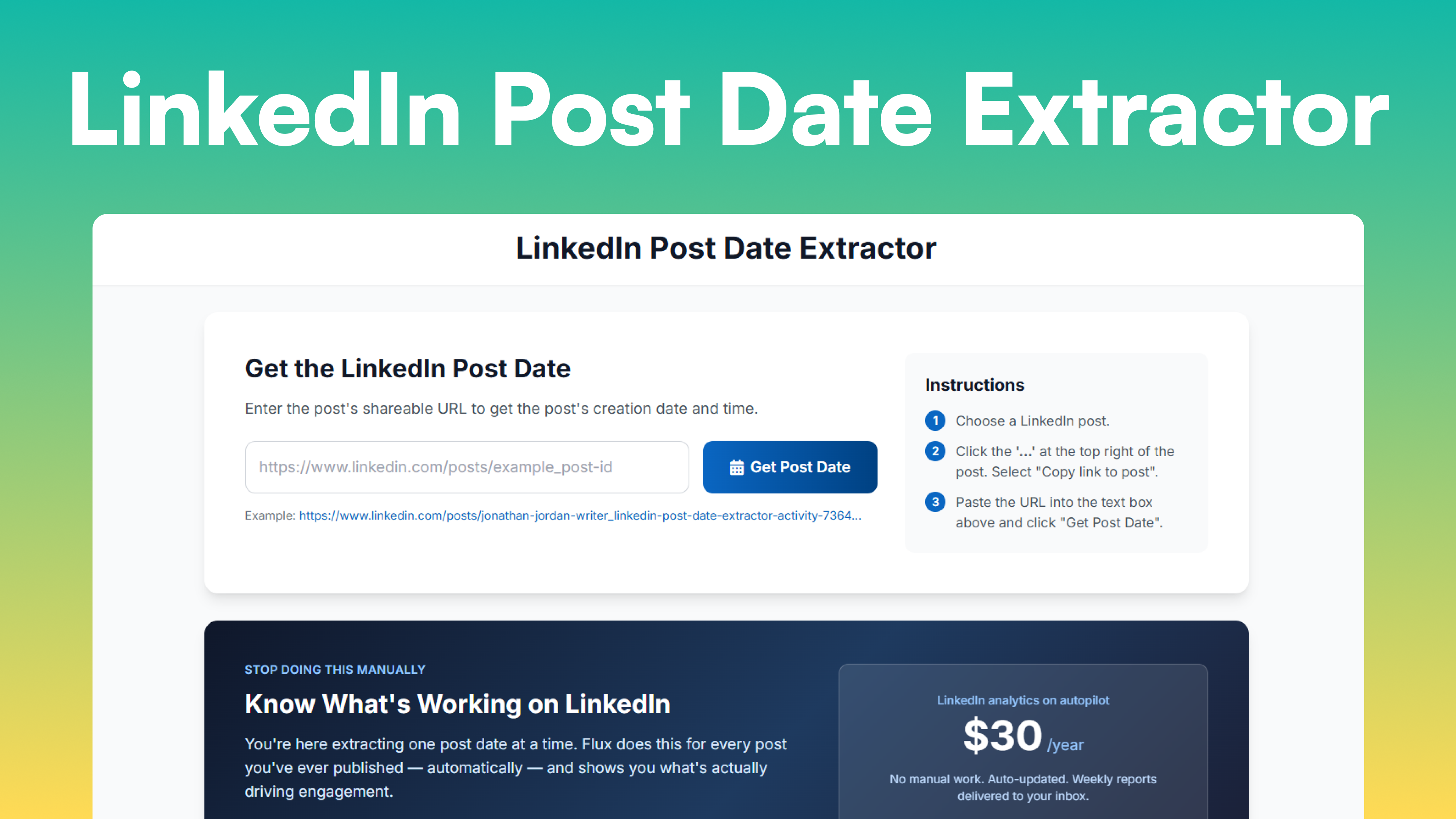
LinkedIn Post Date Extractor is a lightweight tool that reveals the exact timestamp of any LinkedIn post by decoding the post ID hidden in the URL, something LinkedIn itself doesn’t clearly show.
Timing shapes credibility on LinkedIn. Knowing when a post was actually published helps you analyse performance, verify context, and read signals more accurately across use cases.
GrowedIn News
The State of LinkedIn, Spring Edition 2026, is now live.
Going through a report like this is the closest you get to observing trends, experimenting, and staying updated, without doing it every single day.

Coming Up Next…
Sometimes what we intend isn’t what actually happens. LinkedIn engagement can backfire, creating the opposite of the impact you hoped for. In next week’s issue, we’ll break down why this happens and how to avoid it.
Till then, stay consistent, but always prioritise clarity.


