
Why Fake Engagement Is a Serious Problem on LinkedIn

What You’ll Learn in this Issue
• How engagement bots and pods artificially inflate metrics while providing no real audience value
• Practical ways to identify fake engagement through timing, comment quality, and reporting patterns
• Why authentic, intentional engagement is essential for long-term credibility, relevance, and relationship-building
As a LinkedIn branding agency ourselves, we understand the temptation of quick, visible results.
It feels reassuring to see likes and comments roll in soon after you start to put in some effort.
But to manufacture that comfort, people may rely on fake engagement, bots, and pods designed to inflate numbers and retain contracts. What looks like momentum often creates long-term damage to executive credibility.
Let’s break down how this happens and why the impact is often irreversible.
Engagement Bots
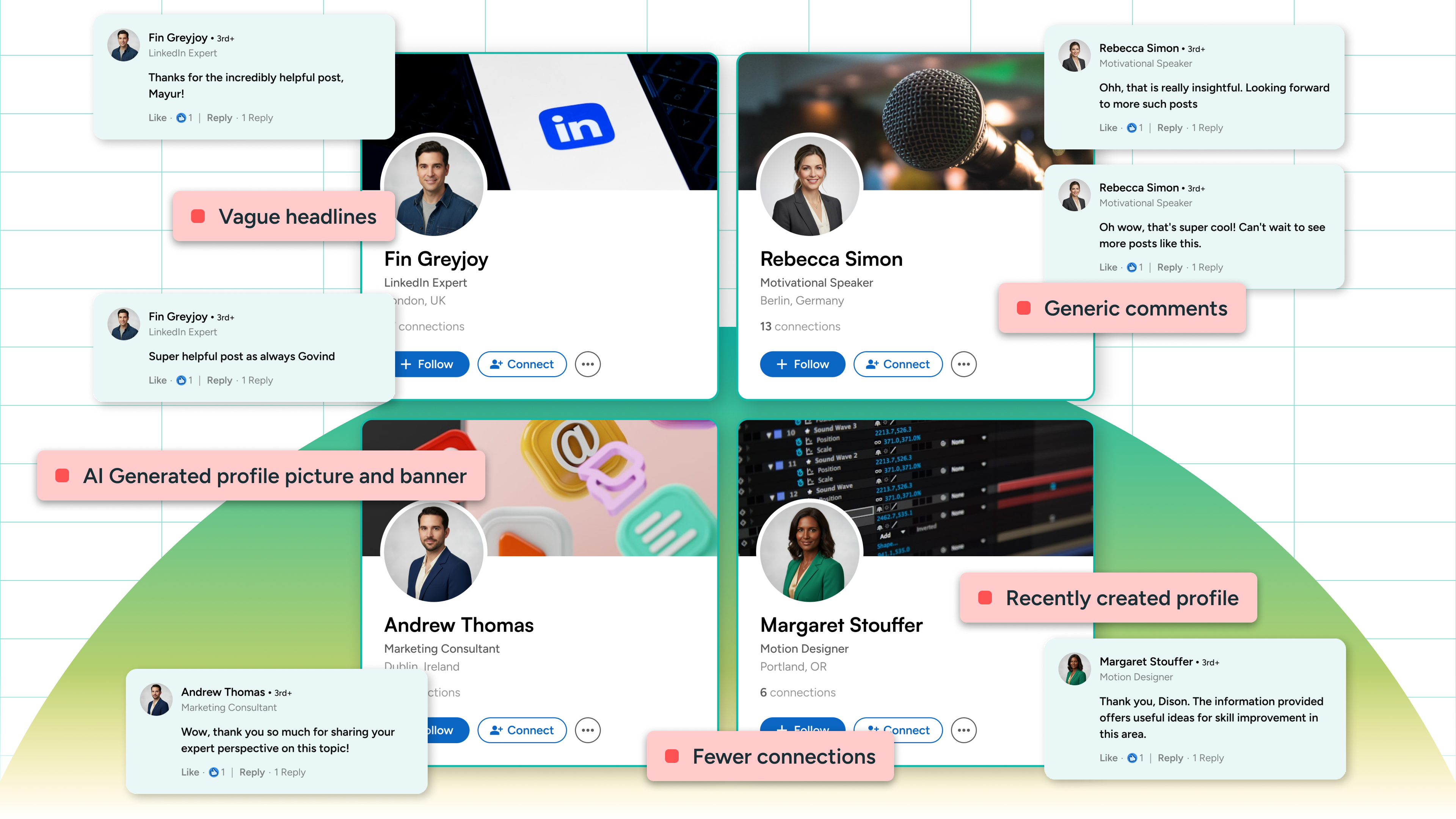
Some accounts use engagement bots, fake LinkedIn profiles created at scale. These accounts often use AI-generated headshots or stolen photos, vague bios, and little to no real activity.
The moment a post goes live, these bots engage instantly. In some cases, agencies outsource this to third-party networks in other countries to maintain plausible deniability.
What you get is activity without attention and numbers without signal.
Engagement Pods
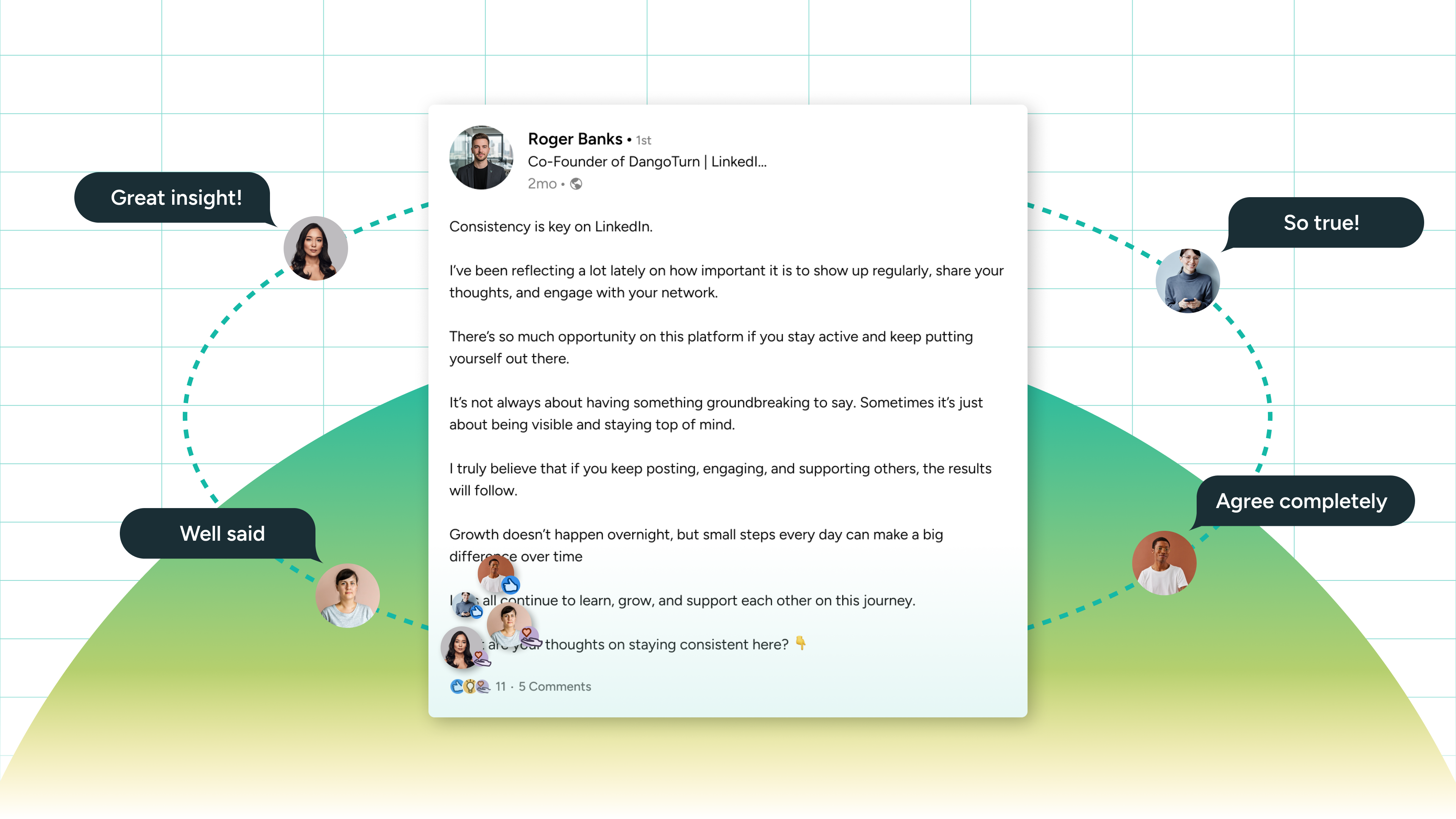
Pods are groups of real people who automatically like and comment on each other’s posts. While the profiles may be legitimate, the engagement isn’t.
Posts are rarely read. Comments are generic. Perspective is irrelevant. The goal is compliance alone. It is a manufactured behavior.
How to Spot If This Is Happening
• Timing: Does engagement spike unnaturally fast and then disappear, or does it arrive gradually over time?
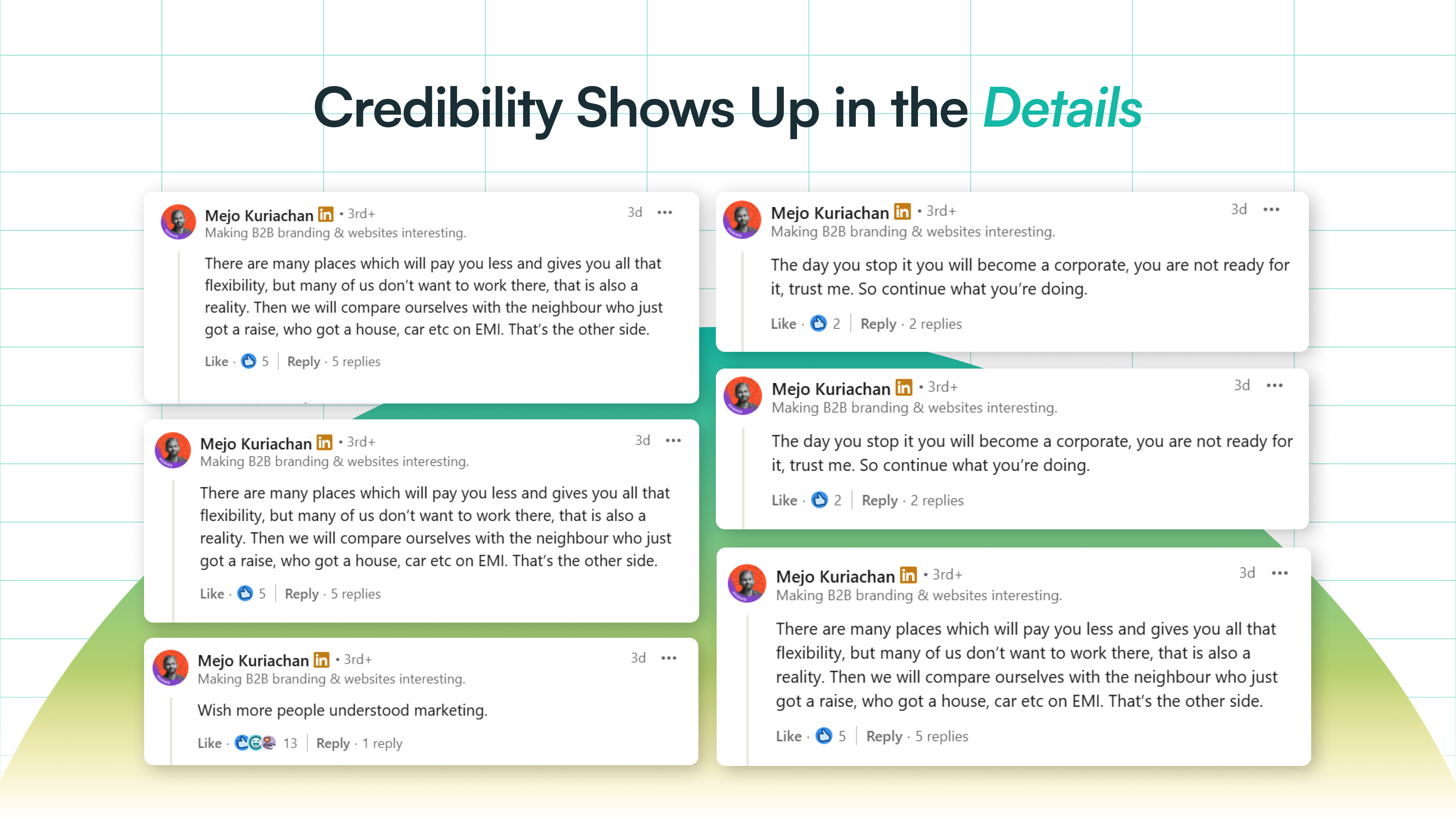
• Comment quality: Do comments reference specific ideas from your post, or could they fit under literally anything?
• Reporting: Are results shown as sudden, dramatic spikes, or steady, contextual growth that reflects learning and iteration?
The Damage
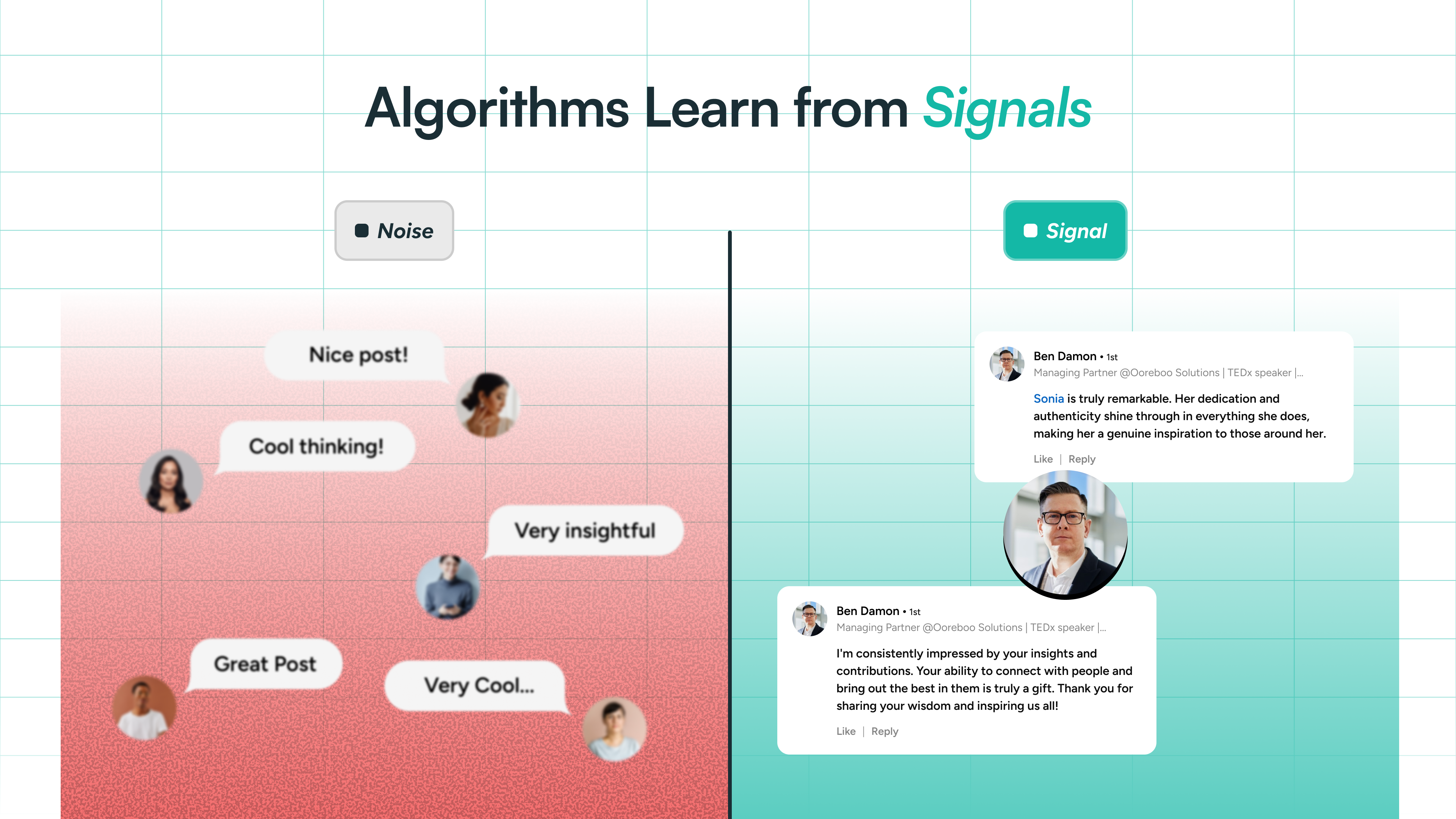
LinkedIn’s algorithm learns from who engages with you. When bots or pods dominate early signals, your content is shown to the wrong audience.
You lose relevance with your ICP.
You lose insight into what’s actually working.
And you lose the ability to build meaningful relationships.
50 empty interactions are far less valuable than one thoughtful response from the right person.
GrowedIn’s Approach
We encourage engagement only when it’s intentional, contextual, and value-driven.
Chasing short-term metrics erodes offline authority and compromises long-term online credibility. This principle guides every part of how we work and every service we offer.
Executive Spotlight
Karan Kumar is a young climate entrepreneur who brings grit and urgency to LinkedIn.
As the co-founder of Finobadi, his content interrogates sustainability.
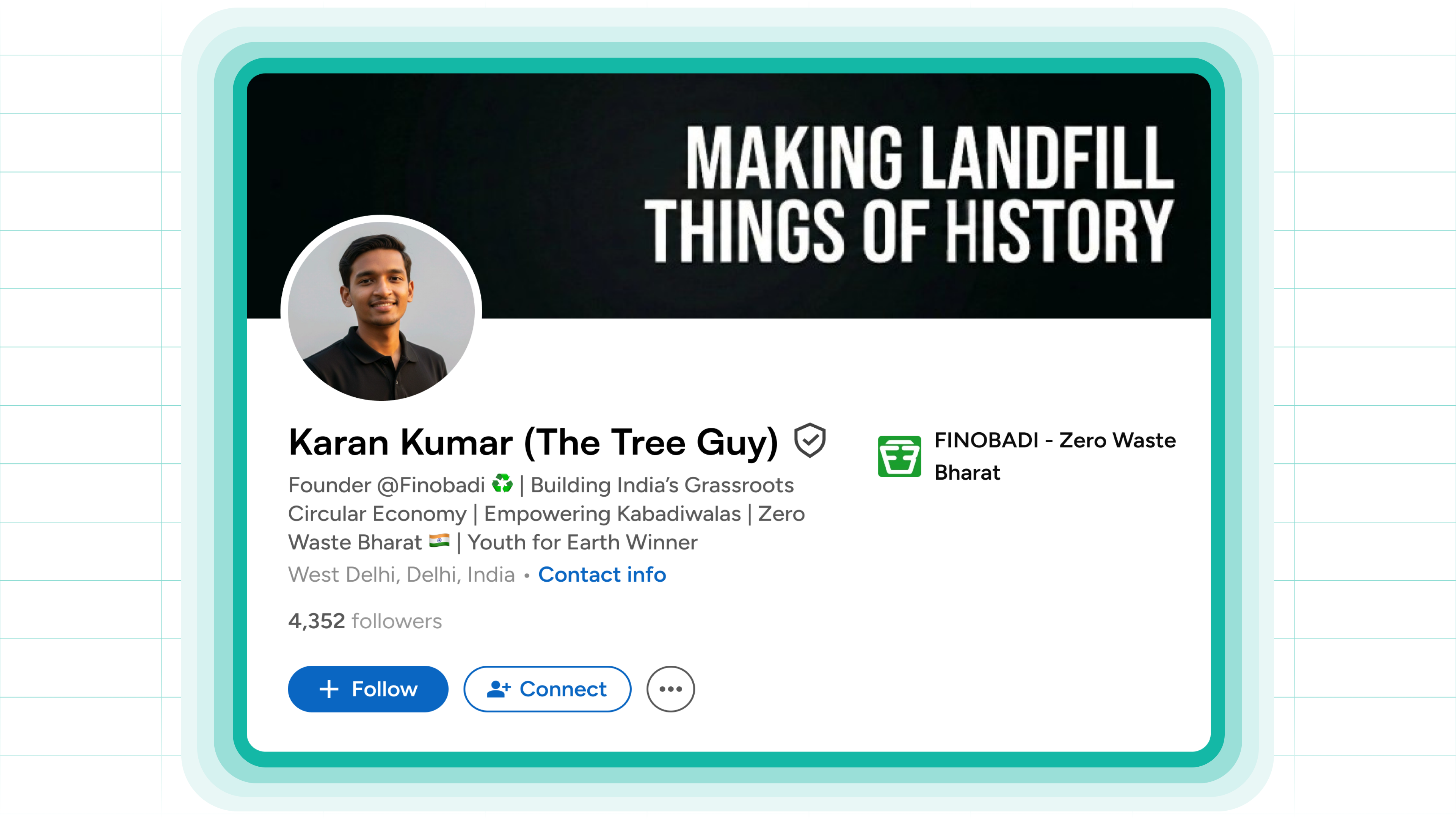
Karan writes drawing from firsthand experience with India’s waste ecosystem and the people who power it.
In this post, Karan cuts through performative “green” branding with sharp clarity.
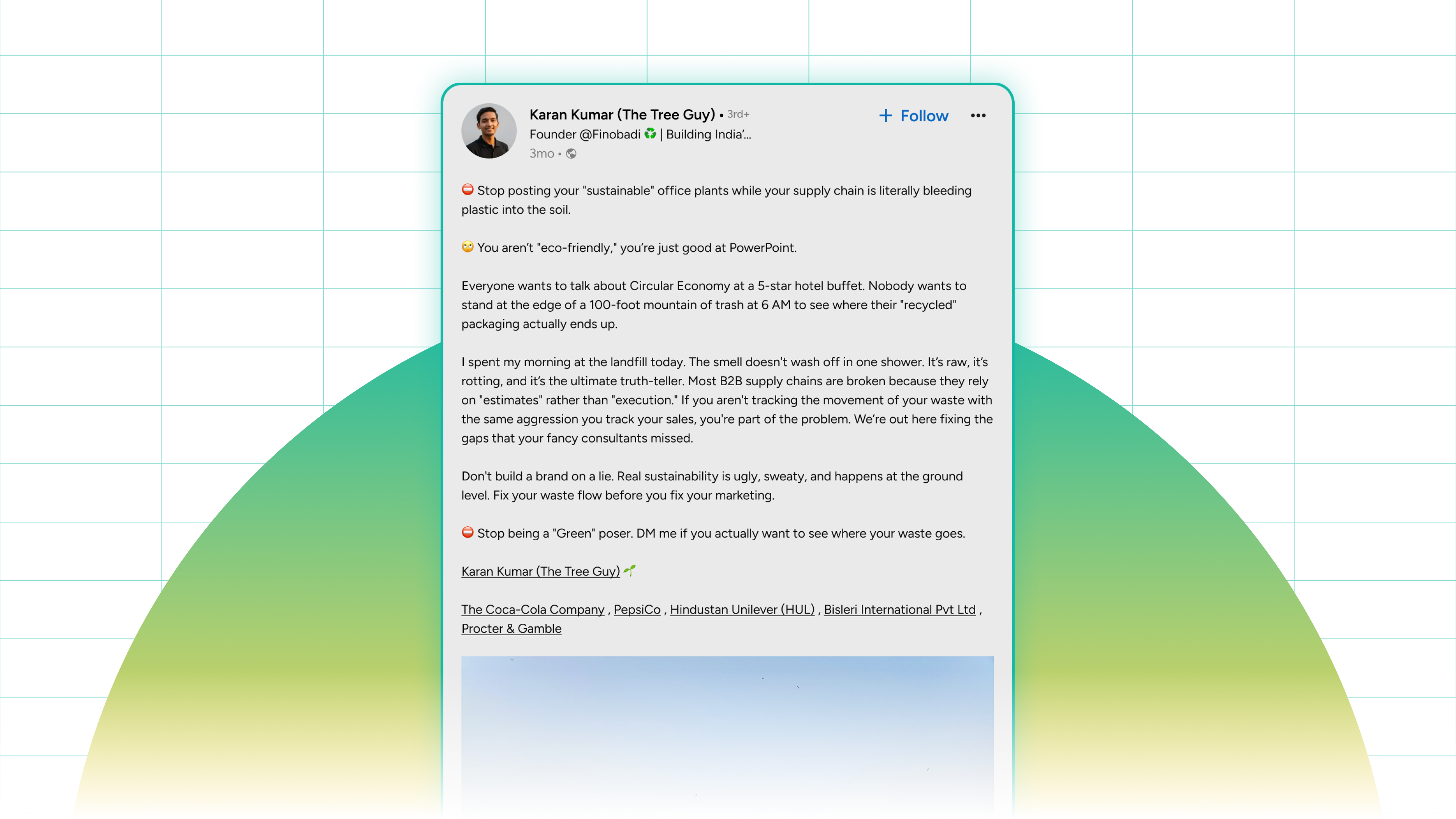
Calling out glossy sustainability narratives, he contrasts boardroom talk with the brutal reality of landfills. His tone is raw and direct, reminding readers that real impact is messy, operational, and impossible to fake.
If you value substance, Karan’s voice is hard to ignore.
Resource of the Week
Percentage Calculator is a simple tool for quick percentage math.
Useful for rate changes, growth comparisons, and back-of-the-envelope calculations when you need answers fast.
This comes in handy, especially for percentage increase/decrease and ratio-based checks.
%20(1).png)
GrowedIn News
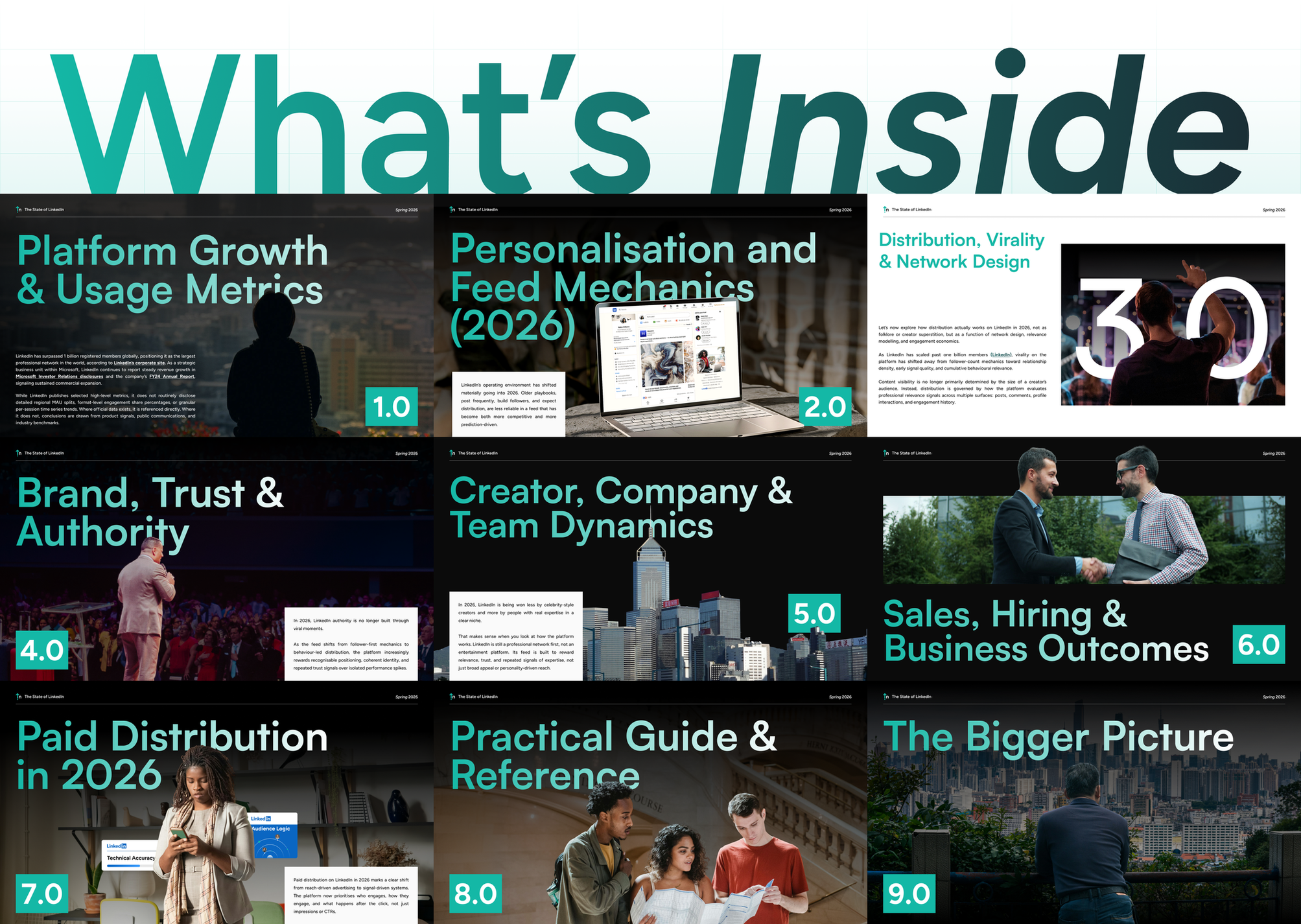
The State of LinkedIn, Spring Edition 2026, went live a few days ago, and we’ve been encouraged by the quality of readership it’s receiving.
At GrowedIn, we focus on building things that compound over time. The report is one such effort.
Going through it is the closest you get to observing trends, experimenting, and staying updated, without doing it every single day.
Coming Up Next…
Next week, we’ll break down how visibility is shifting, why individual voices are outperforming brand pages, and what this means for executives trying to build real influence, drawing from The State of LinkedIn, Spring Edition 2026.
Till then, show up thoughtfully. Skip the pretence.


