

The Hidden ROI of Executive Visibility on LinkedIn

What You’ll Learn in this Issue
- Why LinkedIn ROI for executives goes beyond metrics and shows up in trust, influence, and opportunities
- How visibility compounds into real outcomes like faster deals, better hires, and stronger pricing power
- Why consistent context-building turns familiarity into trust, and trust into revenue over time
Most people judge LinkedIn by what they can measure.
Impressions. Follower growth. Inbound leads.
If those numbers are not moving, the conclusion is usually simple: LinkedIn is not “working.”
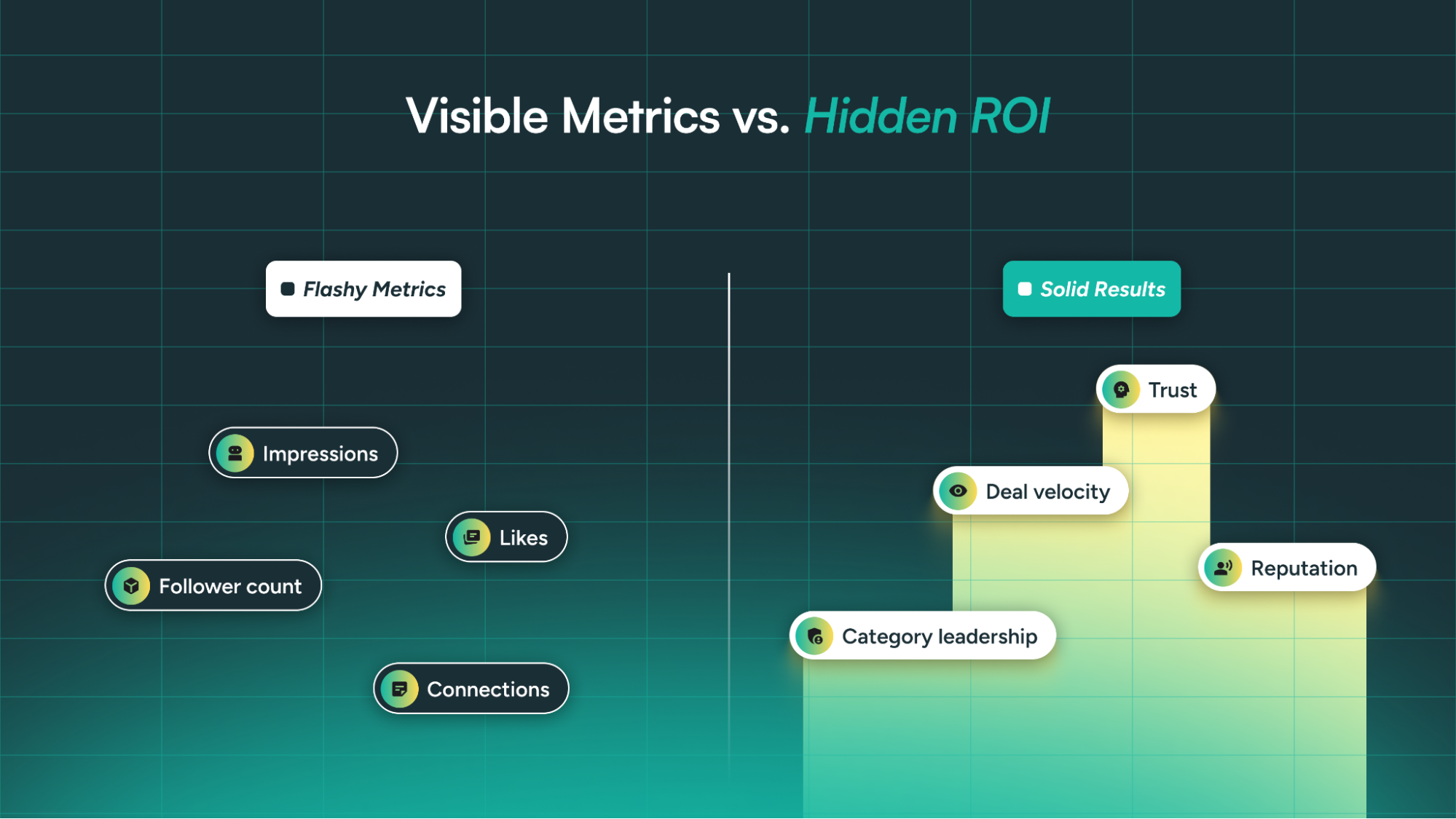
But for executives, the biggest returns from LinkedIn rarely show up on a dashboard. They show up in conversations, decisions, and opportunities that look unrelated until you trace them back.
These Are Results Too
The real ROI of LinkedIn runs much deeper than most people assume.
Executive visibility builds a holistic reputation. One that elevates your entire business and indirectly drives revenue, even when it cannot be traced to a single post or metric.
Here is how executive visibility compounds in ways dashboards cannot measure:
• Higher trust in negotiations
People come in already aligned with your thinking and values, reducing scepticism and friction.
• Faster deal cycles
Prospects are familiar with your expertise and credibility, so the need to prove yourself largely disappears.
• Easier hiring
Your online voice attracts like-minded talent, cutting down recruitment time and culture mismatches.
• Increased speaking invites
Visibility positions you as a thought leader and creates opportunities you never actively pitch for.
• Category-building advantages
Consistent presence allows you to shape the narrative of your industry instead of reacting to it.
• Serendipitous introductions
People remember your name and refer you when you are not in the room. Your reputation does the outreach.
• Higher pricing power
Recognised authority reduces resistance around pricing.
• Access to better deal flow
Investors, partners, and collaborators approach you because your perspective signals competence.
• Resilience during downturns
When markets tighten, visible leaders are trusted sooner and retained longer.
How These Returns Happen
The mechanism behind visibility is simple.
Executives do not need more content. They need more context.
The more context you provide through consistent thought leadership, the stronger the perception you build over time.
It usually works like this:
→ Familiarity becomes trust
→ Trust turns into influence
→ Influence creates opportunity
→ Opportunity generates revenue
How Long Does It Take?
Honestly, building an audience takes time. A 6-12 month window is typically needed to see meaningful momentum.
But if you stay focused on the right people, the ones who will buy, hire, partner, or advocate, the returns start showing up in meaningful ways, even before they show up in analytics.
Executive Spotlight
Ethan Driskill is the kind of creative who talks about design as a business lever. On LinkedIn, his posts focus on what actually moves revenue.
He writes in quick punches. Sarcastic, mildly smug, and brutally honest.

In one post, he takes an industry cliché like “never work for free” and flips it into a practical lesson on leverage, outcomes, and how unsolicited value quietly builds pipelines.
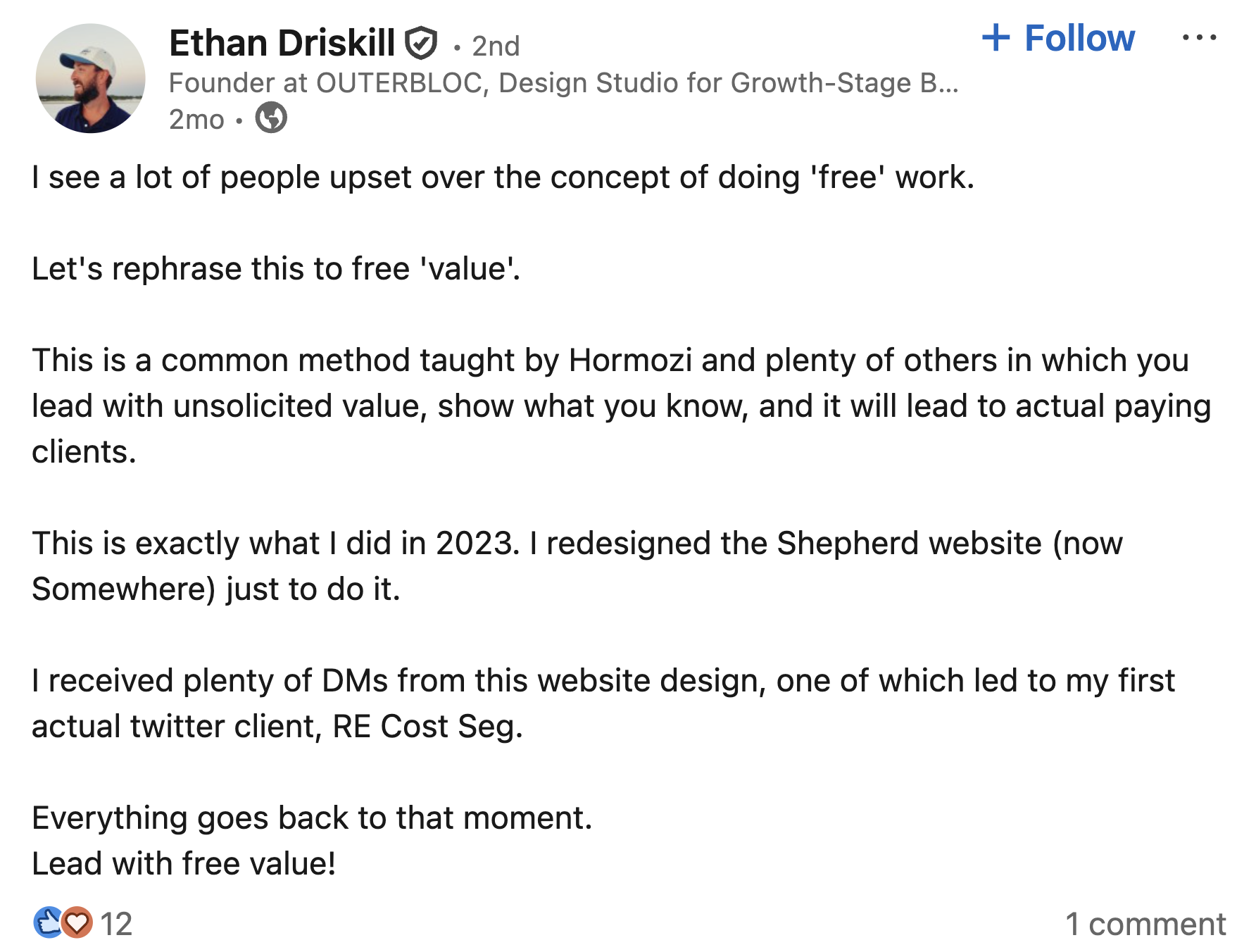
If you want a relaxed but insightful voice that teaches modern creative strategy while calling out the industry’s bad habits, Ethan is worth paying attention to.
Resource of the Week
Lovable is an AI website builder designed for non-technical founders.

You describe what you want, and it creates a working site within minutes.
It is especially useful for testing early ideas, landing pages, or branding concepts before investing in a full build. Great for speed, experimentation, and turning an idea in your head into something you can actually share.
Coming Up Next...
Busy executives rarely get the space to articulate what they wish their customers truly understood.
That is why our content interviews not only help with LinkedIn content. They combine reflection and strategy, bringing out nuances that later form strong narratives for an executive’s overall perception.
In the next issue, we will break down why this approach works.
Until then, remember this: not all ROI is measurable.


