
360Brew and How the LinkedIn Algorithm Really Works

What You’ll Learn in this Issue
- LinkedIn is shifting from engagement-based ranking to behavior- and intent-driven distribution
- Systems like 360Brew unify signals across posting, engagement, and profile context into one model
- Visibility now depends on relevance, consistency, and alignment with expertise, not just network or likes
LinkedIn stands apart as a professional platform in how its algorithm prioritizes intent over impulse.
Unlike platforms that optimise for entertainment or virality, LinkedIn ranks content based on professional relevance, context, and behavioural signals.
With the rise of AI, what once felt like gradual shifts has now become more structured. The platform is moving toward unified systems that understand not just what users do, but why they do it.
This is where models like 360Brew come in, marking a shift from simple content distribution to behaviour-led prediction at scale.
In this edition, we’ll unpack how LinkedIn’s ranking logic is evolving and the shift from follower-led to behaviour-led distribution.
One System, Not Many
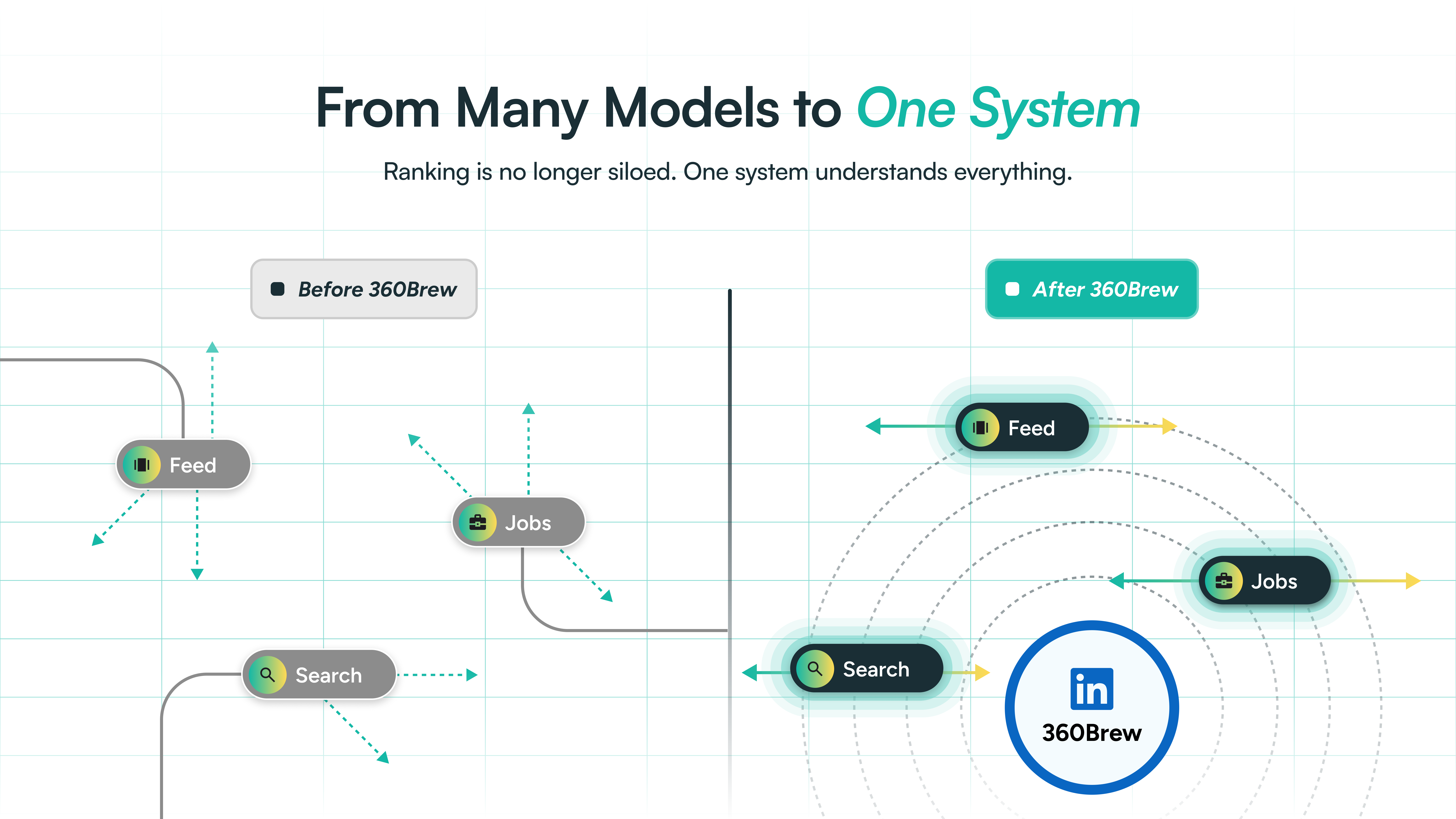
With 360Brew, ranking is no longer siloed.
Instead of multiple models optimizing for different outcomes, LinkedIn now operates as one cohesive AI-driven system.
What you post, how you engage, and how you show up across the platform all contribute to a shared understanding of your profile, informing what content gets seen and by whom.
From Signals to Context
The model relies less on fixed metrics and more on context. It interprets posts, profiles, and interactions as language, understanding intent. It’s no longer engagement metrics that matter, but the quality of interactions.
Behaviour Over Engagement
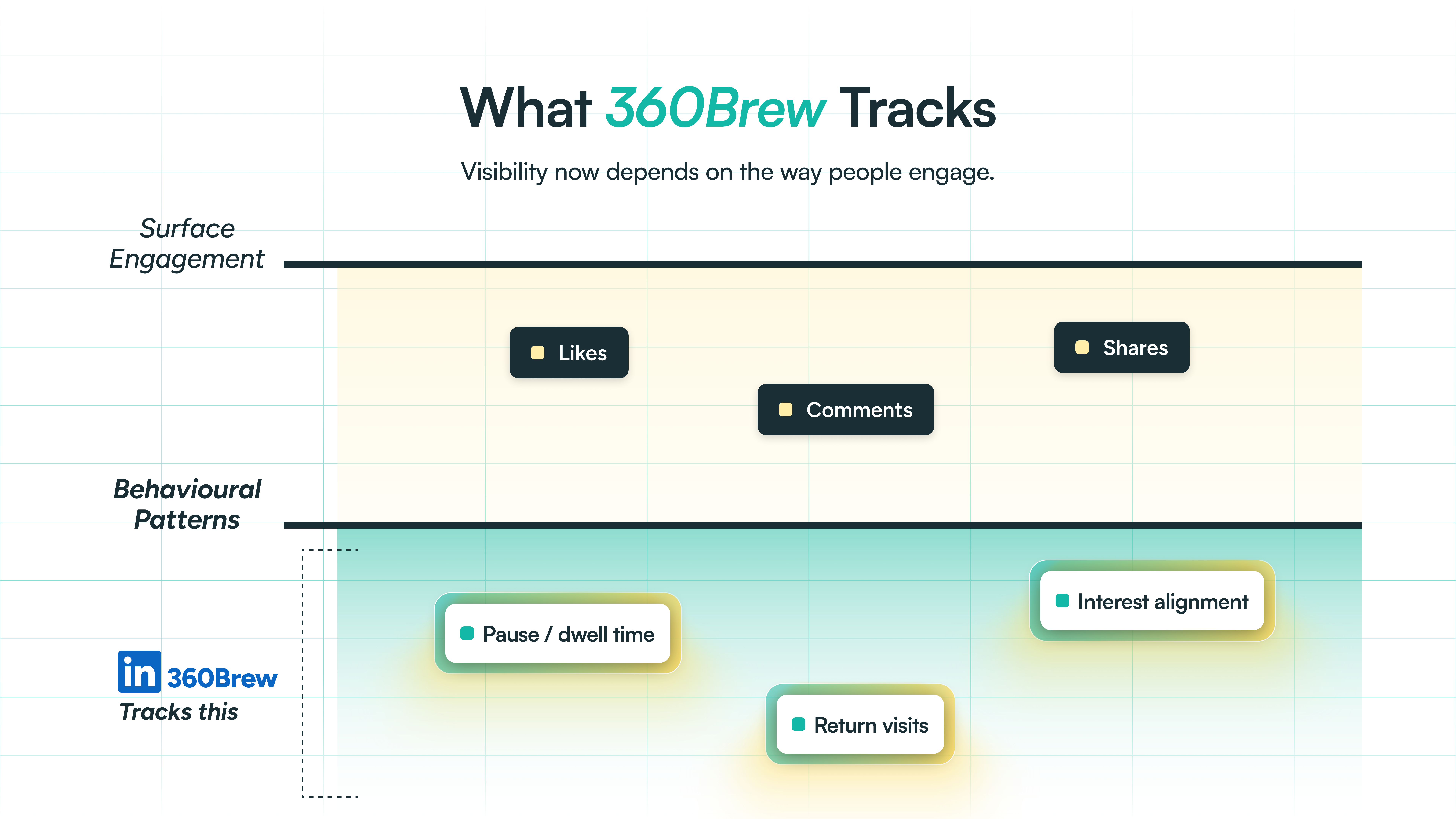
It has moved further away from raw likes or reactions. The algorithm now tracks how people interact:
Did they pause to read?
Did they return to your content?
Does it align with their usual interests?
Over time, these behavioral patterns compound, determining reach and influence.
Your Profile as a Signal
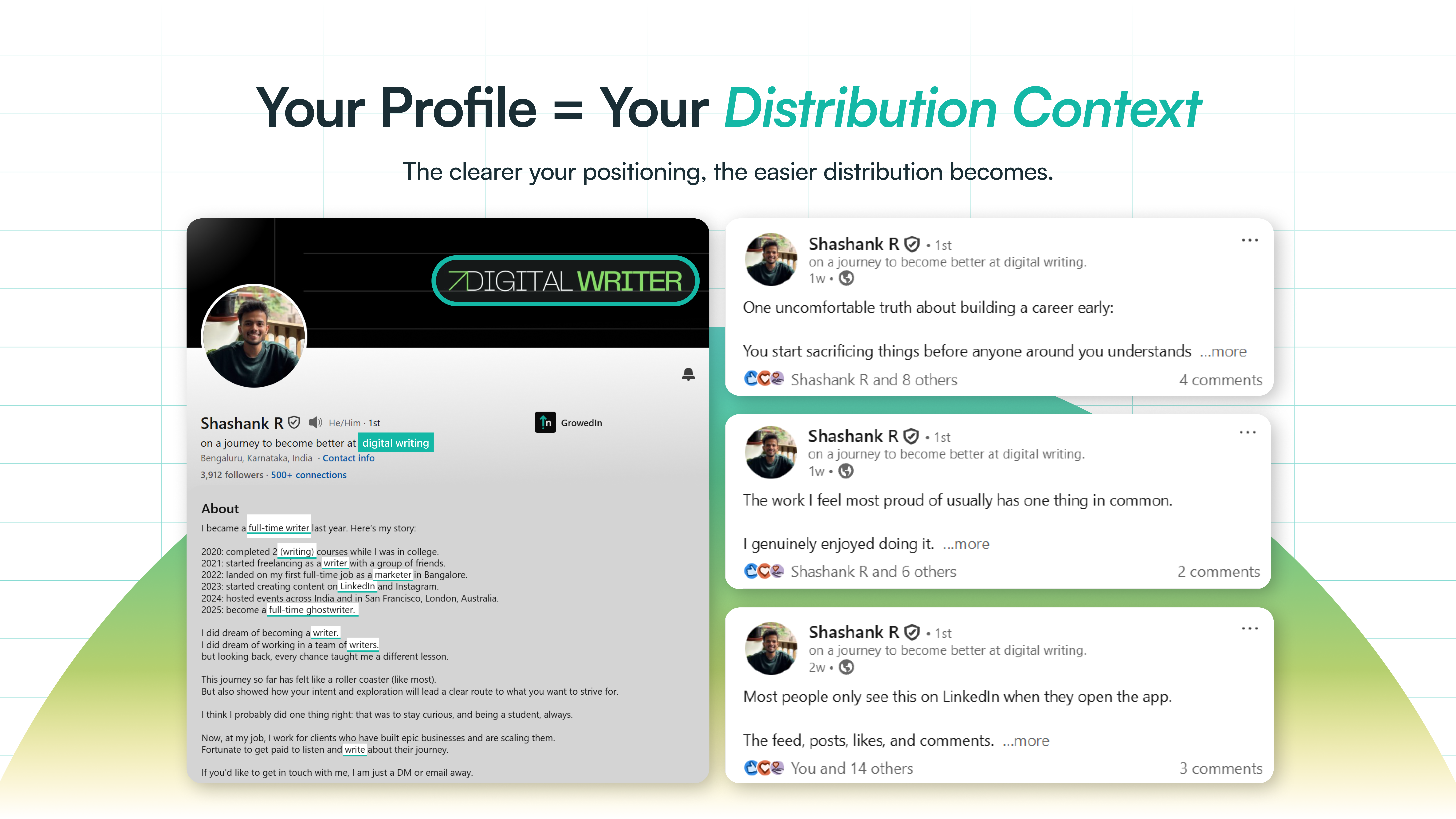
Your profile now signals authority. Headlines, experience, and activity history inform where your content fits.
Posts aligned with your established expertise get amplified; those that don’t, see inconsistent distribution.
Relevance Over Proximity
The biggest shift: content travels based on behavioral similarity, not network connections.
Visibility depends on reaching people who are likely to care, not just those who know you.
LinkedIn has evolved from a timing- or engagement-driven feed into a behavior-driven system, where visibility is earned through sustained relevance, clarity, and alignment with expertise, rather than isolated performance.
We break this down even more deeply in our upcoming report. Stay tuned. :)
Executive Spotlight
Nishank Bhatia is a marketing leader and growth strategist who uses LinkedIn as a thinking space. His presence feels intentional and personal, in the best way.
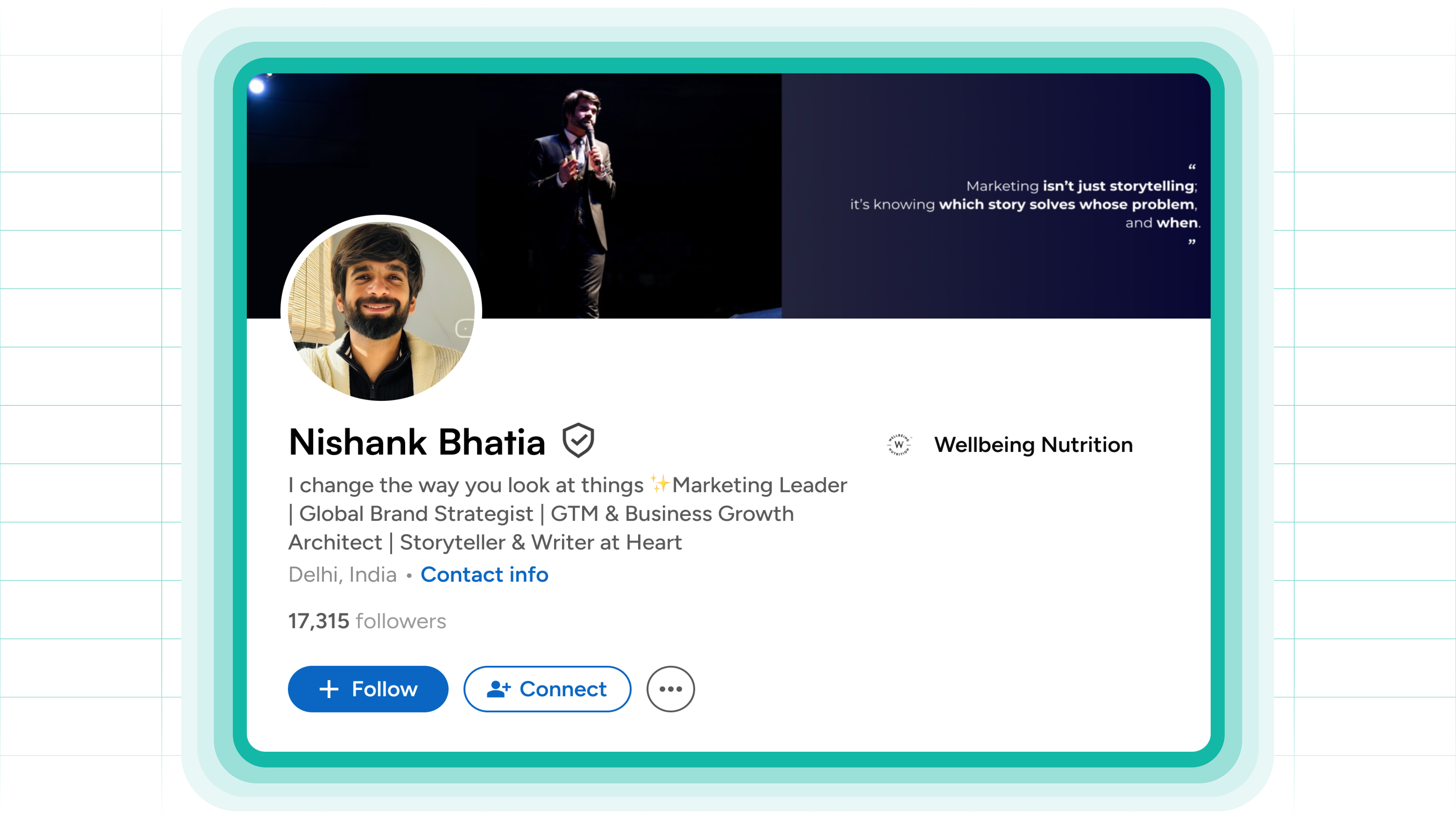
A storyteller by instinct, his content blends lived experience with cultural references, moving fluidly between grit, philosophy, and wit. In this post on coming back from rock bottom, Nishank leans into memoir-style writing and quiet resilience.
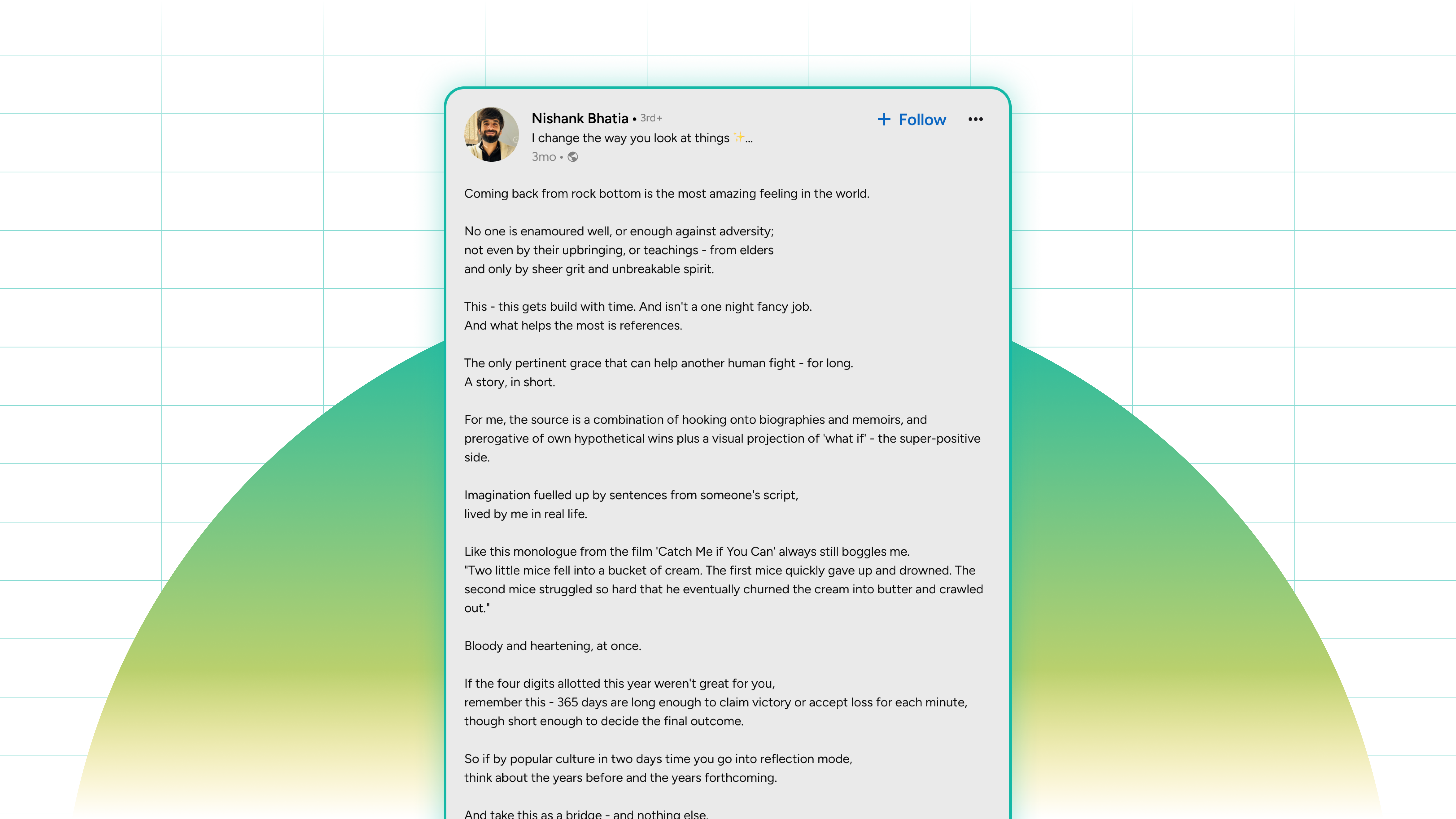
There’s restraint in how he shares wins, paired with rare honesty about setbacks. If you value thoughtful perspective with a touch of light-heartedness, Nishank’s writing is well worth following.
Resource of the Week
Taskade is an AI-powered workspace that brings tasks, notes, collaboration, and automation into one clean system. You can manage projects, create structured workflows, and even spin up AI agents or apps from simple prompts.
It’s ideal if you want fewer tools and more clarity, especially for planning, thinking, and execution in one place.

Coming Up Next…
We will be launching the Spring Edition of The State of LinkedIn, our biannual report on LinkedIn and how it is evolving, on Wednesday, April 15.
This is our second edition, and the process of bringing together something this detailed and meaningful continues to be just as rewarding.
Till then, learn, post, repeat, and let the Brew notice.


