

How to Use AI in Your LinkedIn Routine

What You’ll Learn in this Issue
- Why over-reliance on AI can weaken critical thinking if not used intentionally
- How starting with your own ideas and using AI only for refinement preserves authenticity
- How treating AI as a tool, not a substitute, helps enhance creativity and clarity
AI has made our work faster, smoother, and more creative than ever. But with every new shortcut, something subtle is shifting.
Researchers say our critical thinking is taking a back seat. The more we rely on tools like ChatGPT or Claude, the easier it becomes to skip the deep thinking that sharpens our minds.
Yet avoiding AI altogether is not the answer either. Without it, we slow down. With it, we risk getting too comfortable.
So where is the balance? How do you use AI to enhance your creativity instead of replacing it?
In this issue, we explore how to make AI your thinking partner, not your autopilot.
Start From Your Own Spark
Don’t open ChatGPT and type, "Give me a LinkedIn post idea for my profile as a startup founder."

That’s the first step toward creating generic content.
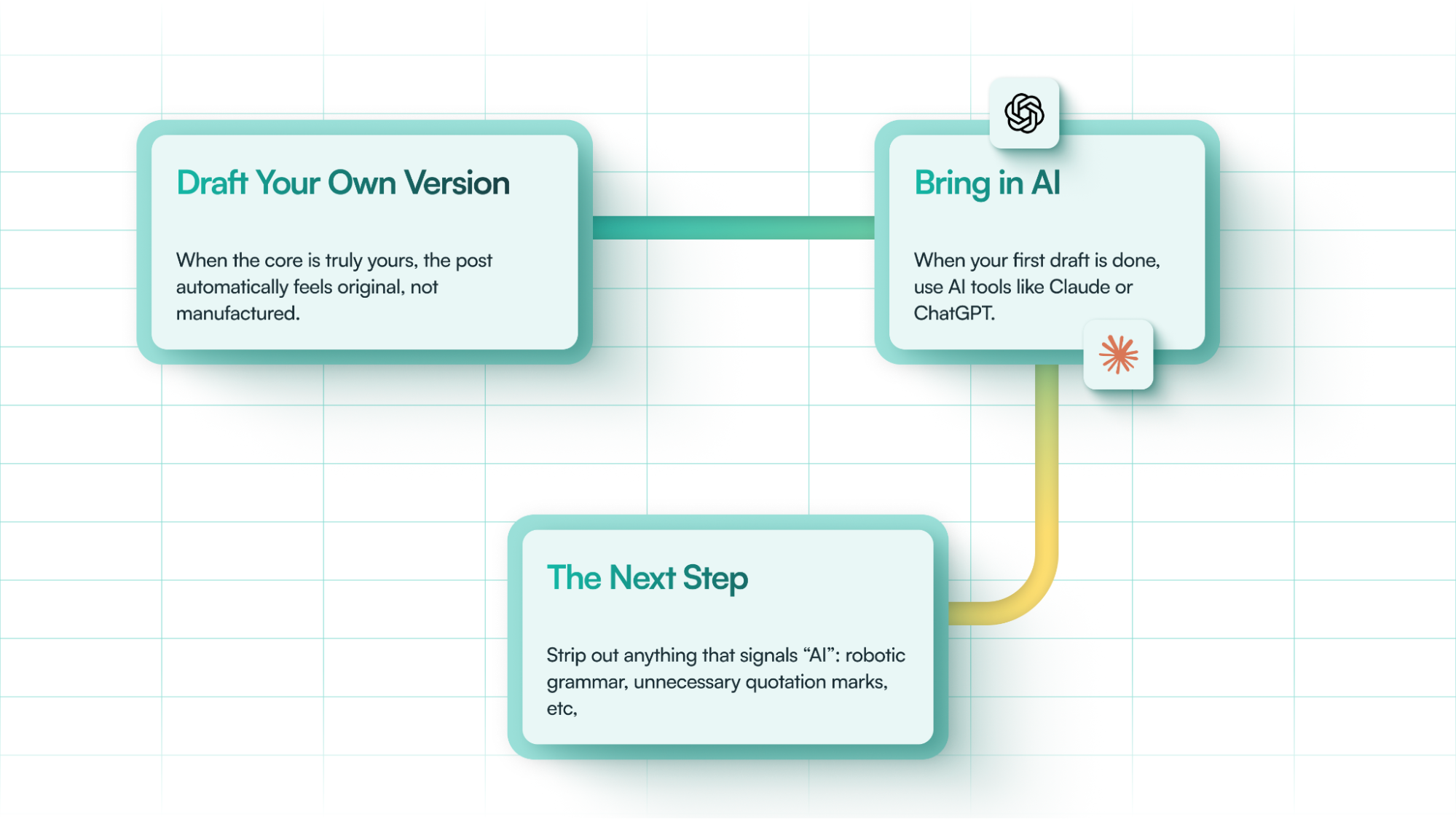
Instead, begin with something only you can bring to the table: an experience, an observation, a thought that sparked a reaction, or an insight you’ve earned. When the core is truly yours, the post naturally feels original, not manufactured.
Draft Your Own Version
Once you have the idea and the angle, write the post yourself. Start with a hook that intrigues, content that’s crisp yet meaningful, and a call to action that keeps readers engaged.
Now, Bring in AI.
When your first draft is ready, use tools like Claude or ChatGPT to refine it.
Prompt with clarity:
Example: “Refine for grammar and structure, but keep my tone, style, and vocabulary. Reduce repetition and vague ideas.”
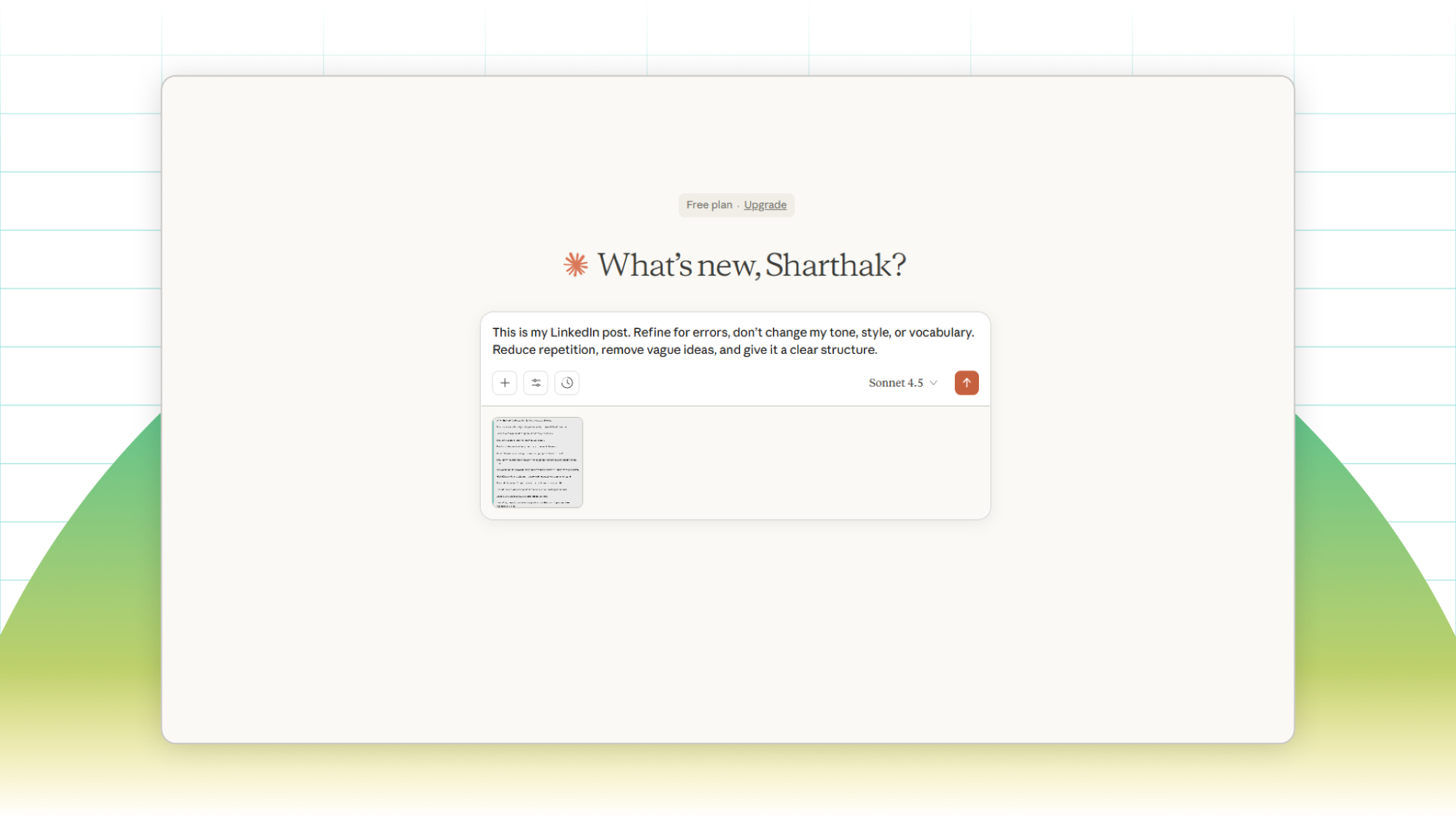
This approach gives you a version that’s still yours, just sharper.
You can also ask AI to shorten hooks or optimise them for clarity and clicks.
The Next Step
Edit out anything that signals AI.
Look for robotic grammar, extra punctuation, and overused words like landscape, leverage, or delve.
The result is a post that’s authentically you, refined for quality, and free of the AI aftertaste.
A Word of Caution
If you already enjoy writing and have a strong voice, keep AI involvement minimal. Use it as a final proofreading tool, not a co-writer. The goal is to sharpen your thinking, not outsource it.
Executive Spotlight
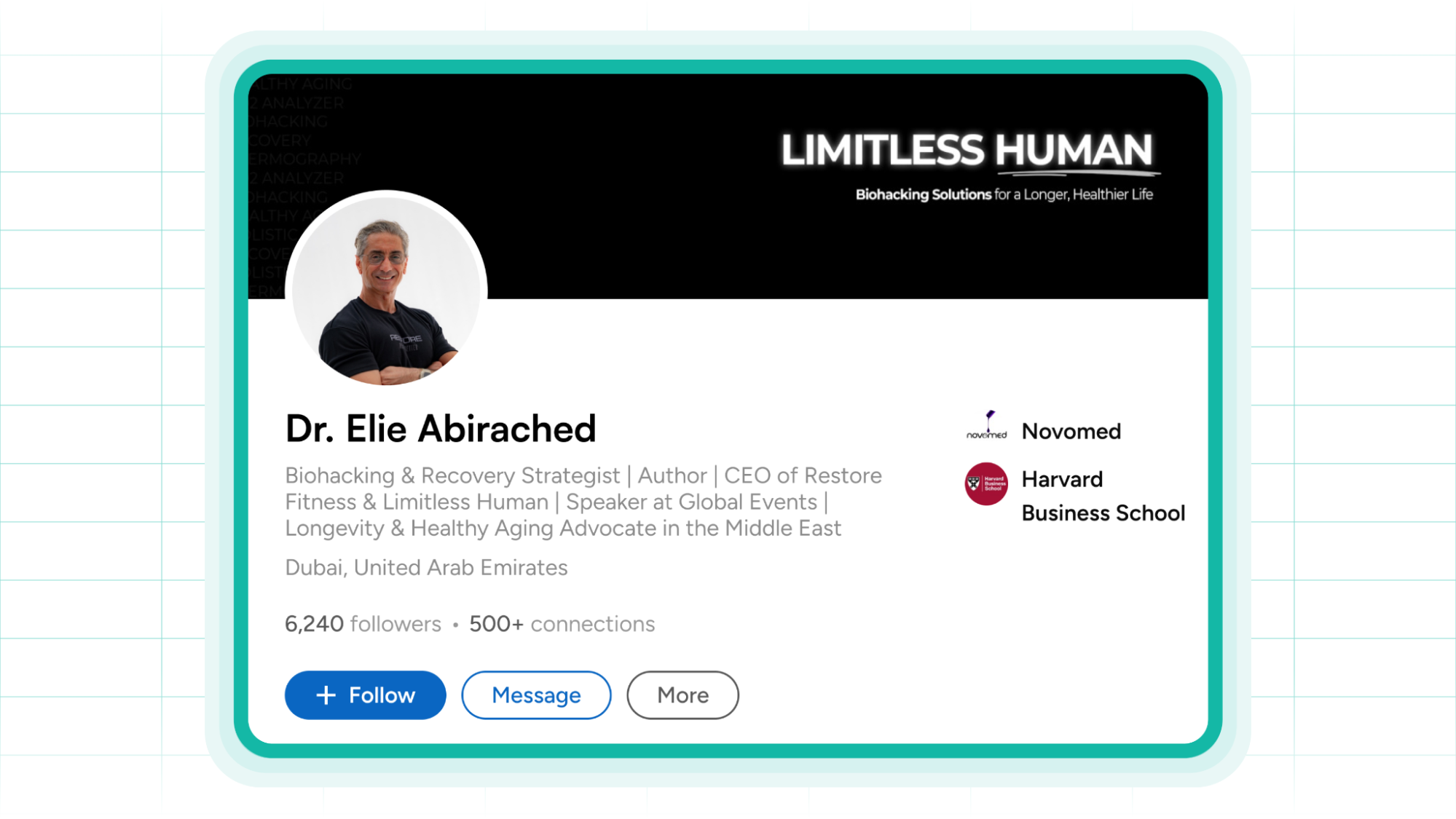
Dr Elie Abirached is a Biohacking and Recovery Strategist, Author, and CEO of Restore Fitness & Limitless Human.
On LinkedIn, he shares insights on optimising performance, recovery, and longevity. His posts simplify complex biohacking concepts into practical takeaways anyone can apply.
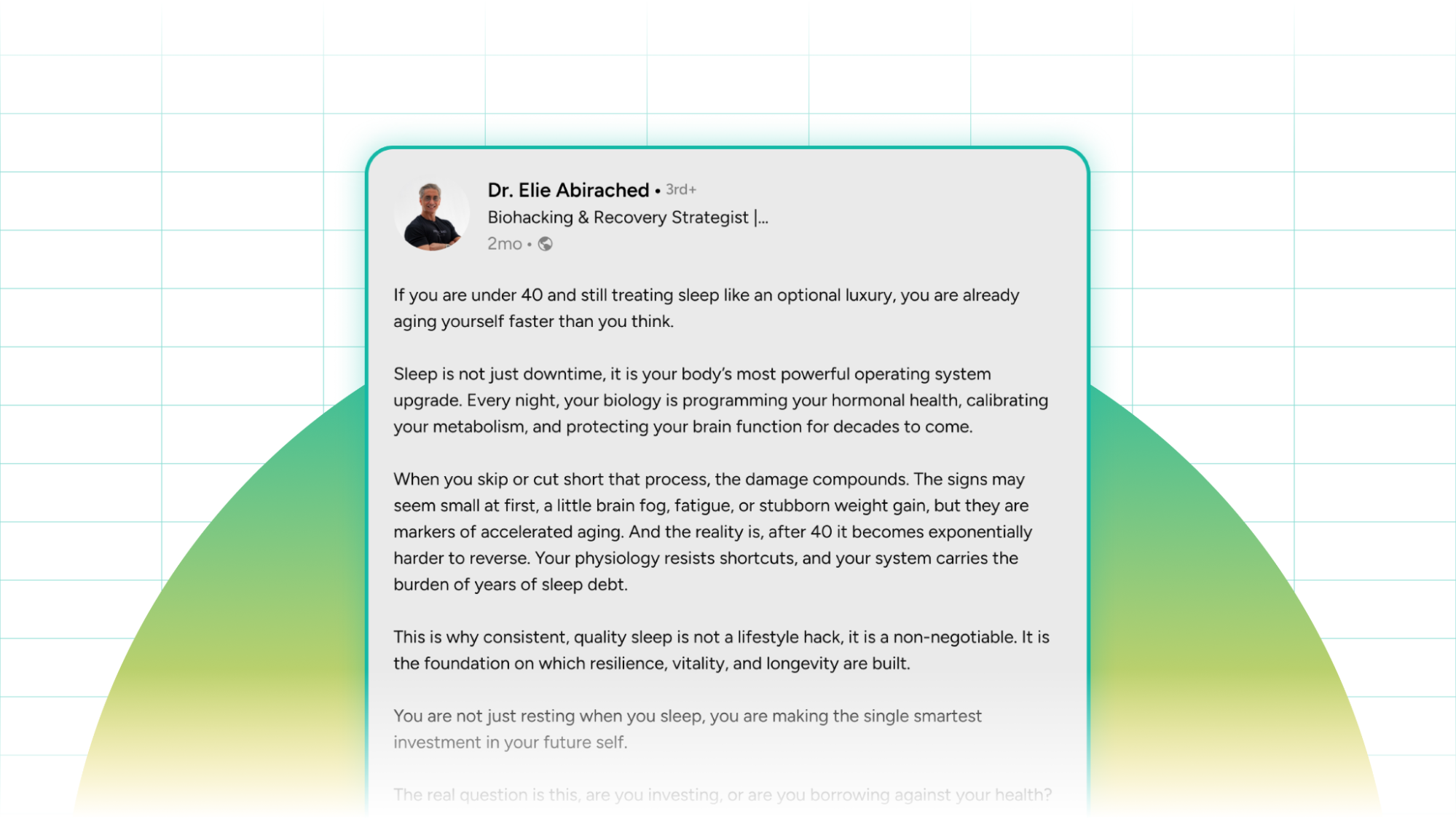
In one of his recent posts, he explores the science of sleep and how its quality shapes energy, focus, and ageing. Thoughtful, evidence-based, and inspiring, his content shows how smart health practices can create lasting well-being.
Resource of the Week
This week’s pick is a simple yet powerful utility: TinyWow.
It lets you merge, compress, and convert PDFs in seconds, perfect for those last-minute tasks that need quick fixes. It’s useful for everyone, not just marketers or writers.

Coming Up Next…
What if your government suddenly banned LinkedIn? Would it feel like losing everything you’ve built?
In the next issue, we’ll explore how to reduce over-reliance on the platform and build a digital presence that lasts.
Till then, use AI, but let your brain lead the way.


