
How Often Should You Post On LinkedIn?

What You’ll Learn in this Issue
- Prioritize quality over volume, especially if you're building an executive brand rooted in expertise.
- Choose a posting cadence you can sustain without compromising originality or depth.
- Remember that consistent, high-value content builds stronger long-term credibility than frequent, forgettable posts.
Five posts a week once felt like the norm on LinkedIn. Today, for many of us, even three feels excessive.
The platform, the audience, and our expectations of what good content should look like have transitioned over the years.
In this issue of North Star, we unpack the changing thinking around posting frequency and how to find a rhythm that works for you.
Why Five Times Made Sense Then
When building a brand on LinkedIn was still relatively new, posting five times a week made sense.
Anything you said felt like it was making an impact. Every post was an acceleration towards becoming memorable.
The algorithm was also more in line with it. The more you post, the more opportunities you have to show up in front of people and stay top of mind.
There was also less content being published overall. Standing out was easier, and posting frequently helped build familiarity much faster.
Why Less Makes Better Sense Now
Over time, the posts on LinkedIn started increasing, and not without a substantial dip in quality.
Seeing an executive make time to say something average every day feels far less valuable than seeing them share something unique and wise once every few days.
The latter feels more aligned with the authority they have built offline. It feels more intentional and more worth paying attention to.
That is one of the reasons we stepped our recommendation down to three posts a week.
And for executives in very senior positions, even three can sometimes be unnecessary. Many of them do not want to show up every other day, nor do they need to.
People also seem to have more things they dislike about LinkedIn than they did a few years ago. In that environment, fewer but better posts often create a stronger impression than simply posting more.
Ideal Posting Frequency For You

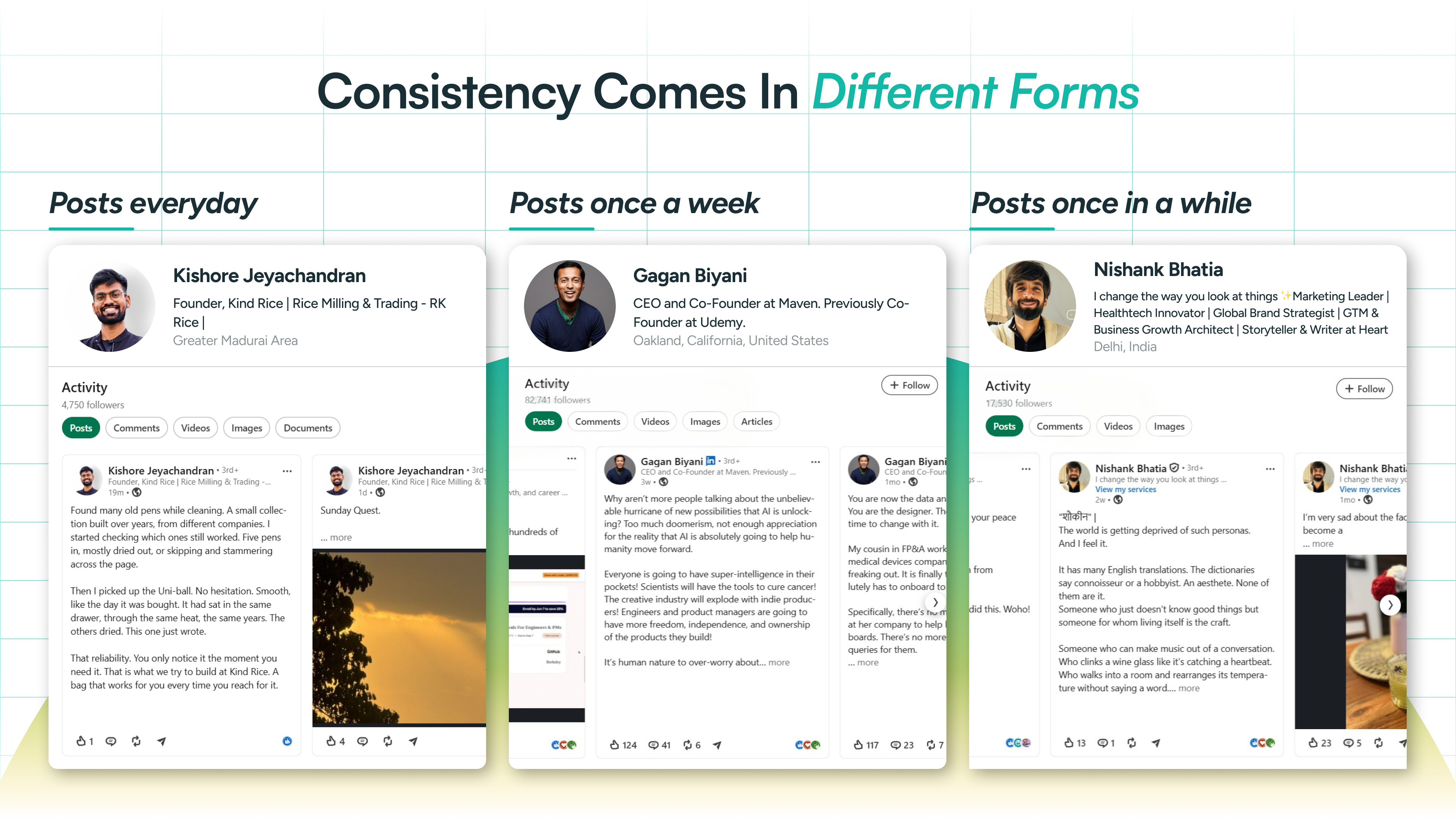
There are still creators and operators for whom daily posting works. If you have a lot to say and can maintain quality, frequency can still be an advantage.
The ideal frequency is the one YOU can sustain while still saying something worth reading.
A good post once a week will almost always outperform five rushed posts that nobody remembers.
Executive Spotlight
Ashish Acharya is the founder and CEO of Propsoch and a former real estate leader. After spending two decades helping developers buy, build, and sell projects, he now helps homebuyers make better property decisions.

On LinkedIn, Ashish writes practical, experience-backed content about real estate, homebuying, and consumer awareness. In one post, he highlights how something as simple as walking around the neighbourhood around a project can prevent costly home-buying mistakes.
For executives looking to build credibility by sharing genuine expertise from their domain, Ashish's profile is a strong example worth following.

Resource of the Week
Mobbin is one of the best swipe files available for anyone working in product, design, marketing, or content.
It gives you access to thousands of real app screens and user flows from leading products, making it easy to study how great companies approach onboarding, notifications, paywalls, profiles, and more.
Mobbin is a useful reminder that some of the best ideas come from observing what already works.


