 Claude
 ChatGPT
 Gemini
Ten connection requests a day, a carefully written outreach template, follow-up messages a few days later, and perhaps another message sharing a case study or inviting someone to book a call.
This is a familiar approach to LinkedIn lead generation, one that is also easy to measure. You can track how many people you contact, how many accept your requests, how many reply, and how many agree to a meeting.
However, these numbers tell you little about whether your efforts are building the kind of professional relationships that eventually lead to business opportunities.
For enterprises selling complex services, the buying process can take months. Prospective clients may need to evaluate several providers, consult internal stakeholders, and secure budget approval before making a decision. During that time, they need opportunities to understand your expertise, assess your credibility, and develop confidence in your ability to address their business challenges.
Outreach still has a valuable role to play. A relevant, well-timed message can start a productive conversation. Problems arise when outreach becomes the entire strategy, and every interaction is designed to secure a meeting before there is sufficient interest or a clear reason to have one.
LinkedIn creates opportunities to develop these relationships more naturally. A founder can share how they approach a difficult business problem, contribute to discussions in their industry, learn about the priorities of potential clients, and build relationships with people whose work complements their own. Over time, these interactions can create familiarity and establish a reason to get in touch when a relevant opportunity emerges.
This is not passive networking, nor does it mean waiting for prospective customers to discover your profile and send you an inquiry. It means treating lead generation as an ongoing process of establishing credibility, understanding people, developing professional relationships, and recognizing when those relationships create a legitimate commercial opportunity.
In the following sections, we'll explore how to put this approach into practice, from understanding how prospective clients make buying decisions to developing relationships through content, conversations, events, and professional networks.
Why LinkedIn Lead Generation Needs to Start Before the Sales Conversation
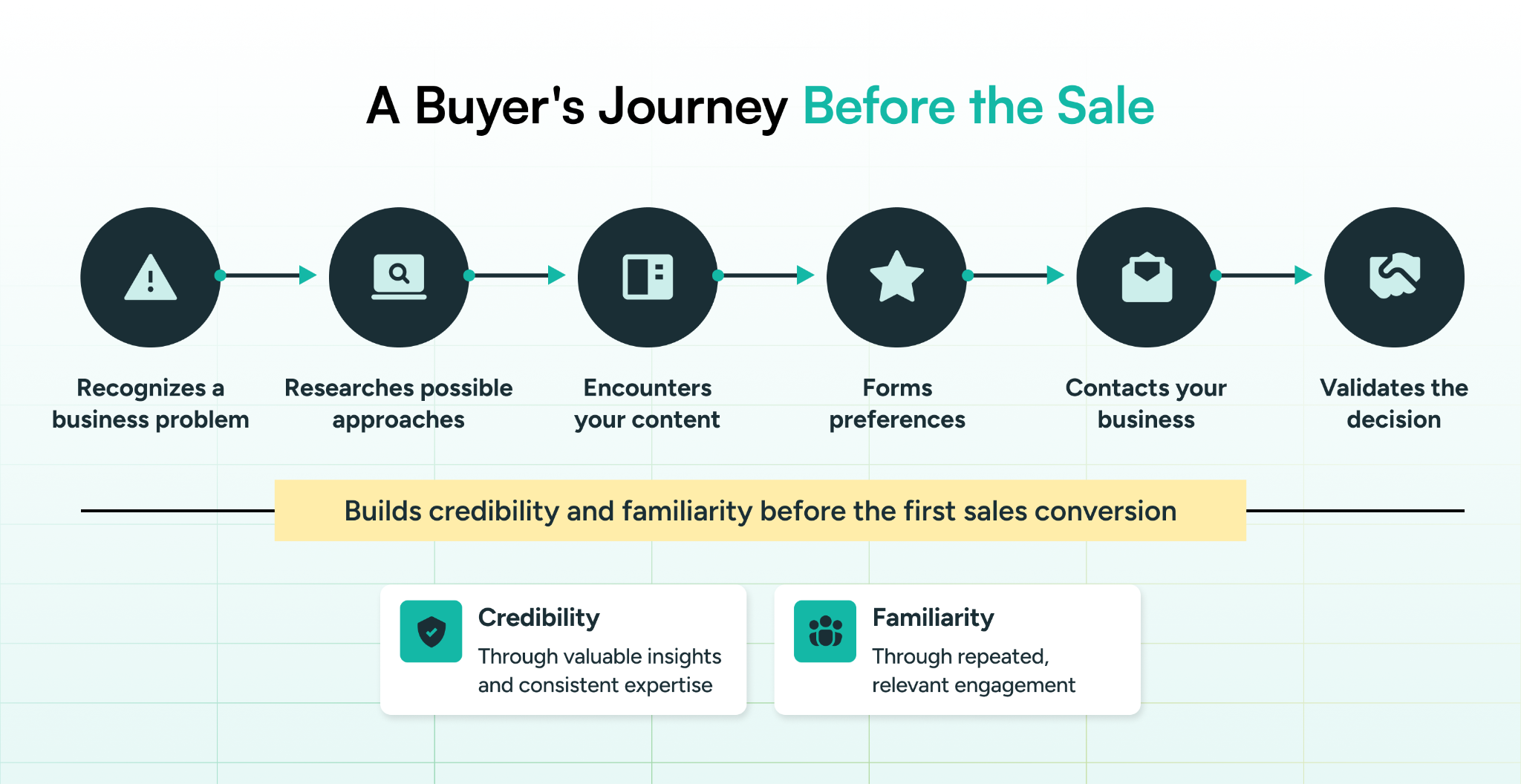
Many assume the sales process begins when a prospect responds to an outreach message, fills out a form, or books a discovery call. From the seller's perspective, that is a convenient starting point. However, the buyer may have spent considerable time researching and evaluating potential providers before making contact.
Consider a founder looking for an agency to support the company's growth. Before contacting any provider, the founder might ask peers for recommendations, read industry discussions, compare approaches, and look at how potential providers explain their work online. By the time the founder agrees to a meeting, they may already have a preference.
According to 6sense's 2025 B2B Buyer Experience Report, based on a global study of nearly 4,000 B2B buyers, 95% of winning vendors were already on the buyer's Day One shortlist, and pre-contact favorites won 80% of the time.
While the study covers B2B purchase behavior across multiple channels, it illustrates that buyers often develop preferences before a formal sales conversation begins. For a business investing in LinkedIn, it gives an opportunity to provide a prospective buyer with the information they need before they decide to actively look for a solution.
They might encounter a post explaining a problem they are struggling with, or see a thoughtful comment you left on an industry discussion. A colleague might recommend your services, prompting them to visit your profile. Or they might recognize your name because they have been reading your work for several months.
These interactions may not generate an immediate inquiry, but they can influence how prospective clients perceive your expertise and which providers they consider when a business need arises.
Familiarity Vs. Trust
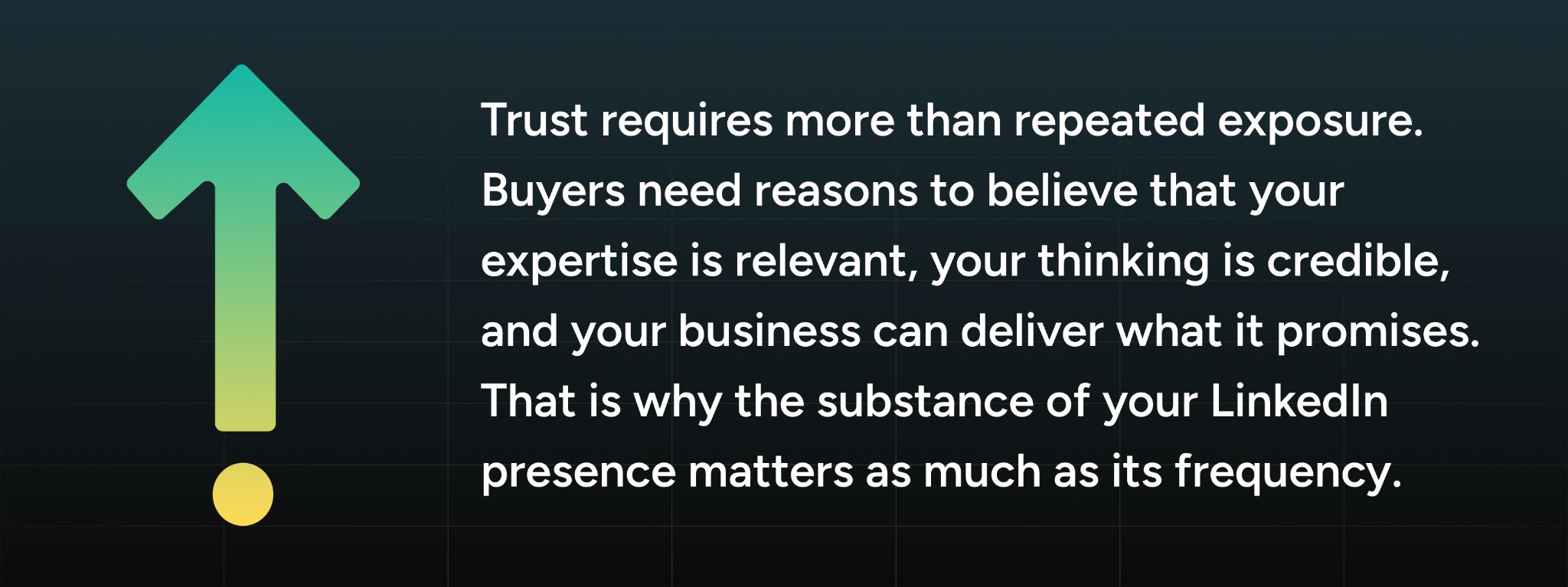
It is tempting to assume that regular visibility automatically builds trust, but there is more to trust than visibility.
A person might recognize your name because you publish frequently, but still have little understanding of what you know or whether you can solve their problem. They might enjoy your posts without seeing a connection between your expertise and their business. They might even agree with your opinions while having reservations about your ability to deliver.
What This Means for Your Lead Generation Strategy
Rather than evaluating LinkedIn only by the leads generated this week, consider the work your presence is doing before a prospect becomes sales-ready.
Are the right people encountering your ideas? Can they understand the problems you solve? Is there enough substance in your content and profile to help them evaluate your expertise? Are you building connections with people who can become clients, introduce you to potential buyers, or help you understand the market?
These questions help you assess how your LinkedIn activity supports business development, even when the results aren't immediately reflected in lead generation metrics.
Don't wait until a prospect is ready to buy before giving them a reason to know your business. Build a credible presence and meaningful professional relationships before a buying need becomes urgent.
Build Credibility Before You Need The Lead
If relationships influence whether people consider a business, the next question is how those relationships begin. The answer starts with what prospective buyers can learn about founders and executives without speaking to them directly. This is where executive personal branding and lead generation intersect.
Start With a Clear Point of View
A founder's LinkedIn presence becomes difficult to remember when it consists entirely of broad business advice that could have come from anyone.
Posts about leadership, growth, innovation, and customer experience may attract attention, but these subjects are widely discussed. What makes your perspective interesting is the experience, judgment, and understanding you bring to the challenges your audience faces.
For example, the founder of a B2B software company might explain why certain digital transformation projects struggle despite having the right technology in place. An executive at a consulting firm could examine the trade-offs involved in entering a new market, while a professional services leader might discuss how an operating model that once worked well can create challenges as a company grows.
Each example offers a way to demonstrate expertise through the interpretation of a real business issue. For a prospective client, this can be a more useful basis for evaluation than a profile that simply lists credentials and services.
Make Your Expertise Easy to Evaluate
When someone discovers your content and decides to visit your LinkedIn profile, they should be able to understand what you do, who you work with, and the experience you bring.
Start with the headline. Does it communicate your role and the business problems you help solve, or does it have a vague description such as “visionary leader” or “growth enthusiast”?
Your About section should explain your expertise, the audience you serve, and the perspective you bring to your work. The Featured section can guide interested visitors toward relevant material, including case studies, original research, interviews, or useful resources. Your recent posts should reinforce your professional positioning and give visitors a consistent sense of the subjects you know well.
This does not mean every element must contain a sales message. In fact, a profile that reads like a permanent advertisement can make it harder for people to understand the person behind the business.
A well-developed profile helps prospective clients assess whether your expertise is relevant to their needs and gives them a clear path to learn more about your business.
Use Content to Demonstrate How You Think
There is a vast difference between announcing that you have expertise and demonstrating it. Saying that your company helps businesses improve their sales processes is a claim. Explaining why a particular sales process breaks down, which assumptions lead to poor decisions, and what an organization should examine before changing its approach demonstrates how you think about the problem.
This kind of content can help a buyer assess your judgment before engaging your services. It also gives people something specific to respond to, question, or share with colleagues.
You don’t need to turn every post into a detailed analysis. Short observations, responses to industry developments, and lessons from professional experience can all contribute to a credible presence. However, the content should ideally reflect a coherent understanding of the problems your audience faces regularly.
Credibility Needs to be Consistent
A single insightful post can attract attention, but people often need several opportunities to engage with your ideas before developing a fuller understanding of your expertise. Publishing consistently allows prospective clients to see how you approach different challenges and gives them more chances to discover your work while researching problems or evaluating potential providers.
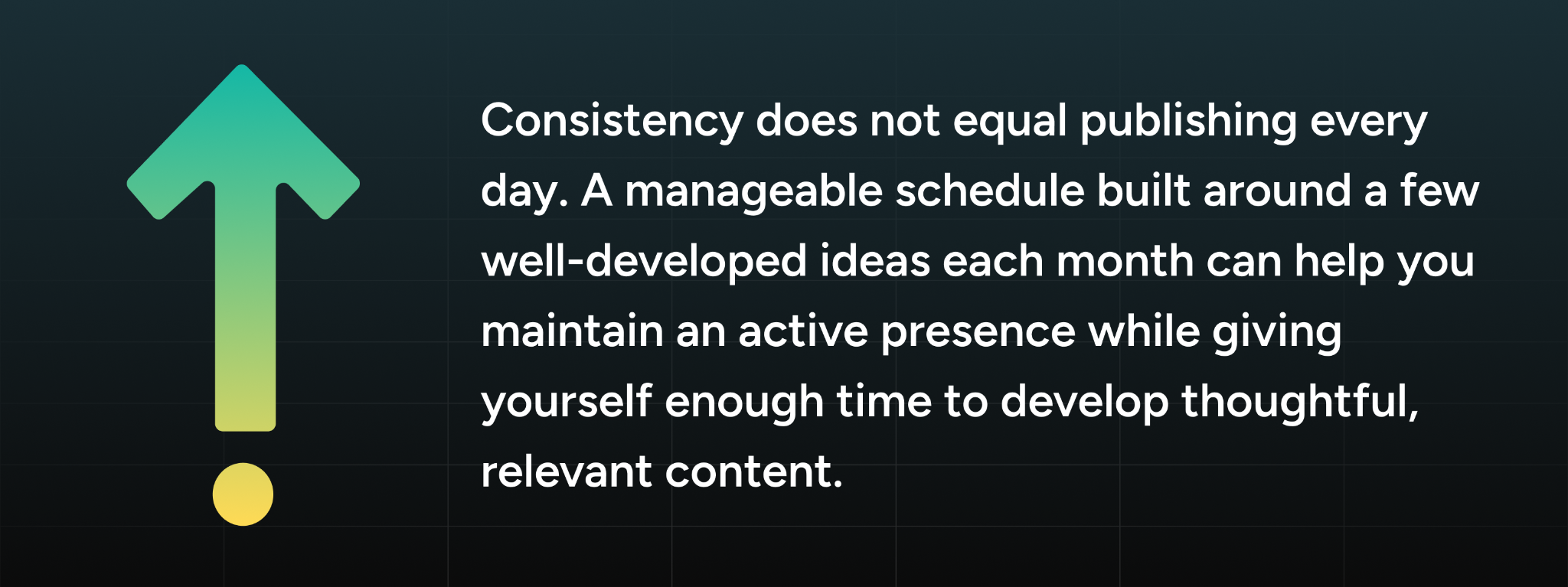
The same principle applies to engagement. A thoughtful contribution to a relevant discussion may be more valuable than dozens of comments on unrelated posts.
Engage Before You Pitch: Turn LinkedIn Interactions Into Meaningful Conversations
A strong profile and useful content can give people a reason to pay attention. But credibility itself doesn't build a relationship. At some point, you need to engage with the people whose work, interests, or business priorities overlap with yours.
LinkedIn comments, replies, and direct messages offer several ways to initiate these conversations. How you approach them can influence the quality of the interactions that follow.
Consider two approaches to engaging with a potential client who has published a post about the challenges of entering a new market.
The first is to comment, “Great insights! We help businesses expand into new markets. Happy to connect.”
Alternatively, you could respond to a specific point in the post, share an observation from your experience, or ask a question that encourages further discussion.
The latter gives the author something meaningful to respond to and demonstrates that you've taken an interest in their perspective. It can also open a conversation around a subject where you have relevant expertise.
Comment With a Purpose Beyond Visibility
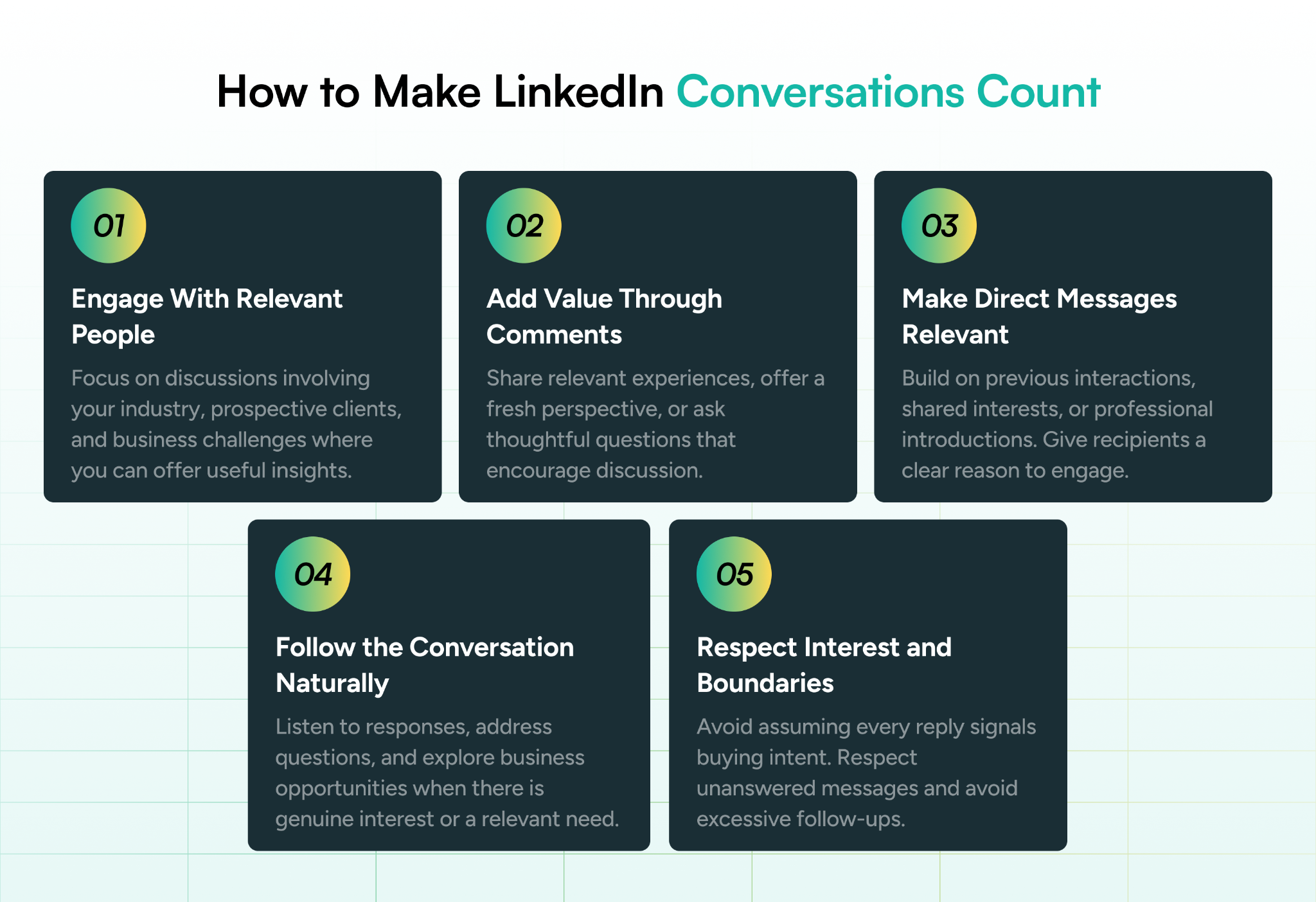
LinkedIn comments can be brief and still contribute meaningfully to a discussion. A relevant observation, a thoughtful question, or an example drawn from your experience may be enough to encourage a productive exchange.
Being selective about where you engage can make these interactions more valuable. Focus on conversations involving your industry, prospective clients, and business challenges where your experience allows you to contribute useful insights.
As people encounter your contributions across different discussions, they have opportunities to become familiar with your thinking and professional interests. Some may visit your profile, respond to your posts, or initiate conversations of their own.
Of course, that outcome is not guaranteed, and a comment should not be judged solely by whether it generates a profile visit. Its immediate value may be the discussion itself. The broader opportunity is that consistent, relevant participation can help you develop professional connections beyond your existing network.
Use Direct Messages to Continue a Conversation
Direct messages are often treated as the point at which lead generation becomes sales. A person accepts a connection request, and the next message asks for a meeting.
That approach can work when there is a clear reason for the conversation. Without that context, it can feel as though the connection request was simply the first step in an automated sales sequence. A better approach is to consider why the recipient would find the message relevant.
Perhaps you have exchanged comments about a business problem. Maybe the person has published research related to your work. You might have met at an event or share an interest in a particular industry issue. These are legitimate starting points for a conversation because they give both people something to discuss.
Conversely, a message that opens with generic praise and immediately requests 15 minutes to discuss a service asks for time before explaining why the conversation is worth having.
There is nothing inherently wrong with reaching out for a commercial reason. A direct conversation about services can be appropriate when there is a relevant need. Being clear about why you're contacting someone and how the conversation could be useful helps establish a more productive exchange.
Pay Attention to the Response
Relationship-building also means knowing how to respond when someone engages. If a person answers your question, continue the discussion rather than immediately redirecting it towards your service. If they ask for more information about your work, provide it clearly. If they indicate that they have a relevant business challenge, you can explore whether a more substantive conversation would be useful.
Equally, respect the absence of interest. A brief response does not necessarily indicate buying intent, and silence should not trigger an endless sequence of increasingly insistent follow-ups.
Use comments and messages to create conversations that have value for both sides to make each interaction relevant enough that a genuine relationship can develop.
Build Relationships Without Expecting Every Interaction to Generate a Lead
One of the most difficult aspects of relationship-led selling is accepting that a useful professional relationship may not produce immediate commercial value.
That can feel uncomfortable when you measure lead generation against monthly targets. A conversation that doesn't lead to a meeting can feel unproductive. A connection with someone who isn't currently buying may seem less valuable than a direct inquiry. But professional networks don't operate on the same timetable as sales campaigns.
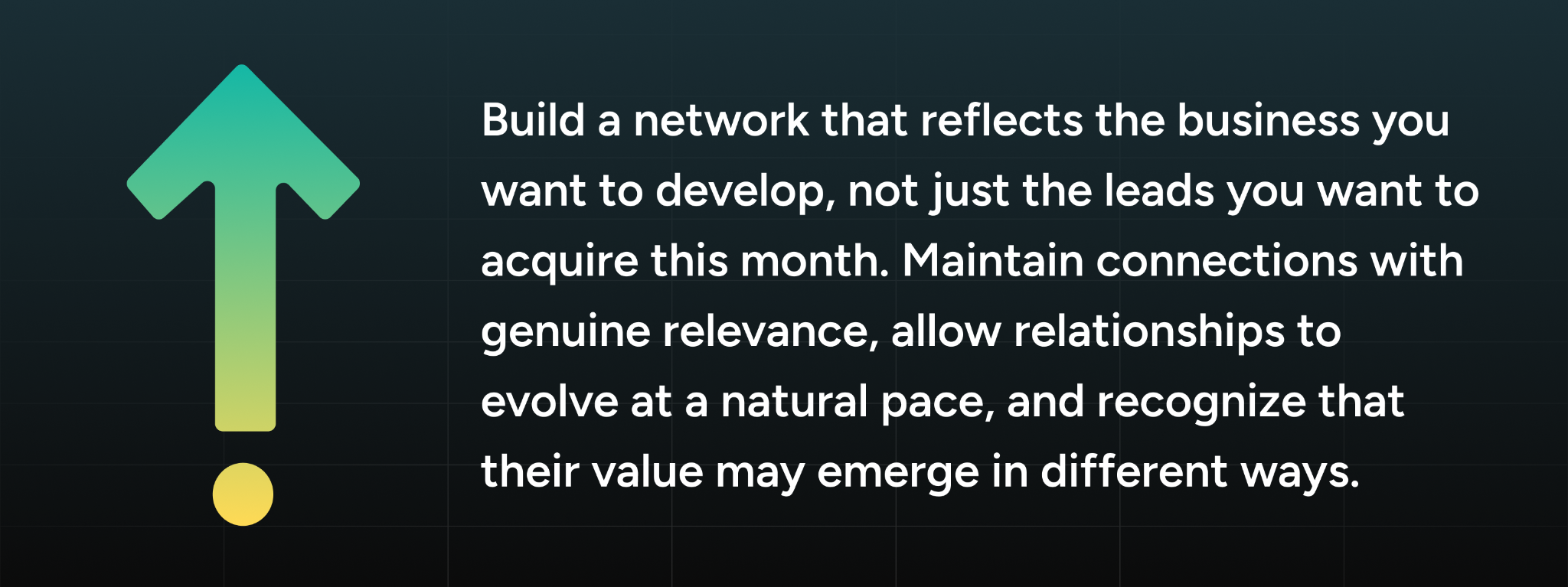
A person you connect with today may become a customer several months later. They might recommend your services to a colleague. They could introduce you to a potential business partner or offer insight into a market you are trying to understand. Or the relationship may never produce a commercial outcome, while still being a worthwhile professional connection.
Give People Reasons to Stay Connected
A relationship becomes easier to maintain when there is a natural reason for people to interact. That reason might be a shared interest in an industry, complementary expertise, a discussion about a common business challenge, or a professional community both people value.
These connections can be maintained on LinkedIn through occasional exchanges, thoughtful comments, sharing relevant resources, and following developments in each other's work.
Relevance should guide these interactions. For example, sharing an article that addresses a question someone raised during an earlier conversation gives them something genuinely useful. Sending unrelated content simply to restart a conversation is unlikely to have the same effect.
Keeping in touch can also be as simple as congratulating someone on a new role, acknowledging a significant professional achievement, or asking about a project they previously mentioned. These gestures are most meaningful when they reflect genuine interest in the other person's work.
The frequency of communication will naturally vary. Some professional relationships involve regular exchanges, while others develop through occasional interactions until a shared interest or business need creates an opportunity to reconnect. Trying to force every connection into the same follow-up schedule can make professional networking feel transactional.
Don't Turn Generosity Into a Transaction
There is a difference between adding value to a relationship and looking for something in return. If you share a useful resource, introduce two people, or offer advice, it should be because the action makes sense in that context. Expecting an immediate referral in return can undermine the trust the interaction was supposed to build.
Commercial etiquette cannot be ignored. Professional relationships can involve mutual benefit, and it is reasonable to recognize when a collaboration or referral arrangement makes sense. But reciprocity develops more naturally when both sides understand the value of the relationship rather than feeling pressured to balance every interaction.
Create LinkedIn Content That Gives People a Reason to Remember You
Content is one of the most visible parts of a LinkedIn strategy, but its role in relationship-led lead generation can be misunderstood. Your content should help the right people understand your business.
A prospective buyer may not be ready to purchase today. They might be exploring a business problem, comparing possible approaches, or trying to understand what a change would involve. Content that helps them make sense of that problem can create a useful connection long before a sales conversation becomes relevant.
This is why a founder's content should be built around the questions their intended audience cares about, rather than a schedule designed solely to maintain activity.
Write About the Problems Your Buyers are Trying to Solve
Start by identifying the decisions, frustrations, and uncertainties your prospective clients encounter.
Useful content helps readers understand why a problem occurs, which assumptions may be contributing to it, and what factors they should examine when considering possible solutions. Drawing on your professional experience can help you explain these challenges with the depth and context that prospective buyers appreciate.
You can share these insights without revealing every detail of your services or processes. By explaining how you approach familiar business challenges, you give readers an opportunity to evaluate your expertise and determine whether your perspective is relevant to their needs.
Use Different Types of Content for Different Purposes
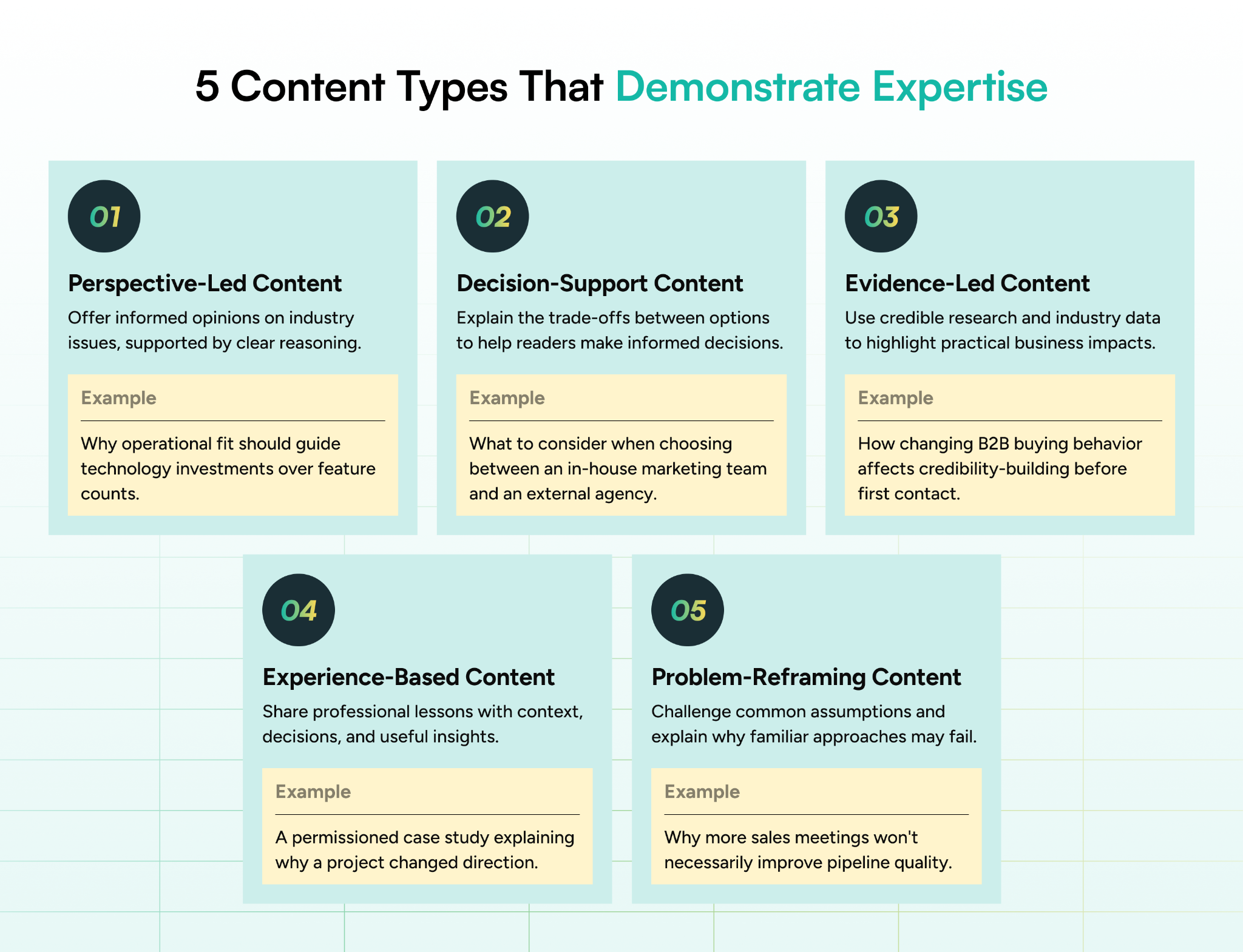
A strong LinkedIn content strategy draws on different types of posts to demonstrate your expertise and address the questions your audience encounters. Some posts can challenge established thinking, while others can help prospective clients evaluate decisions, understand industry developments, or learn from your professional experience.
Individual posts can naturally combine several approaches. You might interpret new research through the lens of your professional experience or use a real business example to explain the trade-offs involved in a decision.
By exploring relevant subjects through different perspectives, you can develop a body of content that reflects the breadth of your expertise and gives prospective clients a clearer understanding of how you approach business challenges.
Make It Easy for People to Continue the Conversation
A post can create an opportunity for engagement, but the way you handle the response is crucial. If someone raises a thoughtful objection, respond to the substance of it. If a reader asks a question, provide a useful answer without immediately directing them to a sales link. If a discussion reveals a genuine business challenge, you may have a reason to explore it further in a private conversation.
Not every post needs a call to action. Some content is valuable because it helps people understand your perspective or remember your expertise. Other posts may appropriately invite readers to download a resource, attend an event, or discuss a specific challenge.
The offer should fit the content and the reader's likely level of interest. Asking someone to book a consultation after every post can make even useful content feel like a sales sequence.
Turn LinkedIn Connections Into Commercial Conversations At the Right Time
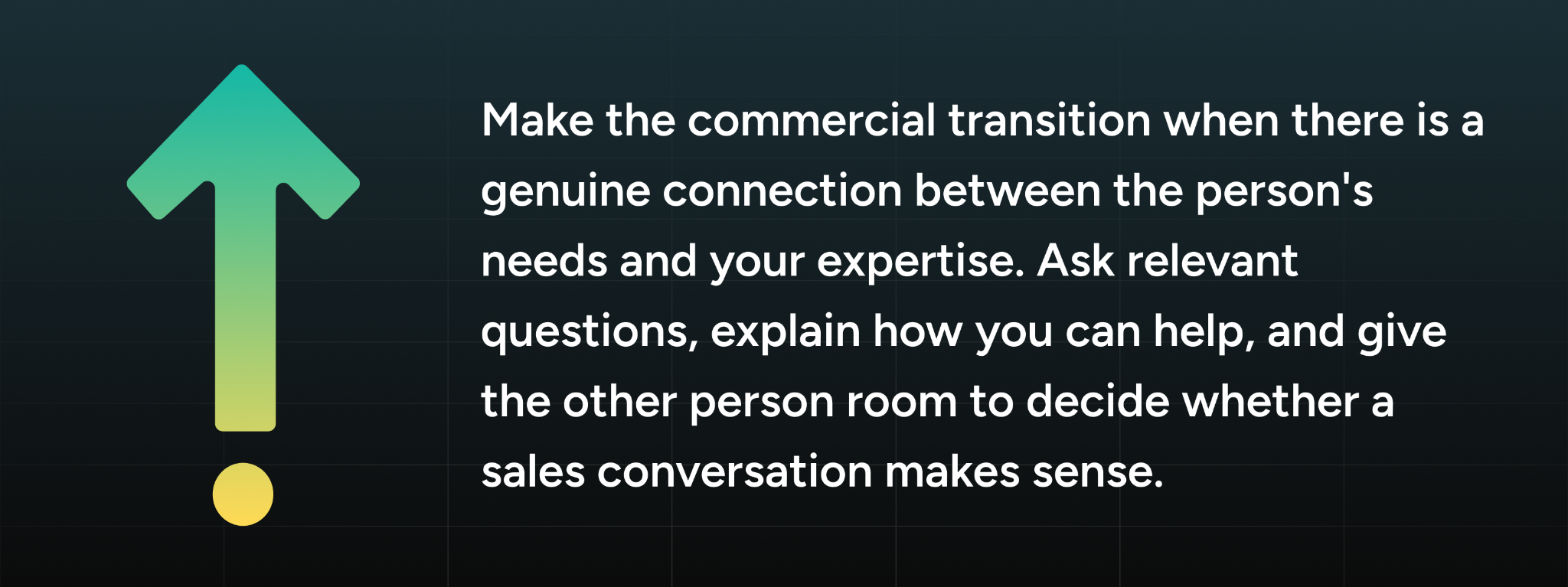
Relationship-led selling does not avoid the sales conversation. It involves recognizing when there is a credible reason to have one.
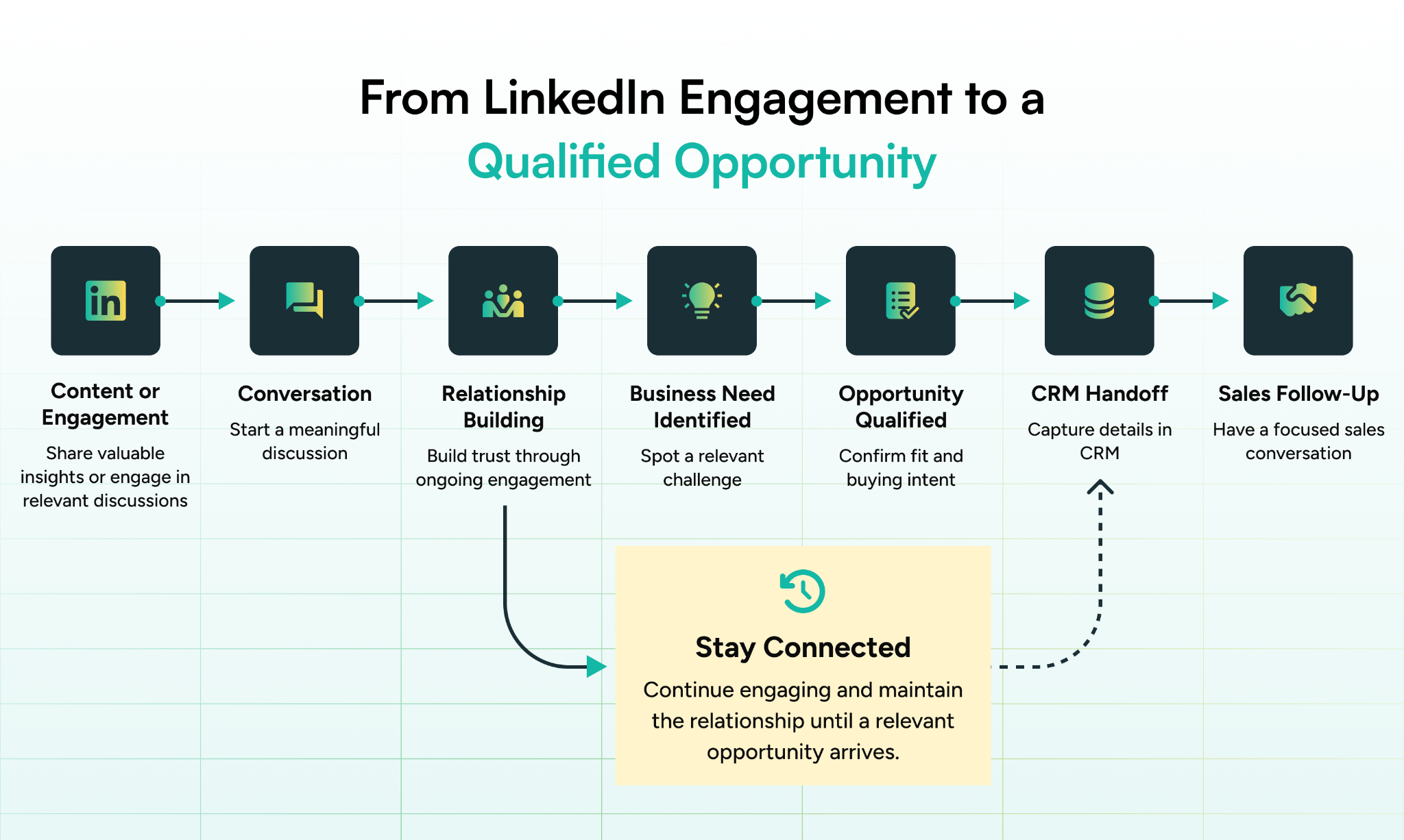
This is significant because relationship-building can become vague advice if it isn't connected to an actual commercial process. Founders and brands still need to identify opportunities, understand buyer needs, qualify prospects, and ask for business. How they move from one stage to the next can influence the outcome.
A person who likes a post isn't necessarily interested in buying. Someone who comments on an industry discussion might be a peer rather than a prospective customer. Even a positive reply to a direct message doesn't automatically mean the recipient wants to hear a pitch.
The ability to recognize the difference between general engagement and evidence of a relevant business need is important.
Look for Context, Not Just Activity
Useful signals include an explicit question about a service, a discussion of a problem your business solves, a request for recommendations, or a change in the person's role or organization that makes your expertise relevant.
Other signals are less conclusive. A single like or profile visit may indicate curiosity, casual browsing, or an unrelated reason for engaging. Even repeated interactions should be interpreted in context.
Using tools like LinkedIn Sales Navigator for lead generation can help identify relevant accounts, monitor changes, and organize prospect research. These capabilities can make it easier to determine whom to approach and when a conversation might be appropriate. However, interpreting these signals still requires professional judgment.
A job change, for example, may create an opportunity to congratulate someone or reconnect, although the person may have no current need for your services.
Make the Commercial Transition Explicit but Natural
Suppose you've been exchanging ideas with a business leader who mentions a challenge your company helps solve. You could acknowledge the issue and ask whether they'd find it useful to compare approaches before discussing a proposal.
For example:
“You mentioned that coordinating regional teams has become difficult as the business expands. We've helped companies work through similar challenges. Would you be open to a conversation about what's happening at your end?”
This message establishes a clear connection between the conversation and your expertise. It also gives the recipient room to decide whether further discussion would be worthwhile.
If they agree, the next step might be a short conversation to understand the problem. If they aren't interested, you can leave the discussion there without damaging the relationship.
Know When Not to Sell
Sometimes a connection is valuable but has no immediate commercial relevance. The person might work in a different industry, have no current need, or simply be interested in a professional exchange.
In those situations, there is no need to force a pitch. Maintain the relationship where it makes sense, and revisit the commercial question if the context changes.
This is not an excuse to spend unlimited time networking without clear priorities. Brands should still allocate their attention deliberately, recognizing that not every interaction needs to produce a sales outcome to justify itself.
Use Events, Partnerships, and Introductions to Extend Your LinkedIn Relationships
LinkedIn relationships don't have to remain confined to the platform. Some of the most valuable opportunities emerge when online interactions create opportunities to meet in person, collaborate, or introduce two people who could benefit from knowing each other.
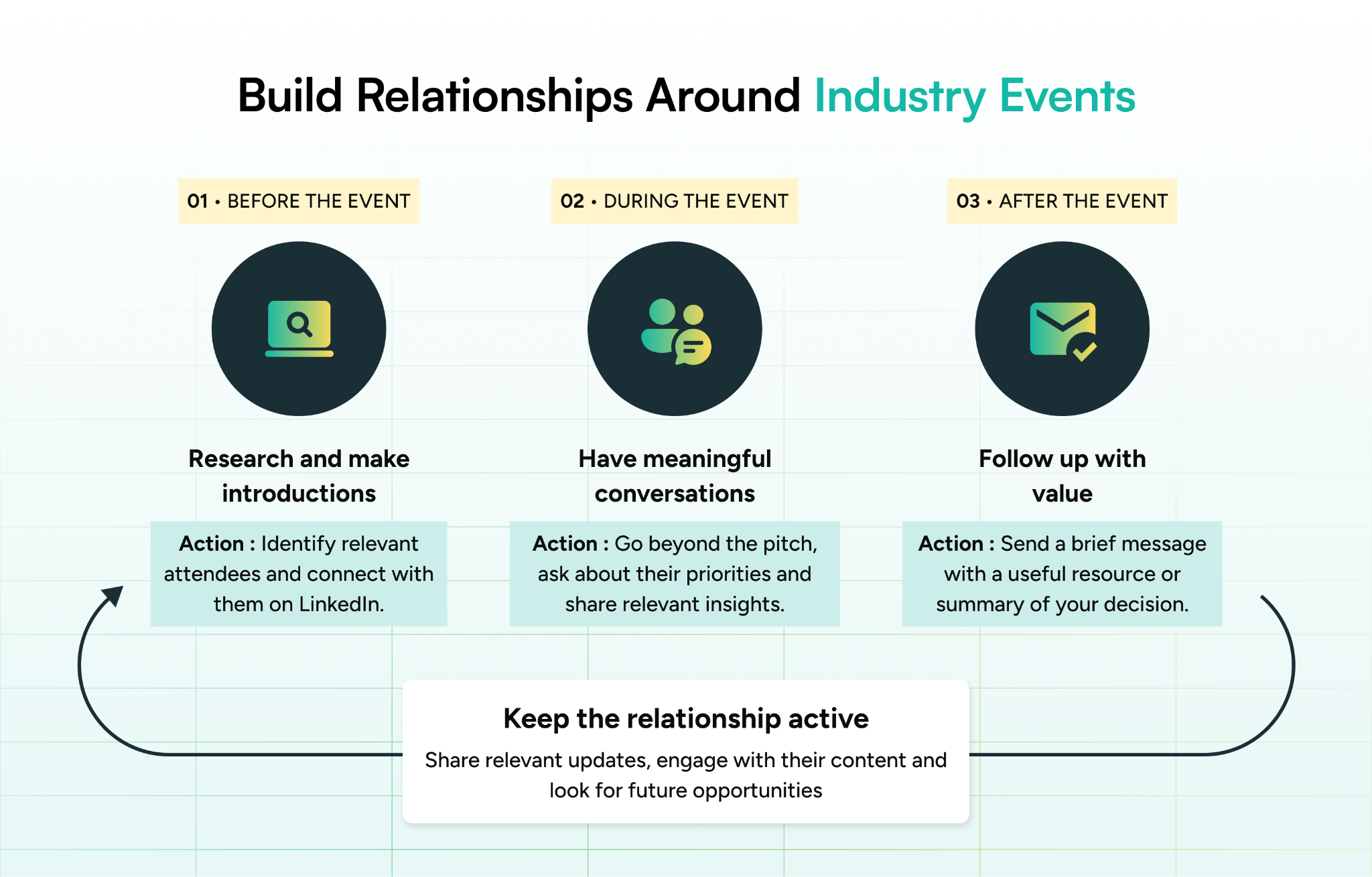
Founders and senior executives often have professional networks that include industry communities, conferences, peer groups, and complementary service providers. LinkedIn can help them make better use of these connections by learning about people before meeting them, continuing conversations afterward, and maintaining relationships that might otherwise fade between events.
Use LinkedIn to Prepare for Events
Conferences and industry events can bring together people who share business interests but have little time to establish meaningful connections. A relationship-led approach begins before the event itself.
If an attendee list is available, identify people whose work is relevant to your business. Look at their roles, companies, and recent professional activity. Where there is a genuine reason to connect, engage with their content or send a short message explaining that you'll be attending the same event.
For example:
“Hi Alex, I saw that you'll be attending the upcoming industry summit. I'm interested in the discussion around expanding into new markets and the operational challenges involved. If you have time during the event, it would be good to exchange perspectives over coffee.”
The invitation has a clear context. It doesn't require the recipient to agree to a sales meeting, and it gives both people a reason to have a conversation.
Once you're at the event, focus on understanding what people are working on and what matters to them. A useful conversation may reveal a potential collaboration, a business challenge, or simply a shared interest worth pursuing.
Afterwards, use LinkedIn to continue the discussion. Refer to something you actually talked about, share a resource if it is relevant, or suggest a next step if there is a clear reason to do so.
Every contact doesn’t have to turn into a lead. Make the initial interaction the beginning of a relationship rather than an isolated exchange of contact details.
Build Partnerships With Complementary Businesses
Partnerships offer another way for LinkedIn relationships to generate opportunities.
Consider two service providers who work with similar clients but solve different problems. A design consultancy might work with companies that also need specialist technology support. A leadership adviser might serve organizations that need executive communications expertise. A marketing agency might collaborate with a research firm whose work strengthens its clients' strategic decisions.
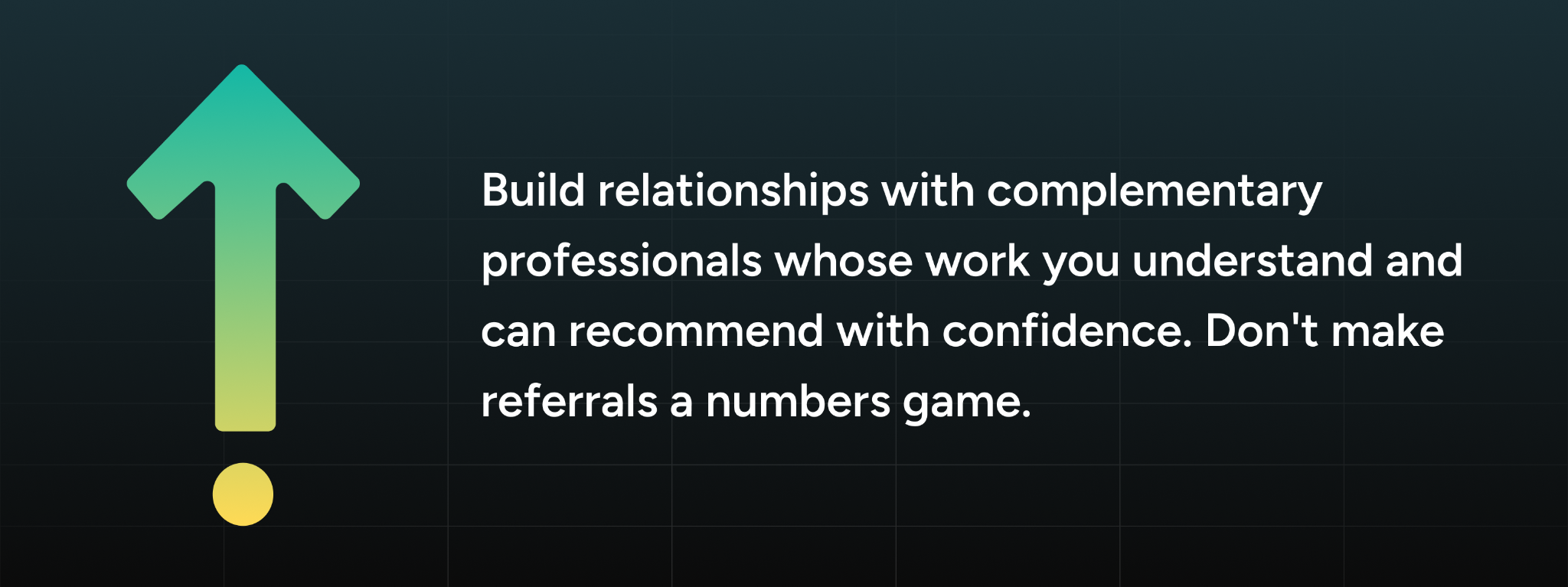
These businesses have a reason to know each other's work. When they understand each other's expertise and have confidence in the quality of delivery, they may be able to recommend each other to clients who need complementary services. Trust is essential to making these recommendations valuable.
A referral is not just a name passed between two contacts. The person making the introduction is putting some of their own credibility behind the recommendation. If the service provider disappoints, that can affect the referring professional's relationship with the client.
This is why partnerships should be built around genuine understanding of each other's capabilities, appropriate client fit, and confidence in delivery. Exchanging referrals simply because two businesses have agreed to do so is unlikely to create the same value.
Remember That Trust Can Travel Through a Network
An established professional relationship can make an introduction more meaningful than an unsolicited message. The person making the introduction may be able to explain why the two parties should speak, establish a degree of confidence, and provide useful context for the conversation.
The prospective client will still need to evaluate the provider's expertise and suitability. A recommendation can open the door, but the provider must demonstrate that their approach fits the client's needs.
LinkedIn makes it easier to maintain these professional connections and identify potential introductions. The trust behind a valuable recommendation, however, develops through professional experience and genuine relationships.
Treat events and partnerships as extensions of your relationship-building efforts. Use LinkedIn to prepare, connect, and follow up, and build referral relationships with professionals whose work you understand and trust.
Create a Relationship-led Lead Generation System That Fits an Executive's Schedule
A relationship-led approach can sound time-consuming, especially for founders and executives who already have demanding schedules.
There is content to create, people to engage with, messages to answer, events to attend, and relationships to maintain. Without a clear process, these activities can become another collection of tasks competing for an executive's attention.
While some administrative tasks can be automated, meaningful professional interactions still require human attention and judgment. Build a system that makes the work manageable while preserving the judgment and personal engagement that give relationships their value.
Decide Which Relationships Require Greater Attention
Identify the people and communities most relevant to your business. This includes potential buyers who fit your ideal customer profile, along with peers, complementary service providers, existing clients, and industry connectors who may contribute to future opportunities.
You can use LinkedIn searches, Sales Navigator, event programs, and your existing network to identify these groups. Keeping the focus on relevant connections makes it easier to prioritize your efforts without trying to account for everyone who might conceivably become a client.
Consider what a useful relationship would look like for each group. With a prospective buyer, it might involve understanding their business priorities and establishing relevant expertise. With a potential partner, it could mean learning how their services complement yours. With an existing client, it may involve maintaining the relationship and identifying opportunities to help as their needs evolve.
This gives your networking activity a business purpose without making every interaction transactional.
Establish a Sustainable Weekly Routine
A manageable LinkedIn routine can help executives maintain a consistent presence without taking too much time away from their other responsibilities. It might include a few recurring activities:
- Review relevant industry discussions and identify posts worth responding to.
- Publish or contribute to content that demonstrates expertise in the problems your business solves.
- Continue conversations that have a clear reason to progress.
- Research a small number of relevant people or accounts.
- Follow up with event contacts, peers, and potential partners when there is something useful to discuss.
- Review which interactions are creating meaningful relationships or commercial opportunities.
The appropriate frequency depends on the executive's role, audience, and available time.
Use Tools to Support Relationships
Sales Navigator can help with account research, saved searches, and relevant alerts. A CRM can preserve the context of previous conversations and make it easier to coordinate follow-ups. Content planning tools can help executives and their teams develop ideas without requiring the executive to manage every production task.
Automation can be useful for administrative work, such as organizing information or maintaining internal workflows. It becomes less useful when it creates generic messages that pretend to be personal or continues contacting people regardless of their response.
A relationship-led system should preserve the distinction between tasks that can be delegated and interactions that require genuine judgment.
A content team can research industry developments, develop draft posts, and organize a publishing calendar. The executive should still contribute the experience, opinions, and expertise that make the content credible. A business development team can research potential partners and maintain records, but an introduction or sensitive conversation may require the executive's personal involvement.
This division of work allows the business to scale its efforts without turning professional relationships into an impersonal sequence of automated touches.
Create a Clear Handoff When a Relationship Becomes an Opportunity
When a conversation develops commercial relevance, the next step should be clear.
Who follows up? What context needs to be recorded? Who is responsible for qualifying the opportunity? How will the executive remain involved without becoming the bottleneck?
Defining these responsibilities early helps prevent promising opportunities from getting lost across private messages and informal conversations.
A simple workflow can capture the contact's business context, the issue discussed, the next action, and the person responsible for it. The CRM should help the team maintain continuity and recognize when a contact is ready for a sales conversation, without pushing every new connection into an immediate sales sequence.
A repeatable process can make relationship-building more manageable as your network grows. Use tools to support research, preserve context, and coordinate follow-ups, while keeping the conversations themselves relevant, thoughtful, and personal.
Measure Relationship-led Lead Generation Without Reducing it to Vanity Metrics
A relationship-led approach creates a measurement challenge. Some outcomes, such as a new inquiry or a booked meeting, are relatively easy to track. Others, such as becoming a trusted contact or being remembered when a colleague needs a recommendation, are harder to attribute to a specific interaction.
That doesn't mean relationship-building should remain unmeasured. It means the measurement system needs to reflect both the progress of relationships and their eventual contribution to the business.
Separate Activity From Progress
Connection requests sent, comments published, and messages exchanged tell you what your team has done. They don't tell you whether the activity has produced useful relationships.
A high volume of outreach may generate few relevant conversations, while a smaller number of thoughtful interactions may lead to a valuable introduction or a qualified opportunity.
Neither volume nor quality should be assessed in isolation. Understand which activities are contributing to business outcomes and where time is being spent without a clear return.
Track the Path to the Opportunity
When an opportunity emerges, record what contributed to it. Did the prospect respond to a post? Did a professional introduction lead to the first meeting? Had the executive and prospect been exchanging ideas for several months? Did an event create the connection that eventually became a client relationship?
This context helps the business understand how opportunities develop. However, attribution requires care. A buyer may encounter a post, read a website, attend an event, speak with a colleague, and receive a direct message before making contact. Assigning the entire outcome to the last interaction can obscure the contribution of everything that came before it.
Where practical, combine CRM records with information from the prospect about how they discovered and evaluated the business. Review patterns across multiple opportunities to identify which activities and interactions are contributing to meaningful results.
Give Long-term Relationships Time to Produce Results
Not every useful relationship will generate revenue within a reporting month or quarter, especially when the service involves significant investment, multiple decision-makers, or a lengthy evaluation process.
Tracking both leading indicators and commercial outcomes helps account for these longer buying cycles. Meaningful conversations and relevant introductions can indicate progress, but they should be assessed separately from revenue.
Over time, the business should be able to assess whether its LinkedIn activity is helping it reach the right people, establish more relevant conversations, and create commercially valuable opportunities.
Conclusion
Effective LinkedIn lead generation requires a clear understanding of the people you want to reach, the challenges they face, and the relationships that can create business opportunities over time. Thoughtful content, meaningful conversations, and consistent engagement help establish credibility, while a structured approach ensures these efforts contribute to your broader business development priorities.
At GrowedIn, we help enterprises build a credible LinkedIn presence through strategic content and professional engagement. If you're looking to make LinkedIn a more effective channel for brand presence, credibility, and generating qualified leads, book a call to discuss how we can help.

Frequently Asked Questions
How does LinkedIn help generate leads?
LinkedIn helps businesses identify relevant decision-makers, demonstrate expertise, build professional relationships, and create opportunities for commercial conversations. Its value also comes from the trust and familiarity developed through consistent engagement over time.
Is LinkedIn lead generation still effective in 2026?
Yes. LinkedIn remains useful for lead generation, but relying solely on connection requests and automated sales messages can limit results. A stronger approach combines relevant content, meaningful engagement, targeted networking, and timely conversations.
What type of LinkedIn content attracts potential clients?
Content that addresses genuine business challenges tends to be more useful than generic promotional posts. Industry insights, practical advice, original perspectives, customer case studies, and lessons from professional experience can help prospective clients assess your expertise.
How can enterprise teams use LinkedIn to generate leads?
Enterprise teams can use LinkedIn to share industry insights, demonstrate their organization's expertise, engage with prospective buyers, and build relationships with people who influence business decisions. Their LinkedIn presence should also clearly communicate their capabilities, industry knowledge, and the business challenges they help clients address.
Should businesses use LinkedIn automation for lead generation?
Automation can help with research, prospect organization, and routine administrative tasks. However, automated comments, generic connection requests, and mass messaging can make interactions feel impersonal. Human judgment and genuine engagement should remain central to relationship-building.
How do you turn LinkedIn connections into paying clients?
Building familiarity and understanding the other person's business priorities can create opportunities for commercial conversations. When a relevant need emerges, explore the challenge and discuss whether your expertise can help. Some connections may develop into client relationships, while others remain valuable professional contacts.
How can you measure the success of LinkedIn lead generation?
Look past impressions, follower counts, and connection requests. Track relevant conversations, meaningful engagement from target accounts, qualified opportunities, referrals, meetings, pipeline contribution, and revenue influenced by LinkedIn activity.
LinkedIn Lead Generation Strategies
- Effective LinkedIn lead generation builds credibility and professional relationships that create opportunities beyond direct sales outreach.
- Buyers, especially those involved in B2B purchases, often evaluate potential providers before making contact, making early visibility and demonstrated expertise essential.
- A credible LinkedIn presence combines clear professional positioning, relevant industry insights, and consistent, valuable content.
- Thoughtful comments, personalized messages, and genuine conversations help develop relationships with prospective clients and industry peers.
- Long-term networking, industry events, strategic partnerships, and trusted referrals can create opportunities beyond immediate sales prospects.
- Commercial conversations are most productive when genuine business needs emerge, and there is a clear reason to discuss solutions.
- A sustainable lead generation system combines focused networking, team collaboration, CRM tools, and selective automation without sacrificing personal engagement.
- LinkedIn success should be measured through meaningful relationships, qualified opportunities, pipeline contribution, and revenue, alongside activity metrics.


Insights Hub
How to Build a LinkedIn Brand That Isn't Founder-Dependent
LinkedIn Company Page Audit