73% of B2B decision-makers say thought leadership is a more trustworthy way to evaluate a company's capabilities than its marketing materials and product sheets. Even more telling, 47% of business buyers say thought leadership has led them to do business with a company they hadn't previously considered.
For founders and executives, it’s worth paying attention to this buyer sentiment.
Buyers no longer rely solely on websites, sales decks, or case studies to form opinions. They're looking to leadership for insights, expertise, and perspective. The way you show up on LinkedIn influences how your company is perceived and whether it makes the shortlist when buyers begin evaluating potential partners.
Building a LinkedIn personal brand means becoming a credible voice in the conversations your customers already care about.
What Is LinkedIn Personal Branding?
For founders and executives, your personal brand is often the first impression people have of both you and your business. Before someone books a meeting, applies for a role, or responds to your outreach, they're likely to evaluate your profile, your content, and the perspectives you share.
As information becomes easier to access, expertise alone is no longer enough. The people who consistently share valuable insights and perspectives are often the ones buyers remember and trust.
A strong LinkedIn personal brand is built by consistently demonstrating expertise through the ideas you share, the conversations you join, and the value you provide to your network.
At its core, LinkedIn personal branding helps you:
- Build authority by consistently sharing valuable insights and perspectives.
- Become known for your expertise, not just your job title.
- Build trust at scale, allowing prospective buyers to understand how you think before they ever speak with you.
- Create opportunities for partnerships, speaking engagements, inbound leads, and hiring conversations.
Think of your LinkedIn profile as an extension of your professional reputation. Your résumé tells people what you've done. Your LinkedIn presence shows them how you think. And in today's B2B environment, that difference can determine whether someone chooses to start a conversation with you or with a competitor.
Why LinkedIn Personal Branding Matters to Founders
LinkedIn has evolved from a networking platform into one of the most influential trust-building channels. Today's buyers don't just evaluate products; they evaluate the people behind them. Before booking a demo or replying to an email, they're often researching founders, executives, and leadership teams.
Buyers Research Leaders, Not Just Companies
Prospects explore LinkedIn profiles, read recent posts, and assess whether leadership demonstrates genuine expertise.
According to LinkedIn's Trust Advantage report, 88% of B2B buyers say seller engagement is valuable during the consideration stage. For founders and executives, that's an opportunity to influence how buyers perceive both them and their business before a sales conversation begins.
Relationships Drive Modern B2B
Buyers ultimately choose businesses, but the confidence to engage often begins with the people behind them. A founder who consistently shares thoughtful insights, responds to industry conversations, and demonstrates expertise becomes more familiar to potential buyers over time. By the time those buyers are ready to evaluate solutions, they may already have a stronger understanding of the company's perspective and capabilities. That familiarity can make it easier to start conversations and build meaningful business relationships.
AI Has Made Authentic Expertise More Valuable
AI has made creating content easier than ever. Original thinking, however, remains difficult to replicate.
As more businesses publish AI-assisted content, founders who share real experiences, customer insights, and informed opinions become more memorable. Your perspective is your competitive advantage.
The Five Pillars of a Strong LinkedIn Personal Brand
A successful LinkedIn presence isn't built by posting more often. It's built by getting the fundamentals right.
1: Build a Credible Profile
Before someone spends time reading your content, they visit your profile.
Think of it as your digital executive summary. A weak profile creates friction, no matter how strong your posts are.
A high-converting profile should include:
- A headline that communicates expertise, not just a job title
- A banner that reinforces your brand or value proposition
- An About section focused on your experience and perspective
- A Featured section showcasing your best content, media, or case studies
- A complete Experience section that demonstrates credibility
Great content may earn profile visits, but a strong profile turns visitors into followers, connections, and opportunities.
2: Become Known for Something
People don’t remember creators who talk about everything. They're more likely to remember those who become associated with a specific area of expertise.
For example, a SaaS founder might consistently write about:
- Leadership
- Scaling a business
- Hiring and culture
- Product development
- Customer insights
- Industry trends
These recurring themes become your content pillars and help establish executive thought leadership over time.
3: Tell Stories, Don't Make Announcements
Company updates are easy to scroll past. Stories give people context, reveal your thinking, and make ideas more memorable.
Instead of saying, "We launched a new feature," try sharing the journey behind it:
"After hearing the same customer frustration in more than 40 sales calls, we realized our product needed to change. Here's what we learned."
Some of the best founder content comes from:
- Customer conversations
- Difficult decisions
- Lessons from failures
- Leadership challenges
- Behind-the-scenes moments
People remember stories because they understand the thinking and lessons behind them.
4: Conversations Beat Broadcasting
Publishing is only half the job. Founders who consistently build influence also spend time participating in conversations.
That means:
- Replying to comments
- Asking follow-up questions
- Commenting on industry discussions
- Supporting employees' content
- Building relationships with peers
LinkedIn's algorithm rewards meaningful interactions, but more importantly, so do people.
5: Consistency
One great post won't establish authority. Consistently sharing valuable insights over weeks and months will. Think in 90-day cycles, not daily performance.
Instead of chasing virality, focus on becoming a reliable source of useful ideas. Compounding credibility is far more valuable than a single spike in engagement.
Building a LinkedIn Content Strategy
Many founders struggle because they post whenever inspiration strikes.
A content strategy removes that guesswork by defining a handful of themes you can return to consistently.
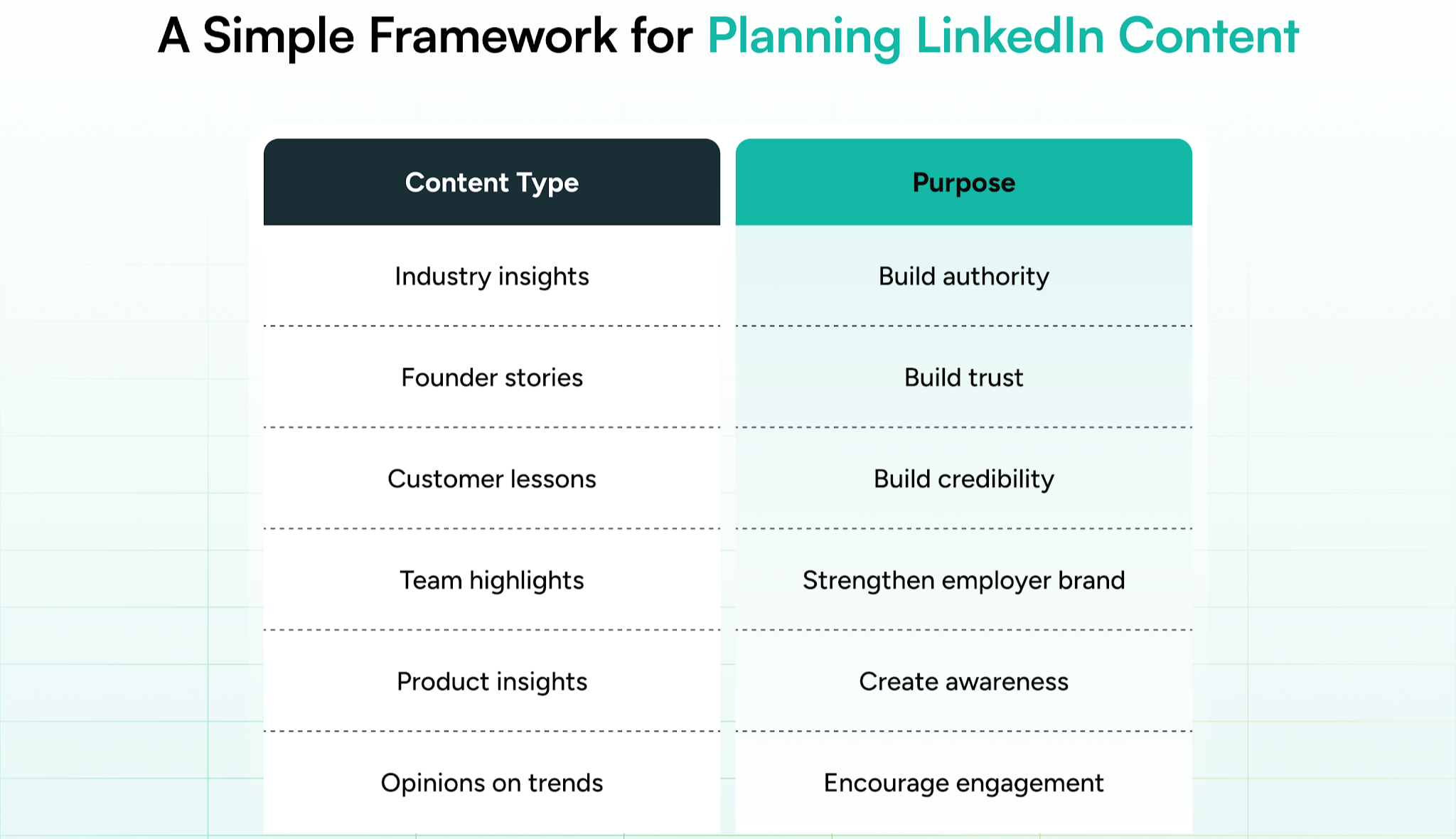
A simple rule to follow is the 80/20 principle:
- 80% educational, insightful, or conversation-starting content.
- 20% promotional content about your company, product, or services.
When promotion becomes the exception rather than the norm, audiences are far more receptive to it.
Common Mistakes Founders Make
Even experienced leaders can unintentionally weaken their LinkedIn presence. The good news is that most of these mistakes are easy to correct once you recognize them.
Watch out for these common pitfalls:
- Treating LinkedIn like a company news feed
- Posting inconsistently, then disappearing for weeks
- Writing in a corporate, jargon-heavy tone
- Ignoring comments and conversations
- Covering too many unrelated topics instead of building expertise in a few core areas
- Failing to establish a clear area of expertise
- Leaving key sections of your profile incomplete
The goal isn't perfection is to build a LinkedIn presence that's clear, consistent, and genuinely useful to the people you want to reach.
Where LinkedIn Ghostwriting Fits In
Most founders have ideas worth sharing. What they often don't have is the time to turn those ideas into a consistent stream of high-quality content.
A good ghostwriter doesn't manufacture opinions or create a polished online persona that doesn't reflect the founder. Instead, they help founders articulate their ideas through interviews, strategic planning, and editorial support while preserving their unique voice and perspective.
The result is:
- Consistent publishing
- Clear and authentic thought leadership
- A recognizable writing style
- More time to focus on running the business
Don't Ignore Your LinkedIn Company Page
A founder's profile and a company page aren't competing assets; they complement each other.
Founders create visibility, build relationships, and start conversations. Company pages reinforce credibility, showcase the business, and provide the information prospective buyers often look for before taking the next step.
An effective LinkedIn strategy brings together:
- Founder thought leadership
- Consistent company page management
- Employee advocacy
- Consistent messaging across leadership and brand channels
Together, they create a stronger, more credible presence than either could achieve alone.
How to Measure LinkedIn Personal Branding Success
The success of LinkedIn personal branding isn't measured by follower count alone. Instead of chasing vanity metrics, focus on outcomes that signal growing influence.
Look for increases in:
- Qualified inbound leads
- Profile views from your target audience
- Speaking invitations
- Podcast appearances
- Partnership opportunities
- High-quality conversations in your DMs
- Employee engagement with your content
The ultimate goal is to become the person your ideal customers think of when they need your expertise.
Conclusion
The founders who stand out aren't always the loudest. They're the ones who consistently share valuable ideas, build trust through authentic conversations, and show up with a clear point of view.
If building that kind of presence feels challenging while running a business, GrowedIn can help. We work with founders to turn their expertise into greater visibility and thought leadership, helping them build stronger networks and create meaningful business opportunities.
Book a strategy call to discuss how to build a LinkedIn presence that supports your business goals, not just generates social media activity.

Frequently Asked Questions
What is LinkedIn personal branding?
LinkedIn personal branding is the process of building a professional reputation through your profile, content, and interactions. It helps founders and executives demonstrate expertise, establish credibility, and become known for specific areas of knowledge within their industry.
Why is LinkedIn important for founders and executives?
LinkedIn helps founders and executives build trust before a sales conversation begins. By sharing insights and engaging with their network, they can increase visibility, strengthen credibility, attract business opportunities, and position themselves as thought leaders in their industry.
How often should founders post on LinkedIn?
Consistency matters more than frequency. For most founders, publishing two to four high-quality posts per week while actively engaging with comments and industry conversations is enough to build visibility and maintain a strong LinkedIn presence.
Can LinkedIn generate B2B leads?
Yes. A strong LinkedIn presence can generate qualified B2B leads by building trust, demonstrating expertise, and staying visible to potential buyers. Over time, valuable content can attract inbound inquiries, partnerships, and business opportunities.
Should founders manage a LinkedIn company page too?
Absolutely. While personal profiles often drive conversations and engagement, company pages reinforce credibility by showcasing products, company updates, culture, and employer branding. The most effective LinkedIn strategies combine both rather than treating them as separate channels.
How long does it take to build a personal brand on LinkedIn?
Building a meaningful personal brand is a long-term effort. Most founders begin seeing increased visibility and engagement within a few months of consistent posting, but establishing lasting authority and recognition typically takes six to twelve months or more.
The Ultimate Guide to LinkedIn Personal Branding for Founders and Executives
- LinkedIn personal branding is about building authority and trust, not just posting content.
- Modern B2B buyers research founders and executives before engaging with a company.
- A credible LinkedIn profile lays the foundation for every content and networking effort.
- Consistent thought leadership helps you become known for a specific area of expertise.
- Stories, insights, and real experiences outperform promotional company updates.
- Meaningful conversations and engagement are just as important as publishing content.
- A focused LinkedIn content strategy with clear content pillars delivers better long-term results than posting reactively.
- LinkedIn ghostwriting enables busy executives to build a consistent presence without sacrificing authenticity.
- The strongest LinkedIn strategy combines executive visibility with effective company page management and employee advocacy.
- Success should be measured by business outcomes like qualified leads, partnerships, speaking opportunities, and industry influence, not just follower count or viral posts.


Insights Hub
The Best Time To Post on LinkedIn In 2026
Personal Branding vs. PR: What Should Executives Prioritize?