Search for the best time to post on LinkedIn, and you'll run into a problem. HubSpot has published its own recommendations. Buffer has analyzed over 4.8 million LinkedIn posts. Taplio has its own data, and Sprout Social has released its studies based on engagement patterns across industries.
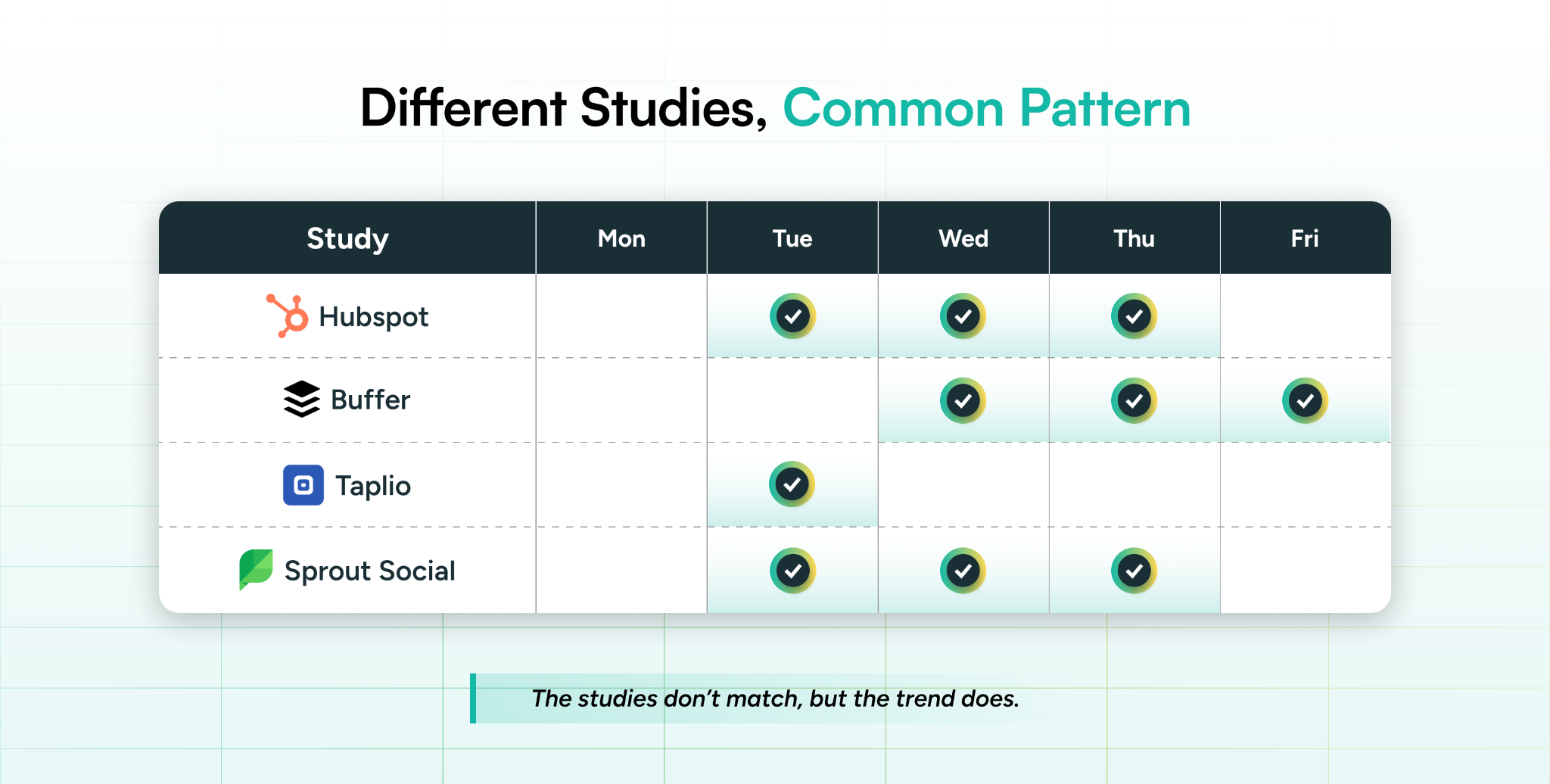
Yet, their conclusions don't perfectly match. One study might recommend Tuesday mornings, while another may favor midweek afternoons. Some may emphasize business hours, and others focus on specific engagement windows.
They can't all be describing the exact same ‘best time’, but they aren’t all wrong either.
There is some truth to the argument that some time windows are better than others to post on LinkedIn. These windows tend to perform well for certain audiences, industries, and goals.
Therefore, the question needs to be reframed from ‘When should I post on LinkedIn?’ to: ‘What outcome am I trying to achieve, and when is my audience most likely to pay attention?’
In this guide, we'll look at the common posting windows identified by major LinkedIn studies, why their findings tend to differ, and how to determine the best posting schedule for your own audience.
The Best Time to Post on LinkedIn
If you strip away the noise from multiple industry analyses and look only at the patterns, you’ll notice a fairly consistent window.
Most posts that perform well on LinkedIn tend to cluster around midweek working hours, when professionals are active but not overloaded.
Common High-Performing Windows
- Tuesday: 11 AM–5 PM
- Wednesday: 11 AM–4 PM
- Thursday & Friday: 1 PM–5 PM
These windows often coincide with points in the workday when professionals are:
- Settled into their workday and not rushing through meetings
- More receptive to content that requires a little more time and attention
- Actively browsing LinkedIn between tasks rather than passively scrolling
In other words, a good posting time comes down to when the people you want to reach are most likely to have the time and attention to engage, not some universally favored hour in the algorithm.
What’s Driving This Pattern
Across large-scale platform analyses, one underlying behavior is repeatedly observed: LinkedIn engagement tends to spike when professional activity is high, but cognitive load is moderate.
That typically happens when:
- The workday has started, but not peaked
- Meetings are spaced out rather than continuous
- Users are checking LinkedIn as a “productive break” rather than a rushed distraction
This may also help explain why midweek appears so frequently in recommended posting schedules, while the beginning, end, and weekend tend to be less consistent:
- Mondays: Professionals may be catching up on emails, meetings, and priorities for the week.
- Fridays: Attention may begin shifting toward wrapping up the week and completing outstanding work.
- Weekends: Professional activity on LinkedIn tends to be lower than during the workweek.
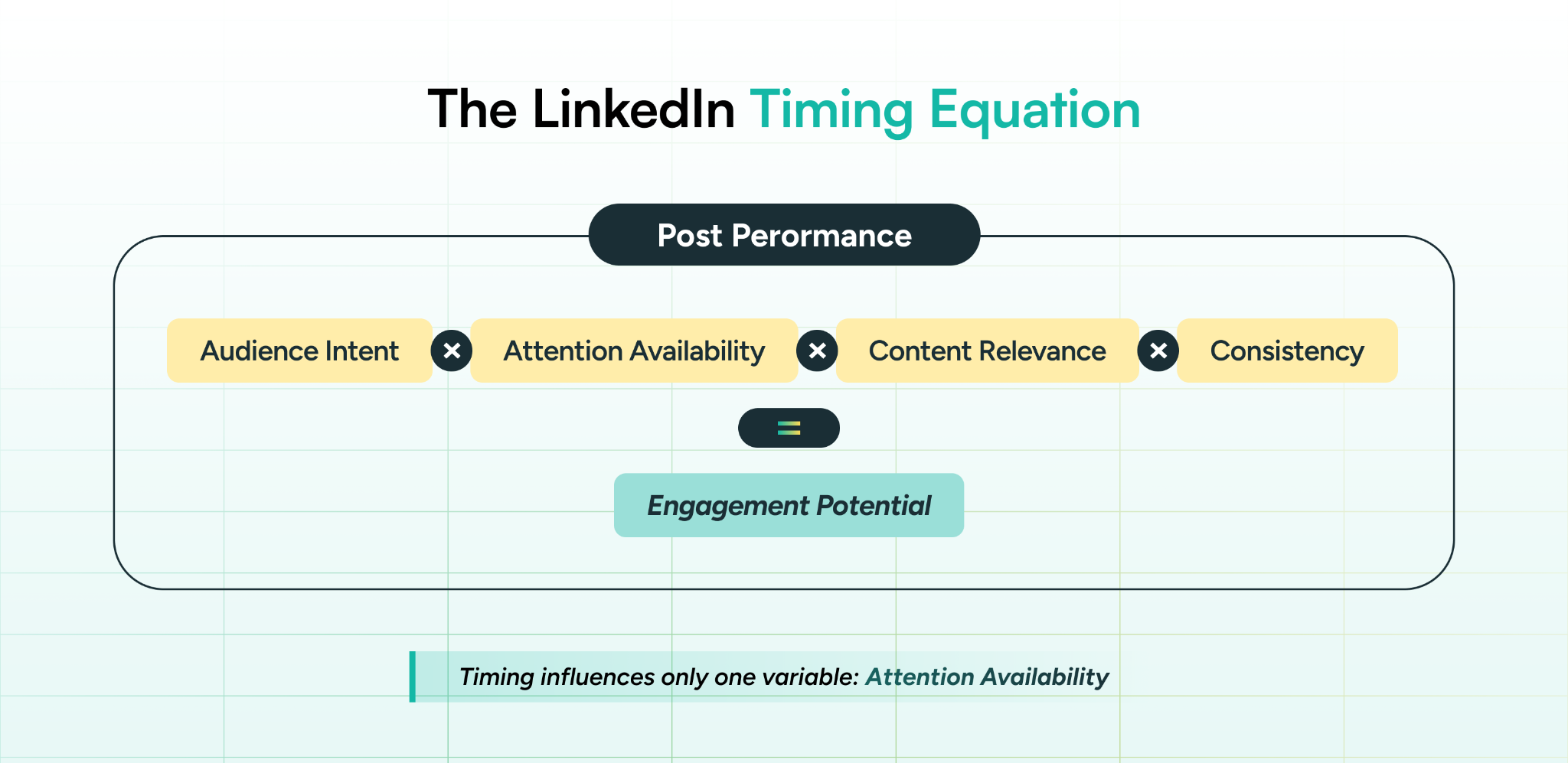
Instead of thinking in terms of fixed optimal hours, it would be more helpful to think in terms of probability zones:
- High Probability Zone: Late mornings through mid-afternoon for strongest combination of attention and professional intent.
- Moderate Probability Zone: Early mornings to late afternoons across weekdays.
- Low Probability Zone: Late evenings, overnight hours, and weekends.
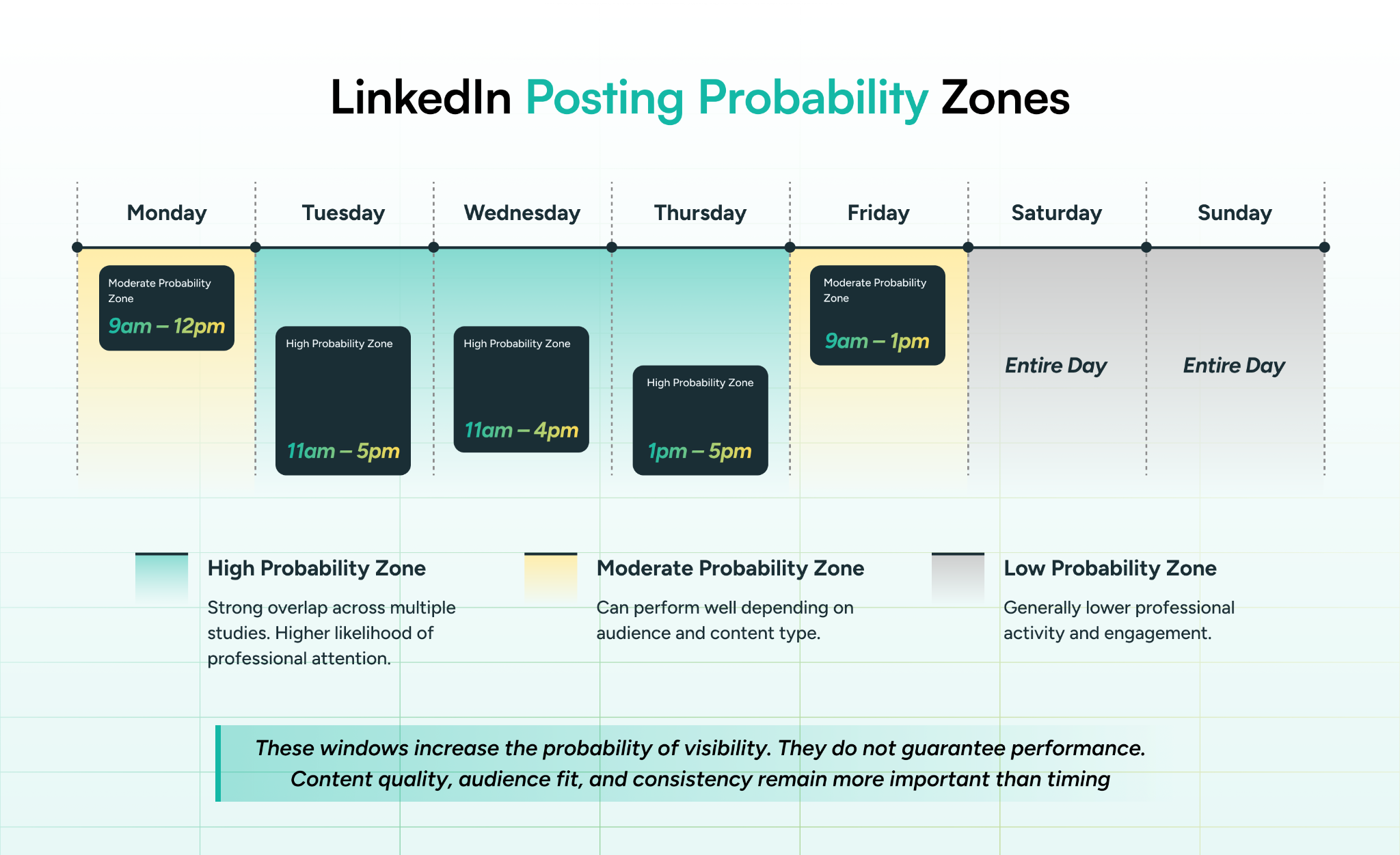
It is imperative that these windows aren’t treated as fixed rules. They are statistical patterns, not guarantees. Think of them as when your content is most likely to get early attention, not when it will automatically perform well. Good timing can improve your chances of being seen, but what happens next largely depends on the relevance and quality of the content itself.
Why LinkedIn Post Timing Matters At All
If content quality matters more than timing, why do so many studies still find noticeable engagement patterns around certain hours and days?
This is mainly because timing here offers a distribution advantage.
A thoughtful post published at 3 AM may reach fewer people initially simply because fewer members are active and available to engage. Meanwhile, an average post published during a high-attention window may generate enough early interactions to earn broader visibility.
The reason is straightforward: engagement compounds. The more people who see a post early, the more opportunities it has to generate reactions, comments, shares, profile visits, and saves.
If we visualize LinkedIn’s distribution as a funnel:
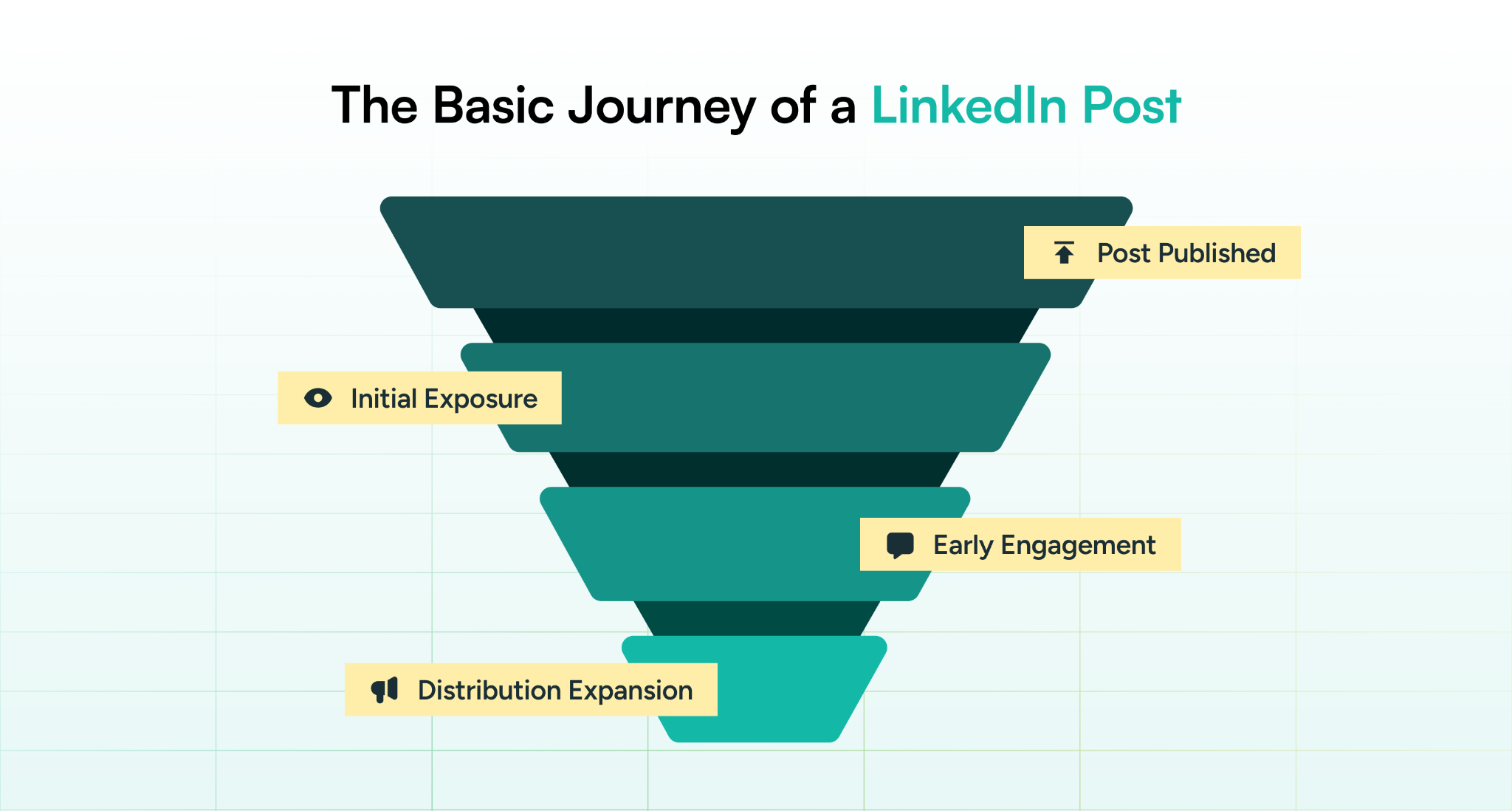
Timing only affects the first stage of that funnel. The post outcome then becomes tied to the strength of the content itself. A weak post may benefit from good timing but rarely sustains attention. A strong post can overcome imperfect timing, although it may take longer to gain traction.
Why Every "Best Time to Post on LinkedIn" Study Gives a Different Answer
At first glance, the disagreement is puzzling. If LinkedIn is one platform, why don't the studies arrive at the same conclusion?
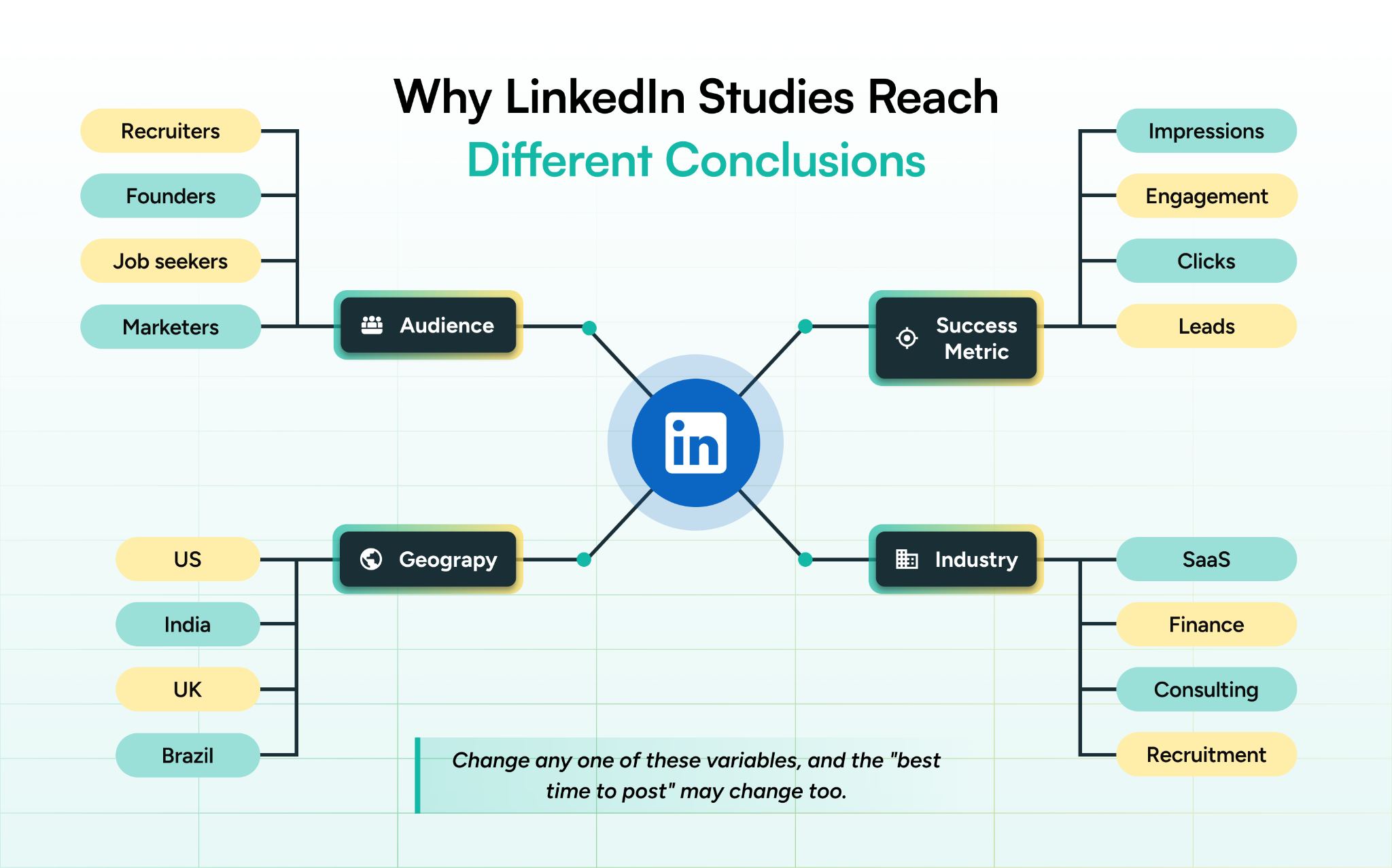
It’s not that the data is flawed. The difference is due to the fact that LinkedIn doesn't have a single audience, a single time zone, or a single definition of success.
1. LinkedIn Isn't One Audience
One of the biggest limitations of most posting-time studies is the assumption that LinkedIn behaves like a single, uniform audience.
A recruiter sourcing candidates, a founder building authority, a marketer distributing content, and a professional exploring career opportunities all use LinkedIn for different purposes. As a result, they don’t interact with content in the same way or at the same time. The platform itself uses these behaviors to tailor results and experiences accordingly.
Beyond platform design, usage varies by career stage and role. For example, there are differences in how executives, mid-career professionals, and early-career users engage with the platform. Early career professionals generally focus more on upward mobility, while mid-career members might look for networking opportunities. Top-level management might focus on thought leadership.
When behavior varies at this level, engagement patterns naturally vary as well. As a consequence, posting-time studies often arrive at different conclusions. They are analyzing different mixes of users, industries, and intent groups rather than a single, unified LinkedIn audience.
2. LinkedIn Isn't One Geography
Geography introduces another layer of complexity. Many posting-time studies analyze activity within a particular region or market, but LinkedIn itself is global.
The United States has LinkedIn’s largest user base, with approximately 247 million members. India follows with more than 167 million users, while Brazil has over 92 million. Together, these three markets represent dramatically different working hours, business cultures, and usage patterns.
A consultant in London targeting North American clients will have a very different posting schedule than a founder in Bangalore selling to Indian enterprises.
That's why a recommendation such as "10 AM" is incomplete on its own. The more useful question is: 10 AM for whom?
What Does ‘Working’ Mean?
Before you can determine the best time to post on LinkedIn, answer this: What does a successful LinkedIn post look like to you?
Many posting-time studies consider visibility metrics such as impressions, reactions, comments, and shares. Those metrics are useful, but they don't reflect business outcomes.
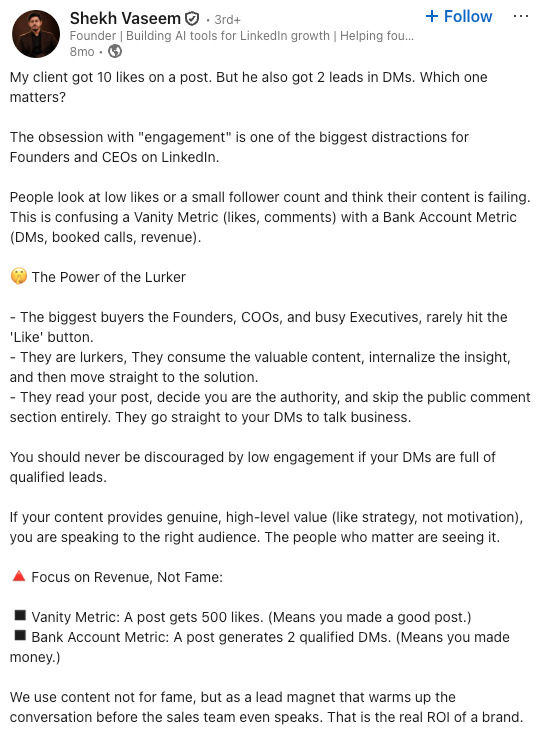
Imagine two LinkedIn posts with very different engagement metrics:
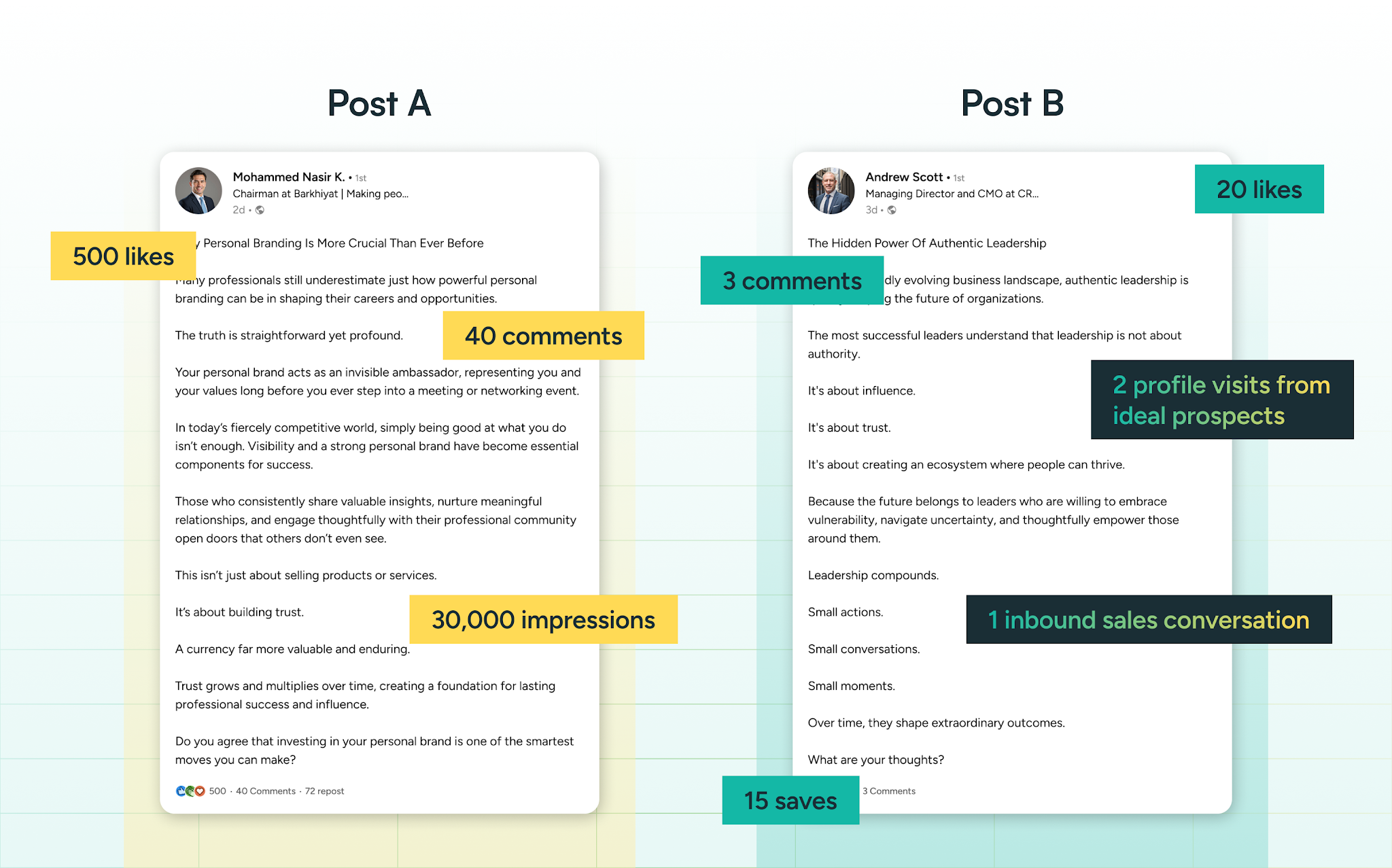
Which one performed better? The answer depends on your goal.
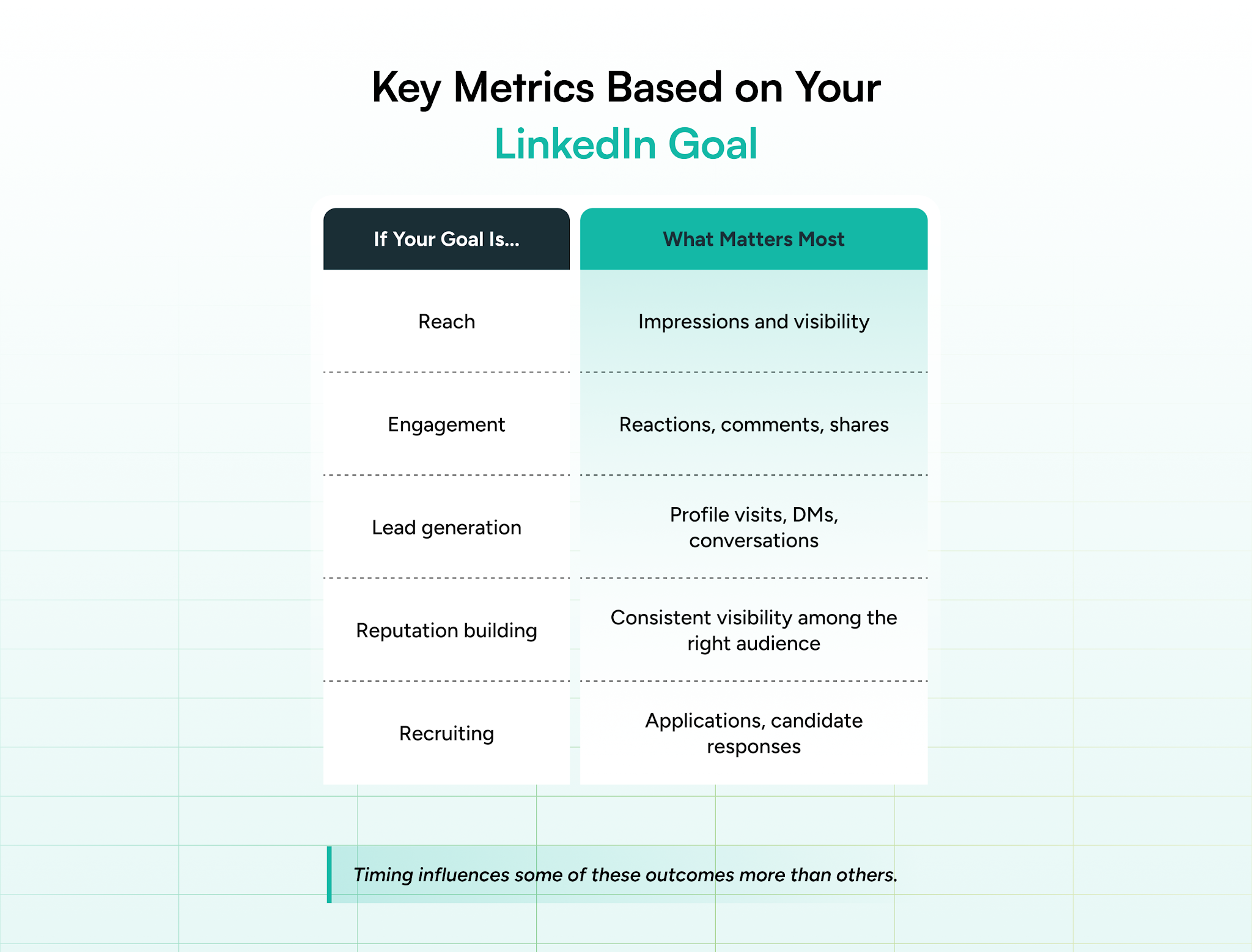
Different Goals Create Different Definitions of Success
If Your Goal Is Impressions
Timing can make a meaningful difference. Publishing when your audience is more active gives your content a better opportunity to be seen and generate early interactions.
This is why studies from platforms such as Buffer, HubSpot, and Sprout Social continue to find engagement clusters around midweek working hours. These windows increase the likelihood of early exposure.
If Your Goal Is Engagement
Audience activity matters more than timing itself. A founder posting for other founders may find strong engagement during completely different windows than a recruiter targeting job seekers.
If Your Goal Is Leads
Timing can help your content get seen early, but relevance is much more critical when the goal is generating leads. Modern purchase behavior shows buyers spend more time researching solutions before engaging with vendors. Many high-value interactions can happen long after the original content is published.
A post that directly addresses a prospect's problem can generate conversations even if it wasn't published during a supposedly optimal window.
If Your Goal Is Reputation
Reputation is built through repeated exposure over time, so the performance of any single posting window becomes less important.
Someone may read your content for months before sending a connection request, visiting your website, or reaching out with an opportunity. Many of the strongest outcomes on LinkedIn happen without any public engagement at all.
A decision-maker may read your post, remember your perspective, and contact you weeks later without ever leaving a like or comment.
That interaction won't appear in your analytics dashboard, but it may be the most valuable outcome your content generates.
The Lesser-Known Side of LinkedIn Performance
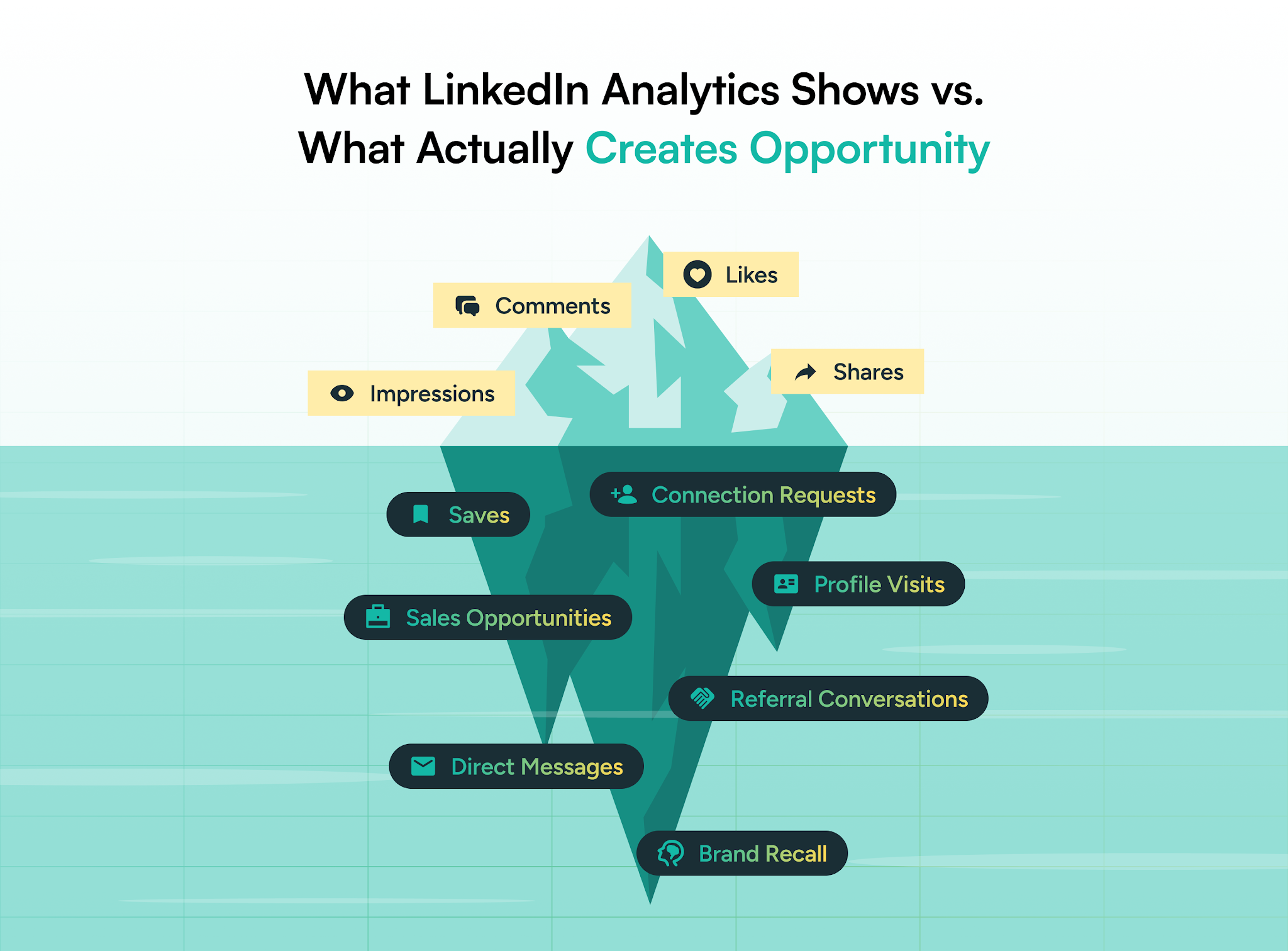
Most LinkedIn performance metrics are easy to measure, such as likes, comments, shares, and impressions.
Because they're highly visible, it’s easy to treat them as the primary indicators of success, but visibility alone is not proof of value. Many of the actions that lead to business outcomes happen away from the public feed.
Saves
A like can be impulsive, but a save is always intentional. When someone saves your post, they're making a small commitment to revisit it later. They may not have time to engage with it in the moment, but they believe it's valuable enough to return to.
In many cases, a post with 20 likes and 15 saves may have created more long-term impact than a post with hundreds of reactions and no saves at all.
A save is often a signal that your content solved a problem, answered a question, or contained information worth keeping.
Profile Visits
A profile visit usually means your content has generated enough interest for someone to want additional context about who you are and what you do.
For professionals using LinkedIn to build authority, attract clients, recruit talent, or create business opportunities, profile visits can prove more meaningful than engagement metrics.
Direct Messages
A post might generate modest engagement on the surface while simultaneously producing conversations with potential clients, referral partners, investors, media contacts, or future employees.
From a business perspective, a handful of relevant conversations are far more valuable than hundreds of reactions from people who are unlikely to take the relationship any further.
The Reality of Delayed Impact
People don’t always move from awareness to action immediately. A prospect might read your post today, follow you next month, visit your website three months later, reach out six months after that, and become a client the following year. At no point during that journey do they need to leave a like, comment, or share.
From an analytics perspective, the original post’s role in this journey is near invisible. From a business perspective, however, this impact is enormously valuable. This is especially true for executives, consultants, founders, and subject-matter experts whose goal is not viral reach but long-term reputation.
Some of the most valuable LinkedIn posts may leave little obvious evidence of their impact. The right person sees them, remembers them, and may act much later when the need or opportunity eventually arises.
How to Find Your Own Best Time to Post on LinkedIn: The GrowedIn Framework
If there is no universal best time to post on LinkedIn, how are you supposed to choose when to publish?
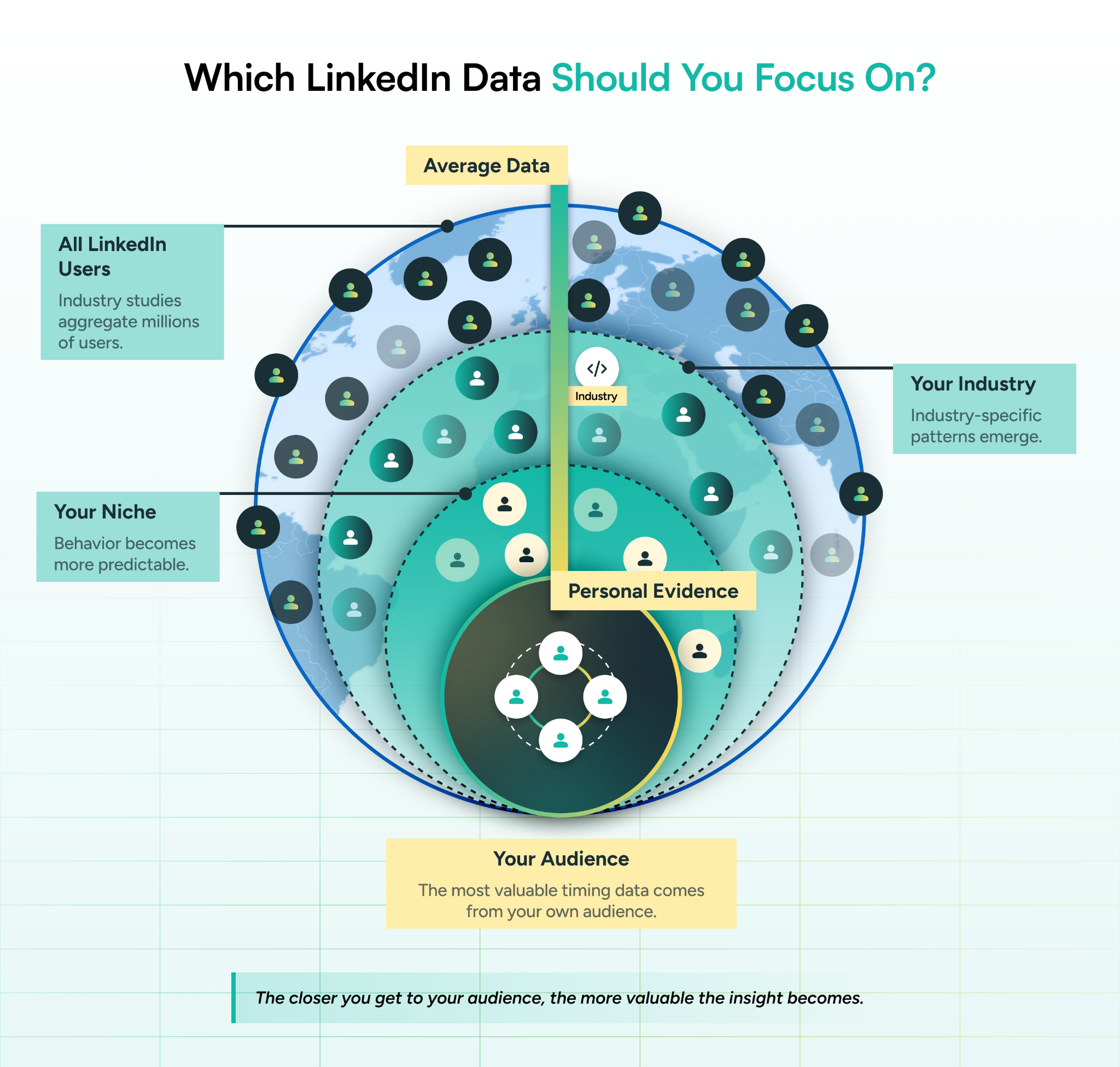
The good news is that you don't need to start from scratch. The studies we discussed earlier still have value. Think of them as a starting point rather than a set of rules. Instead of searching for the perfect posting time, focus on finding the time that works best for your audience.
Step 1: Choose 2–3 High-Probability Windows
Start with the posting windows that consistently appear across major LinkedIn studies.
For example:
- Tuesday mid-morning
- Wednesday afternoon
- Thursday early evening
These aren't guaranteed winners, but they give you a reasonable baseline for testing how your own audience responds.
Step 2: Test for 30–60 Days
One post is not a data point, nor is one week. LinkedIn performance varies naturally because of topic selection, writing quality, audience activity, current events, and dozens of other factors.
Give your test at least 30 days, and ideally 60, while posting consistently enough to test each window more than once. This gives you enough volume to separate random fluctuations from genuine trends.
Step 3: Measure More Than Impressions
Most creators stop at impressions, which can be a mistake. A post can generate impressive reach without creating meaningful outcomes. Instead, track a combination of leading and lagging indicators:
Visibility/Awareness metrics
- Impressions
- Reach
- Follower growth
Engagement metrics
- Reactions
- Comments
- Saves
- Shares
Business metrics
- Profile visits
- Connection requests
- Direct messages
- Inbound conversations
- Leads generated
These metrics tell different stories. A posting window that generates slightly fewer impressions but significantly more profile visits is more valuable than a window that simply produces reach.
Step 4: Look for Patterns Over Trend Winners
Don’t approach LinkedIn posting with the goal of identifying a single perfect hour. Look for recurring patterns instead.
You may discover that:
- Thought leadership performs best on Wednesday afternoons
- Hiring-related content performs best on Tuesday mornings
- Personal stories perform well on Fridays
- Technical content attracts more saves than comments
Aim to understand how your audience behaves and what it values, rather than chasing a universal benchmark.
Step 5: Double Down on What Works
Once you've identified a pattern that works for you, lean into it. If a particular posting window consistently produces stronger engagement, more profile visits, or higher-quality conversations, make it part of your routine.
However, consistency should take the lead after optimization. Many professionals spend months searching for the perfect posting schedule when they would be better served by committing to a good one. Successful creators on LinkedIn are those who publish consistently, learn from their audience, and refine their approach over time.
You don’t discover your best posting time once. It's something you continuously uncover through observation and experimentation.
Best LinkedIn Scheduling Tools
To maintain your posting consistency on LinkedIn, it’s best to take the help of an automated scheduling tool for publishing your posts. You can address the comments and requests at your convenience at any time during the day.
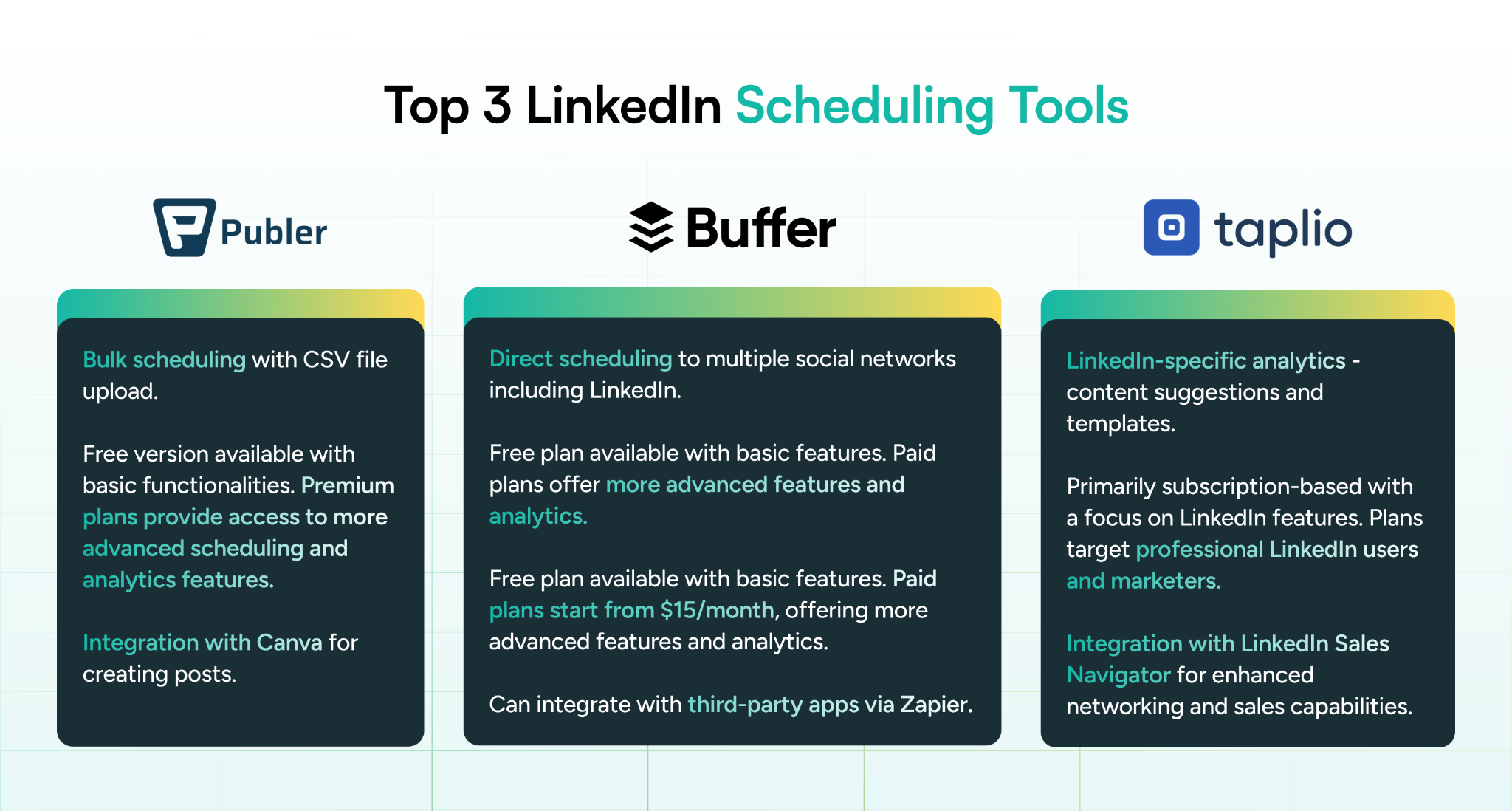
Here are our top 3 choices:
- Publer: With Publer, you don’t need to worry about missing the publication of your post at the time you have chosen. If you decide that 10:30 AM is the best time to post on LinkedIn for you, put up your posts on Publer and set that time. Plus, it also helps you schedule the first comment on your LinkedIn post in advance.
In fact, at GrowedIn, Publer has proven to be the best scheduling and comment-originating tool that can also kickstart comments.
- Buffer: Buffer is the simpler version of Publer in many senses. It is a basic, easy-to-use tool that helps you maintain your posting schedule but doesn’t allow you to initiate engagement through the first comment.
- Taplio: Taplio is a level ahead; it also lets you generate content for your posts through AI. However, if you really want your posts to make a difference in your marketing strategy, we suggest you have them written and not generated.
Conclusion
Timing can increase the probability of being seen, but it cannot retain your audience’s attention. Rather than fretting over whether to post at 9 AM or 10 AM, focus on learning what your audience pays attention to, publishing ideas worth engaging with, and showing up consistently enough to stay top of mind.
The posting schedule you decide on should eventually support the outcome you care about, whether that is stronger engagement, relevant profile visits, inbound conversations, or a reputation that compounds over time.
If you're working to build a LinkedIn presence that consistently reaches the right people with the right ideas, a second perspective could help. We'd be happy to talk it through with you.

Frequently Asked Questions
What is the best time to post on LinkedIn?
There is no universal best time to post on LinkedIn. However, late mornings through the afternoon on weekdays are generally considered strong engagement windows. Your own audience data should ultimately determine when you post.
Does posting consistently matter more than posting at the perfect time?
Yes. A consistent posting habit will generally outperform an inconsistent schedule built around trying to hit the perfect time slot.
Should you post on LinkedIn on weekends?
You can, but weekend engagement is often lower for professional content. Personal stories and lighter posts tend to perform better than educational or technical content.
Does timing matter more than content?
No. Timing can increase visibility, but content quality, relevance, and audience fit have a much greater impact on long-term performance.
Can a LinkedIn post generate results long after it is published?
Yes. People often discover, save, revisit, and act on content days, weeks, or even months after it is posted.
How do I find the best time to post for my audience?
Choose a few promising posting windows, test them consistently for 30–60 days, and track metrics such as saves, profile visits, comments, and inbound conversations.
Can competitors see when you view their profiles?
Yes, unless you switch to private mode. LinkedIn offers three viewing settings: public, semi-private, and anonymous. However, anonymity is reciprocal: if you browse privately, you lose access to detailed insights into who views your profile.
The Best Time To Post on LinkedIn In 2026
- There is no universal best time to post on LinkedIn.
- Most high-performing posts tend to cluster around midweek working hours.
- Different studies produce different recommendations because they measure different audiences, geographies, industries, and success metrics.
- Timing creates visibility opportunities, but content determines long-term performance.
- LinkedIn users are not a single audience; different professional groups engage with content differently.
- Audience psychology and mental availability matter more than simple online activity.
- Many valuable LinkedIn outcomes happen away from public engagement metrics, including profile visits, direct messages, and business conversations.
- Consistency is usually more important than posting at the perfect time.
- The best posting schedule is discovered through testing, observation, and audience-specific data.


Insights Hub
Personal Branding vs. PR: What Should Executives Prioritize?
How to Maintain a LinkedIn Presence with Limited Time
The Strategic LinkedIn Content Framework for Founders and Brands
Want to explore how this applies to your brand?
Let’s talk.
