 Claude
 ChatGPT
 Gemini
The strongest candidates no longer apply to a company based on a LinkedIn job description alone.
Before they click Apply, they look at the people they may work with, the culture they could be joining, and whether the organization’s public presence reflects what it claims to offer internally. Much of that research happens on LinkedIn.
For many candidates, LinkedIn provides an early look at an employer’s reputation. It gives them access to company updates, leadership perspectives, employee activity, workplace conversations, and other signals that help shape their impression of the organization before they ever speak to a recruiter.
According to CareerArc’s Employer Branding Study, 75% of job seekers research an employer’s brand before applying. LinkedIn also reports that a strong online employer brand can lead to 50% more qualified applicants.
And this kind of due diligence does not stop at a company’s Careers page. Candidates can examine:
- The CEO's LinkedIn profile
- Executive activity and thought leadership
- Employee posts and engagement
- Company Page updates
- Comments and conversations
- Values and culture
Collectively, these create what candidates perceive as the organization's employer brand.
Employer Brand Is Built Through People
Corporate messaging has not become obsolete, but candidates now place greater trust in people than polished marketing copy.
The 2024 Edelman Trust Barometer found that 79% of employees trust their employer, making employers the most trusted institution ahead of entities like government, media, and NGOs. Edelman also found that employees who believe leadership acts on their behalf report significantly higher optimism and engagement.
Unlike traditional employer branding assets, LinkedIn reveals an organization's leadership in real time. Candidates don't just read what the company says about itself; they observe how leaders communicate, how employees respond, what conversations are encouraged, and whether the culture appears authentic or manufactured.
LinkedIn brings the employer brand much closer to the people who influence and experience it every day.
Candidates Want Proof
For years, employer branding relied on carefully crafted messaging about culture, values, and mission. Today's candidates expect evidence to back up those claims.
A Careers page might claim that a company values innovation, learning, or flexibility. LinkedIn allows candidates to verify those claims.
- Do executives share lessons from difficult decisions?
- Do employees talk about meaningful work or just obligatory anniversaries?
- Are managers and employees recognized publicly?
- Do technical leaders contribute useful industry insights?
- Are new hires welcomed by colleagues instead of templated announcements?
Static messaging can tell candidates what an organization wants to be known for. What leaders and employees consistently share on LinkedIn gives them something more tangible to judge that message against.
Employer Branding Is No Longer Delegated Solely to HR
This is perhaps the biggest shift of all. Employer branding was traditionally centered around recruitment, with HR playing the leading role through Careers pages, hiring campaigns, and candidate communications.
Today, it's a cross-functional business capability.
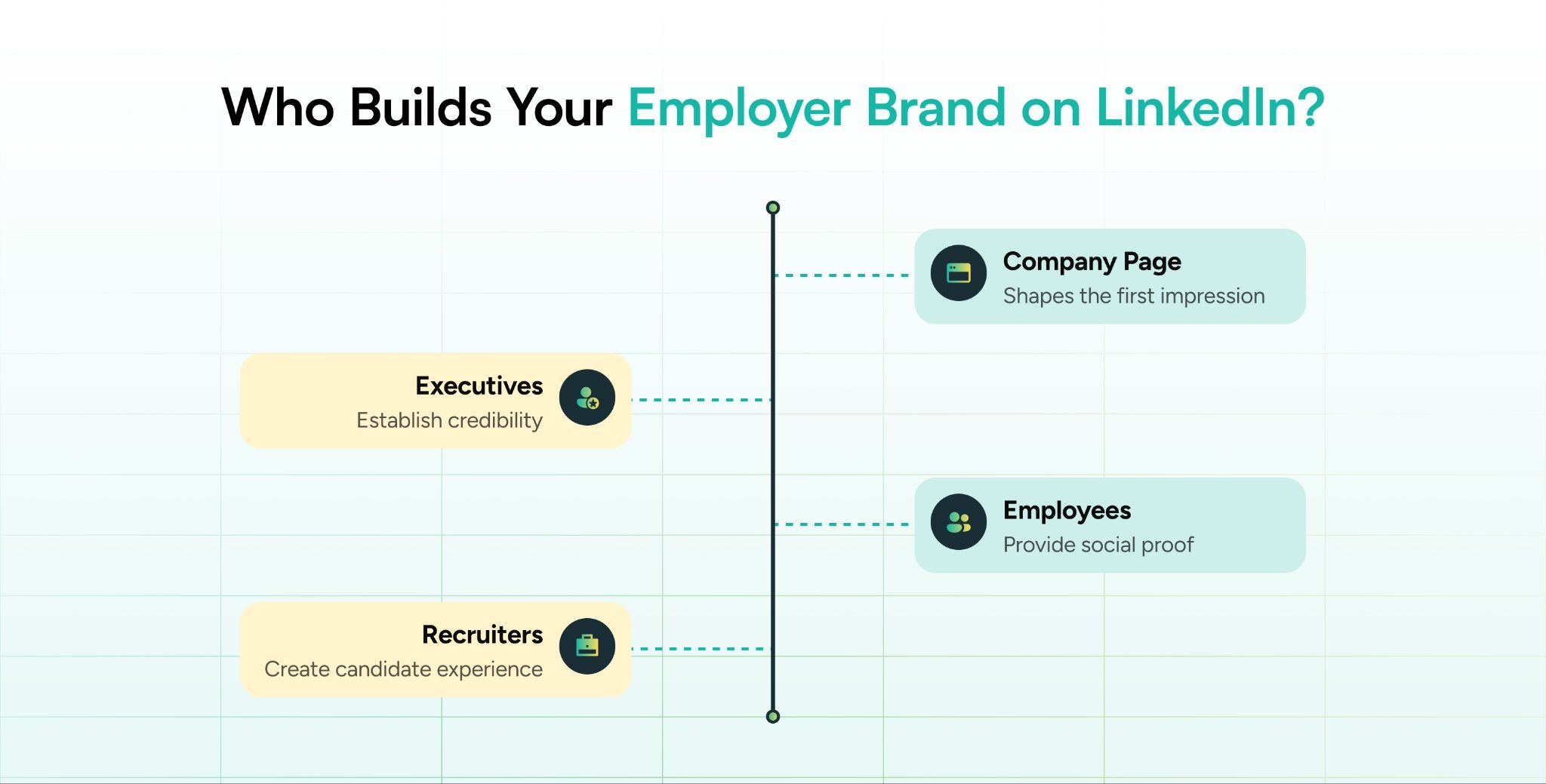
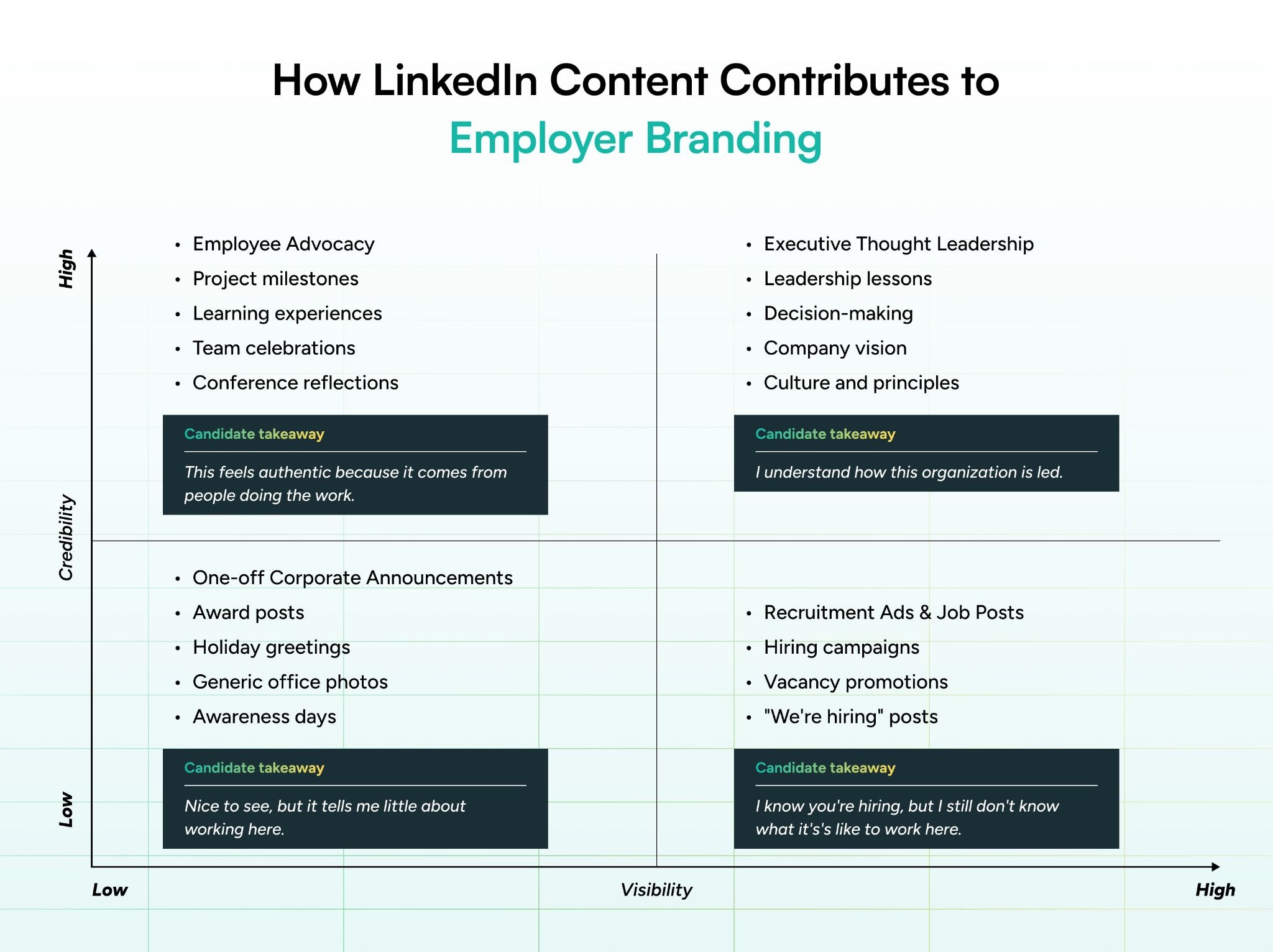
Together, these signals can influence whether a candidate chooses to engage or moves on. That is why employer branding on LinkedIn cannot be limited to publishing vacancies or showcasing office milestones.
It requires a visible, credible presence across the people and channels candidates encounter before they ever engage with the company.
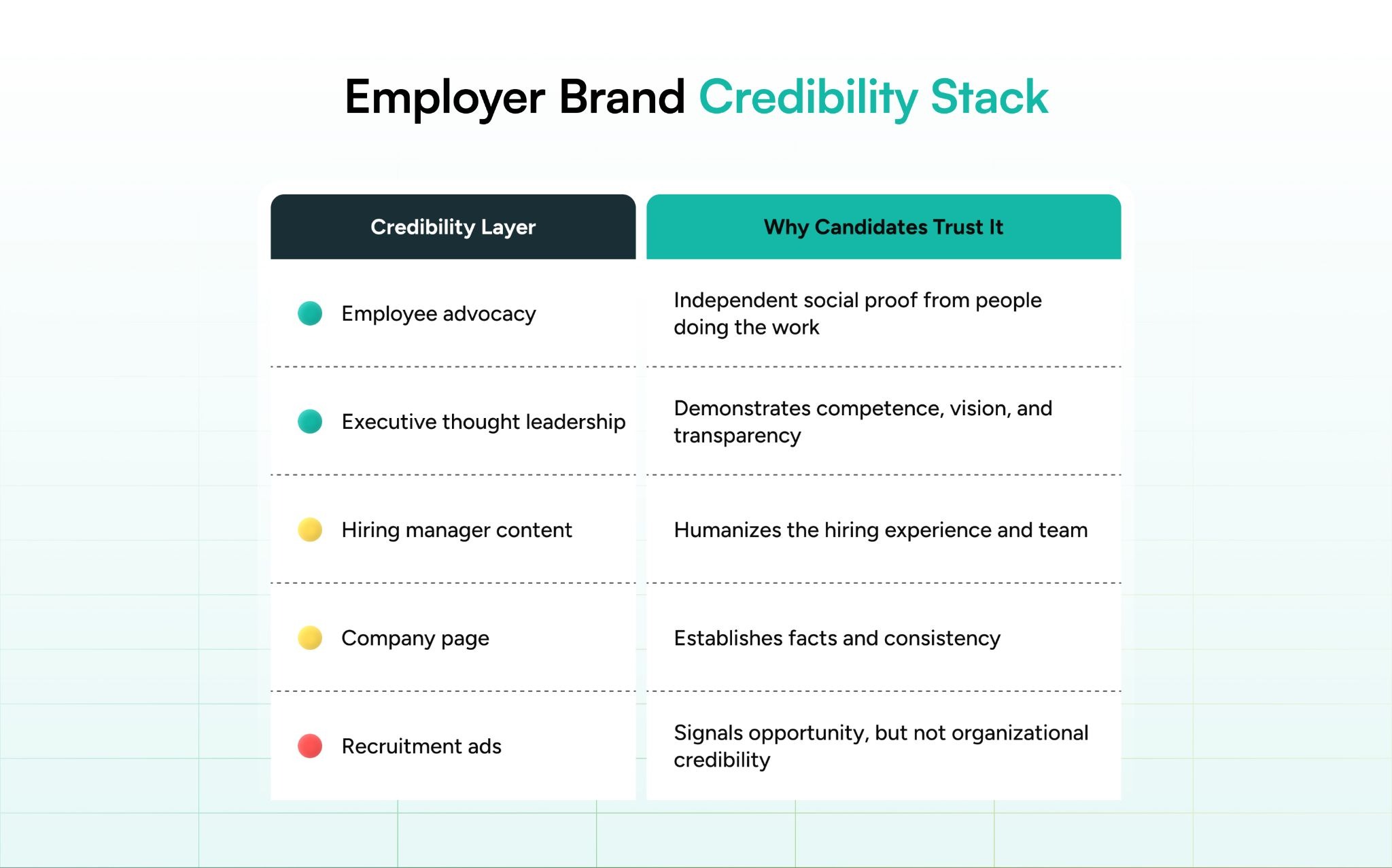
What Candidates Actually Evaluate
Employer Branding Is What Potential Candidates Infer
Employer branding is generally perceived as an organization's reputation as a place to work. On LinkedIn, that reputation is built not only through official messaging, but also through the conclusions candidates draw from many smaller signals.
Very few candidates decide after reading a single post or visiting a Company Page once. Instead, they piece together an impression over time. A CEO's commentary on industry trends, an engineer celebrating a successful product launch, a hiring manager congratulating a team member on a promotion, or employees discussing what they've learned all contribute to a broader picture of what working there might actually feel like.
In behavioral psychology, this is sometimes referred to as thin-slice judgment: the tendency for people to form surprisingly durable impressions from limited observations. LinkedIn gives candidates dozens of these ‘thin slices’, allowing them to assess an organization much before they speak to a recruiter.
Evidence Over Promises
When professionals research a prospective employer, most of them aren’t asking whether the organization has attractive perks listed on its website. They're trying to answer practical questions about what life inside the company is really like:
- Who will I actually be working for?
- Do leaders communicate openly or only appear during major announcements?
- Are employees recognized for meaningful work?
- Does the company invest in learning and development?
- Do people stay and grow their careers?
- Does the culture feel collaborative or highly controlled?
- Is innovation something people demonstrate or simply describe?
What leaders and employees share publicly can provide useful signals around many of these questions, giving candidates something tangible to consider alongside the company’s official messaging.
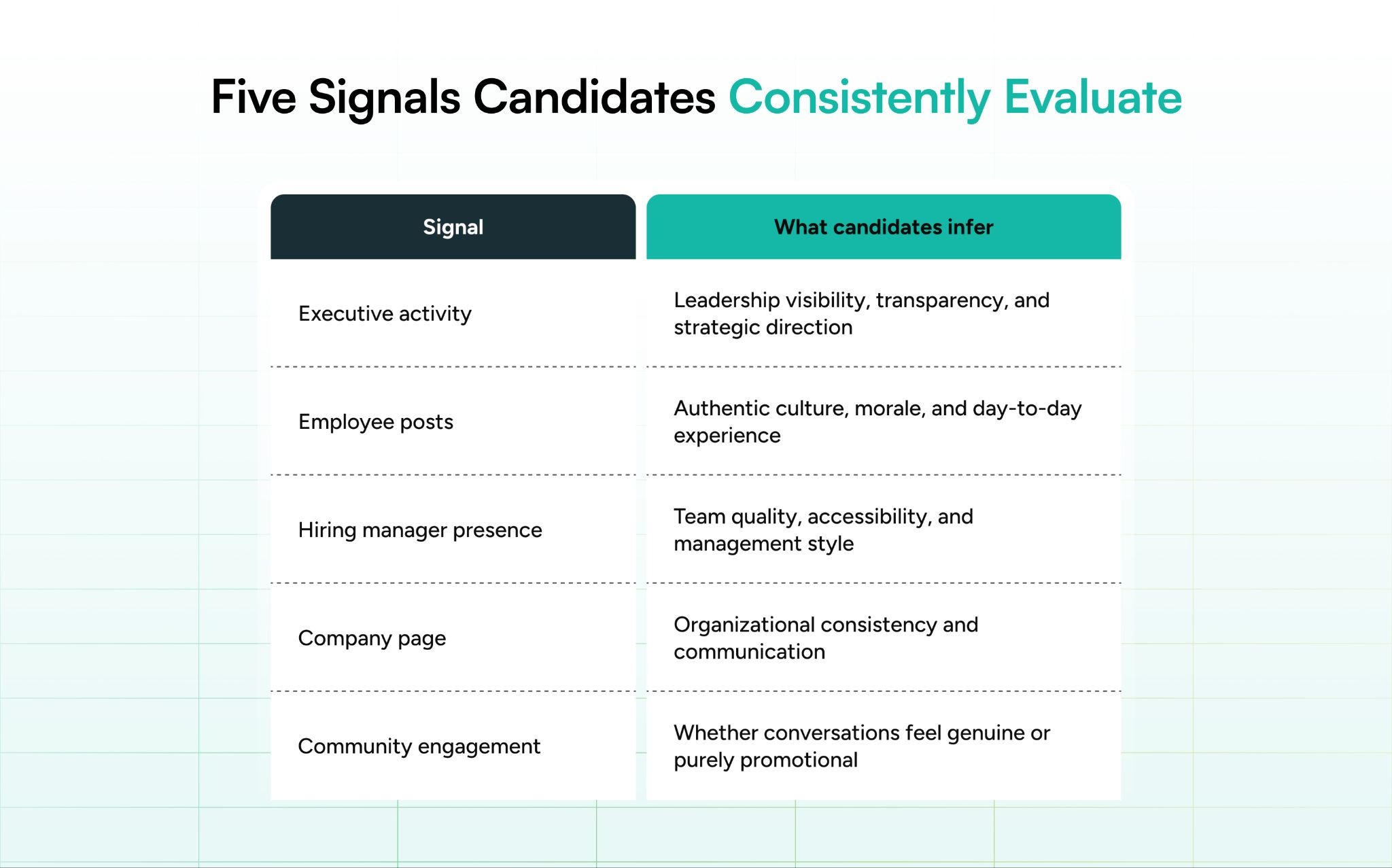
Why Consistency Is More Important Than Frequency
Candidates don't expect every executive to publish daily or every employee to become a creator. What they do notice is whether the different signals coming from an organization support the same picture.
If leaders discuss innovation while employees describe meaningful projects, those messages reinforce each other. If executives promote flexibility while employees consistently mention rigid processes, credibility begins to erode. By the time a recruiter contacts a candidate, many of these judgments have already been formed.
Employer branding therefore shouldn’t revolve around producing content at a relentless pace. It should ensure that the experiences employees share publicly reflect the organization's stated values.
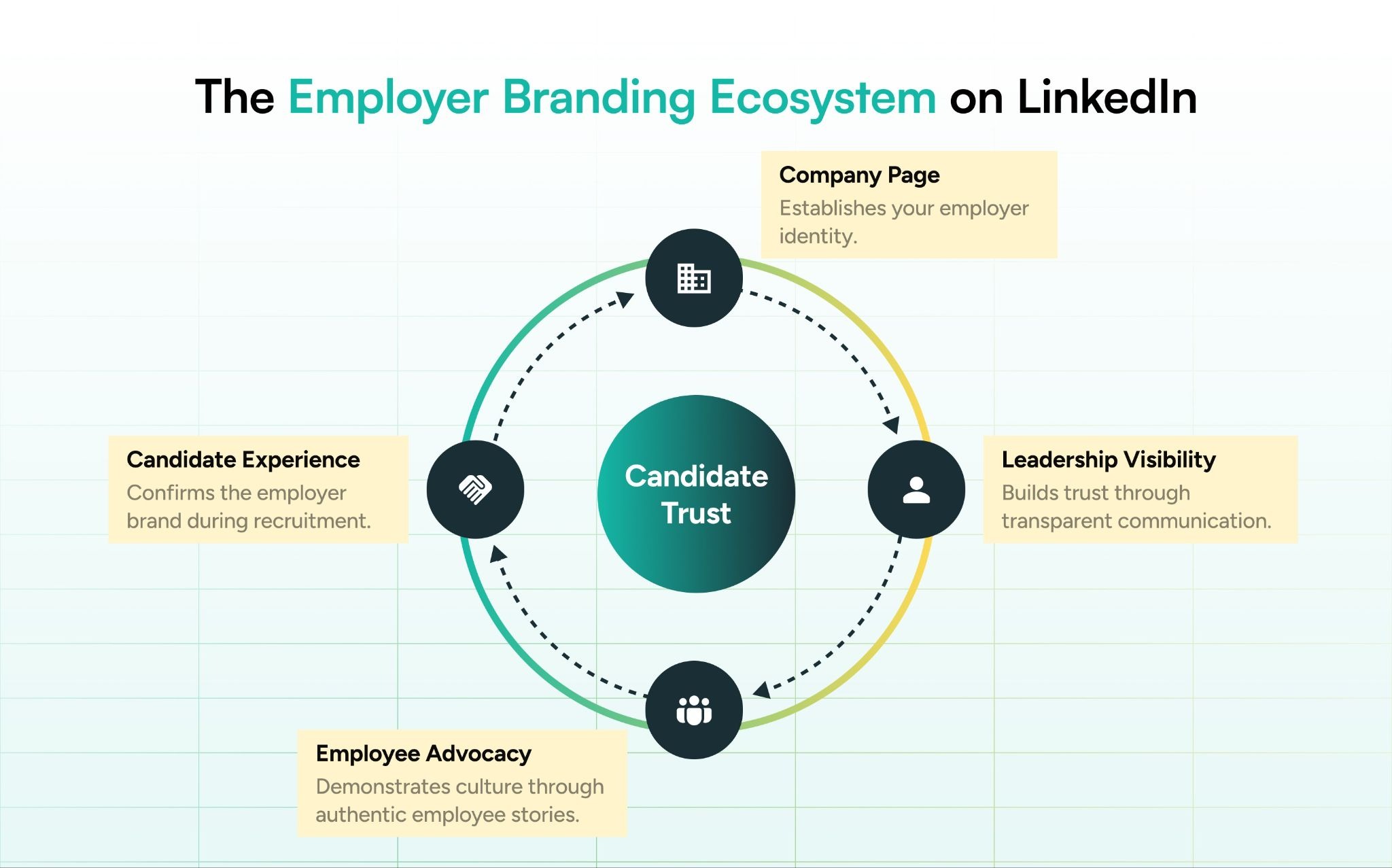
The Four Layers of Employer Branding
Employer branding on LinkedIn isn't built through a single campaign or an occasional hiring post. It's the cumulative result of how an organization presents itself across the different touchpoints candidates encounter before they even submit an application.
While many companies focus on one aspect of their presence, such as posting more jobs or encouraging executives to be active, a strong employer brand requires consistency across four interconnected layers.
Each layer answers a different question in a candidate's mind. Together, they influence whether someone sees the organization as a credible place to build their career.
Layer 1: The Company Page Creates the First Impression
Your LinkedIn Company Page is often the first official touchpoint a prospective employee encounters. It establishes who you are, what your organization does, and what you stand for.
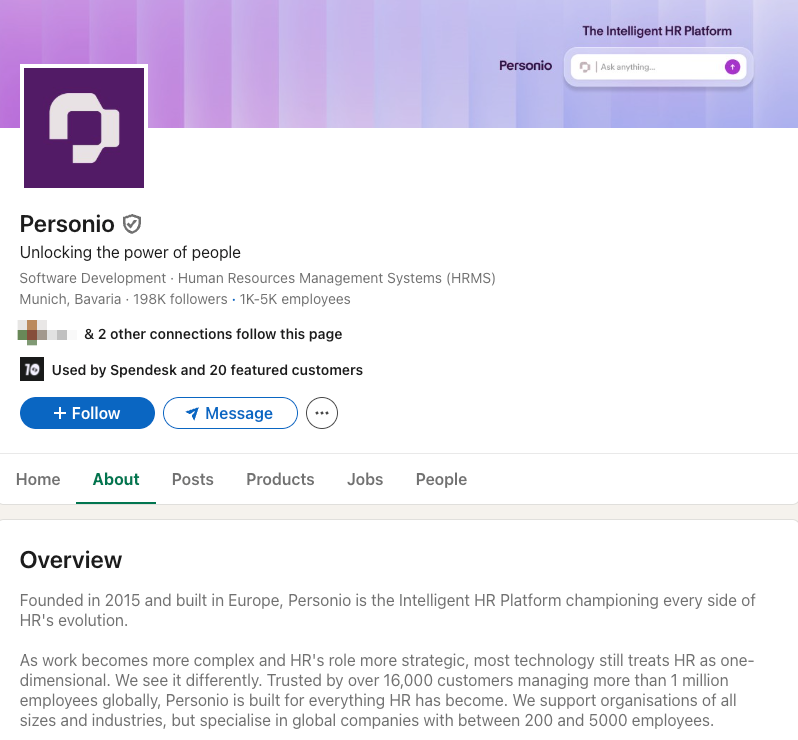
While candidates will visit several other touchpoints before making a decision, they do expect the Company Page to be complete, current, and reflective of the organization they are researching. An outdated page with inconsistent branding or infrequent updates can create uncertainty.
An effective Company Page shouldn’t only broadcast periodic business updates. It should provide insight into your culture, values, workplace policies, leadership, and the kinds of opportunities available within the organization.
LinkedIn reports that Company Pages with complete information receive around 30% more weekly views, making completeness one of the simplest ways to improve employer brand visibility.
Candidates typically look for:
- An active Company Page with regular updates
- Clear messaging around purpose and values
- Workplace policies (remote, hybrid, onsite)
- Employee highlights rather than only product announcements
- Consistency between the brand and leadership profiles
Layer 2: Leadership Visibility Builds Credibility
Once candidates understand what a company does, their attention often turns to the people leading it.
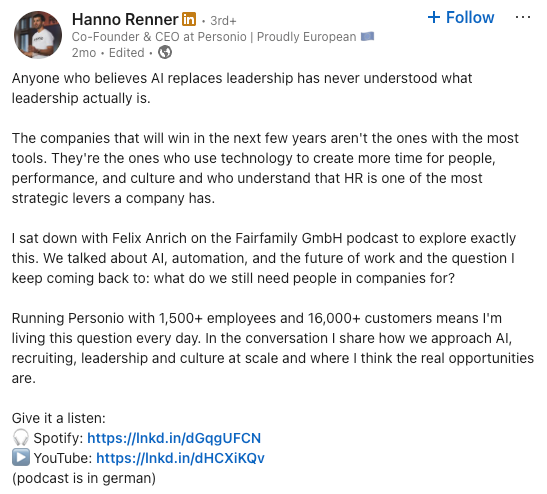
LinkedIn gives candidates a chance to observe how executives communicate long before they speak with anyone from the company. That visibility can offer useful clues about leadership style, priorities, and the way leaders engage with their people.
Visible leaders might explain important decisions, discuss industry trends, celebrate employees, acknowledge challenges, or share where the organization is heading. Over time, this activity gives candidates a clearer sense of the people responsible for shaping the company and its direction.
Leadership therefore becomes part of how candidates evaluate the employer brand. When executives consistently contribute meaningful insights and engage openly, the organization has an opportunity to feel more accessible, transparent, and human.
Layer 3: Employee Advocacy Provides Social Proof
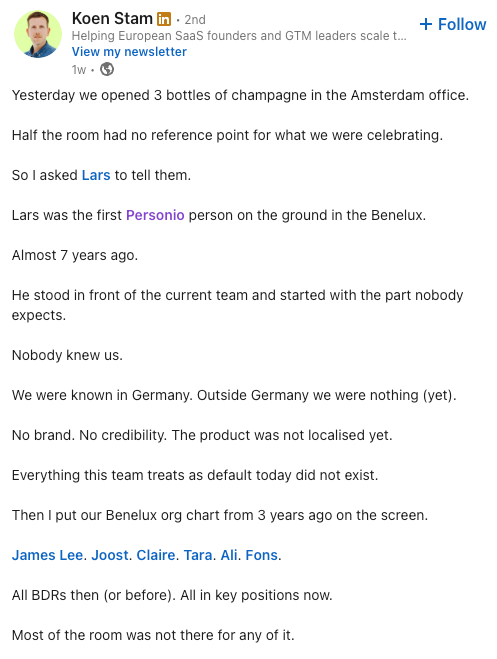
If the Company Page explains who you are and leaders communicate where you're going, employees offer a view of what it's like to work there.
Employee-generated content gives candidates a perspective that does not come directly from the corporate account.
Candidates pay attention to the stories employees choose to share, whether they're celebrating project milestones, reflecting on professional growth, welcoming new colleagues, or speaking at industry events. These moments can give candidates a glimpse into the culture through the experiences of people who work there.
Employee advocacy can also extend the reach of an employer brand considerably. Employees have, on average, 10 times as many connections as their company has followers, giving employee content the potential to reach audiences far beyond the Company Page's existing following.
That does not mean employees should be expected to promote the company constantly. The better foundation is an environment where people have meaningful experiences, achievements, and ideas they genuinely want to share.
Layer 4: Candidate Experience Confirms the Brand Promise
The final layer is where candidates begin to compare what they have seen publicly with their own interactions with the organization.
A candidate who encounters slow communication, a confusing interview process, or inconsistent messaging may begin to question the polished employer brand they have seen on LinkedIn.
Every interaction, from recruiter outreach and interviews to feedback and onboarding, adds to the impression the candidate has already formed. A positive candidate experience creates consistency between what the organization communicates publicly and how candidates are treated during the hiring process.
When candidates feel informed, respected, and engaged throughout the process, the experience gives them another reason to view the employer brand as credible, whether or not they are ultimately hired.
Why These Layers Work Together
Many organizations invest heavily in one layer while neglecting the others.
For example:
- An excellent Company Page cannot compensate for silent executives.
- Thought leadership loses credibility if employees never share their own experiences.
- Strong employee advocacy can be difficult to sustain alongside a poor recruitment process.
- A great hiring experience has limited reach if candidates know very little about the organization beforehand.
Employer branding becomes more credible when each layer supports the others.
Candidates can then build a picture of the organization from several perspectives: what the company says about itself, how its leaders communicate, what employees share about their experiences, and how candidates themselves are treated throughout the hiring journey.
Why Many Companies Get Employer Branding Wrong
Many organizations understand that employer branding is crucial, yet their LinkedIn presence tells a different story. Company Pages are updated sporadically, executive profiles remain inactive, employees rarely share their work, and recruitment activity only becomes visible when there's an urgent hiring need.
Often, these activities are happening independently, without a clear connection between them.
Employer branding is generally treated as a responsibility owned solely by HR or talent acquisition. In reality, candidates evaluate the organization as a whole. They don't distinguish between recruitment content, leadership communication, or employee advocacy. Instead, they form a single impression based on everything they see. When those signals contradict one another or important parts of the organization remain largely invisible, the employer brand can quickly lose credibility.
Mistake 1: Treating LinkedIn as a Job Board
For many organizations, LinkedIn activity begins and ends with hiring.
The Company Page is largely inactive until a vacancy opens, at which point it fills with job ads and recruitment campaigns. Vacancies serve an immediate purpose, but they give candidates very little insight into the organization behind the role.
Before applying, people may want to understand how the organization thinks, what its leaders value, how employees collaborate, and whether the culture reflects the promises made in recruitment marketing.
If the only visible activity is a list of open roles, candidates have little evidence on which to base those judgments.
Recruitment posts should sit alongside content that demonstrates the organization's culture, expertise, achievements, and people.
Mistake 2: Expecting the Company Page to Carry the Employer Brand
A polished Company Page is valuable, but candidates don't necessarily stop there.
After scanning the official page, many may click through to the profiles of the CEO, hiring manager, or prospective teammates to get a better sense of the people they might actually work with.
If those profiles are inactive or contain little beyond occasional company announcements, candidates have fewer opportunities to learn about the people behind the organization. Leaders who communicate consistently can give them greater visibility into how the company thinks, what it values, and where it is headed.
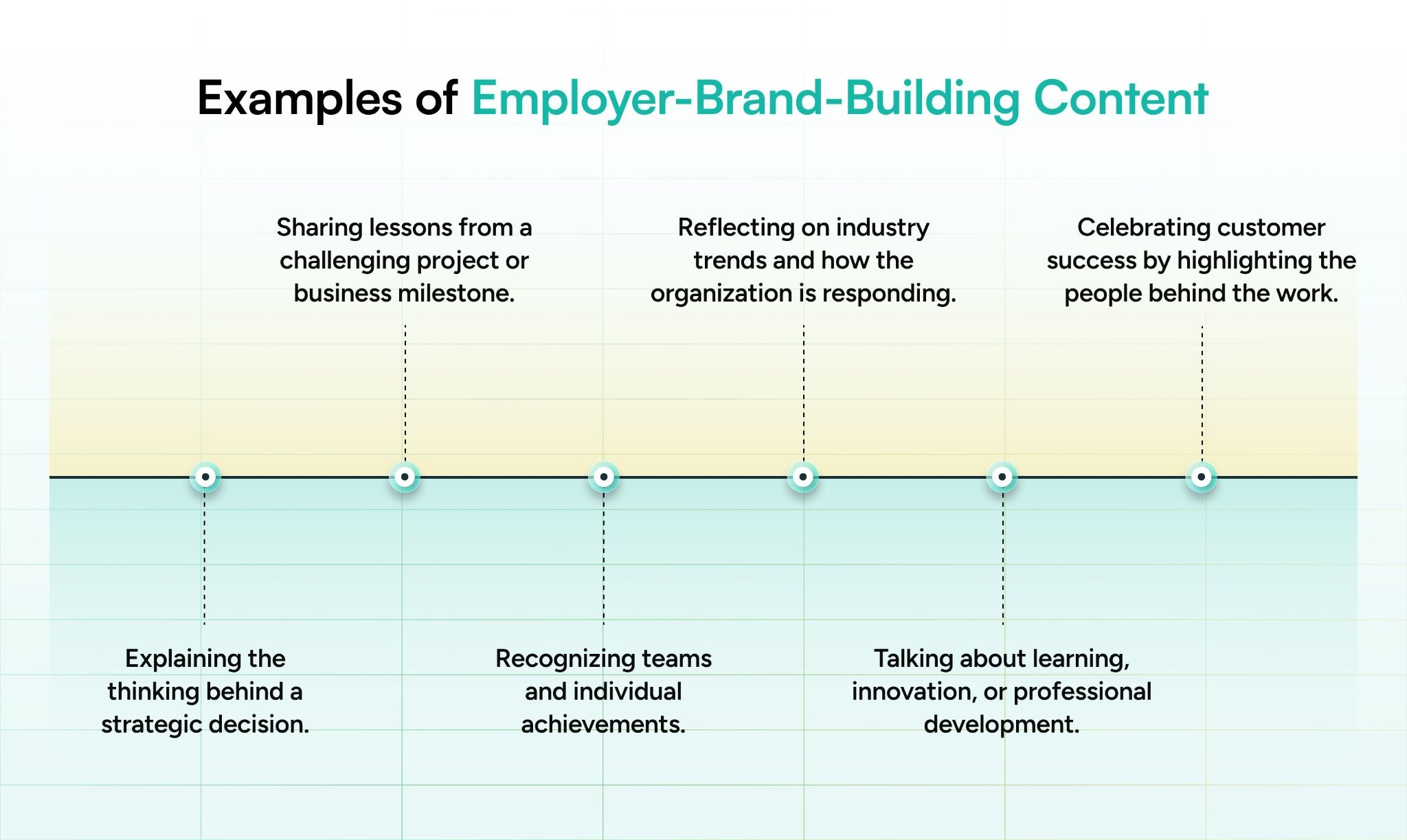
Executive visibility doesn't require daily posting or highly polished thought leadership. Sharing lessons learned, recognizing teams, explaining decisions, or commenting on industry developments can all contribute to a more credible employer brand.
Mistake 3: Leaving Employees Out of the Story
One of the strongest indicators of workplace culture is also one of the most overlooked: employees talking about their work.
When employees voluntarily share project milestones, conference experiences, promotions, learning opportunities, or team successes, they provide authentic signals that candidates can't get from recruitment campaigns.
Conversely, an organization where only the marketing team publishes content can appear overly controlled or disconnected from day-to-day reality. Employee-generated content demonstrates culture through lived experience rather than carefully crafted claims.
Of course, this doesn't require every employee to become a content creator. Organizations can simply make it easier for people who want to share professional moments to do so in ways that feel natural and voluntary.
Mistake 4: Measuring Visibility Instead of Business Outcomes
Employer branding is often evaluated using marketing metrics such as impressions, likes, or follower growth.
These numbers can tell you whether your content is being seen and generating engagement, but they don't tell you enough about what happens further along the hiring journey.
A post celebrating a team achievement may receive modest engagement and still be seen by someone who later applies for a role. An executive's thought leadership may reach a relatively small audience while giving prospective candidates useful insight into the company's leadership and direction.
To understand the broader impact of employer branding, organizations can also track:
- Qualified applications per vacancy
- Offer acceptance rate
- Employee referral rate
- Time to hire
- Candidate satisfaction
- Career page traffic from LinkedIn
- Growth in employee advocacy participation
Executive Thought Leadership As Employer Branding
A company can publish polished careers content, showcase employee benefits, and promote every open role on LinkedIn. But if its leaders are invisible, candidates are left with an important unanswered question:
Who will I be working for?
Executive thought leadership helps answer that question by giving candidates context they cannot get from corporate messaging alone.
Through their LinkedIn activity, executives can share the thinking behind important decisions, what the organization values, how success is recognized, and their perspective on changes affecting the business. These signals help candidates form a clearer picture of the leadership they could be working with and the organization they could be joining.
Showing How You Lead
A CEO who only posts product launches and hiring announcements tells candidates very little about what it's like to work inside the business.
A leader who regularly shares reflections on customer challenges, strategic decisions, lessons learned, or recognizes employees publicly gives candidates a more complete picture of the organization.
Candidates aren't expecting executives to share confidential information or publish daily essays; they're looking for consistency and authenticity. These posts can help candidates understand not just what the company produces, but also the kind of leadership they can expect. One of LinkedIn's greatest strengths is that it allows candidates to observe leaders over time rather than meeting them for the first time during an interview.
Employee Advocacy Is Culture in Action
A Company Page tells candidates what an organization wants them to know, whereas executive thought leadership helps them understand how leaders think.
Employee advocacy answers a different and arguably more important question of what it would actually be like to work for the company in question.
Unlike recruitment campaigns or carefully crafted employer value propositions, these stories are difficult to manufacture at scale. They reflect the day-to-day experience of working inside the organization. This makes employee advocacy one of the strongest forms of employer branding on LinkedIn.
Authenticity Travels Further Than Corporate Messaging
Every organization can publish a post saying it values innovation, collaboration, or professional development. Candidates also look for evidence of those values in practice.
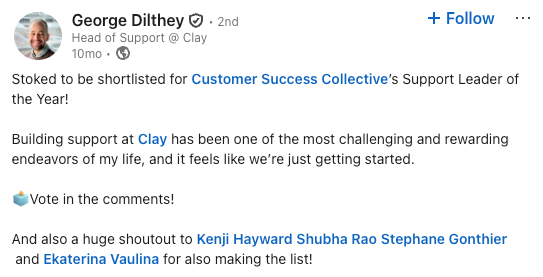
They notice when engineers write about solving complex problems, when designers share lessons from a product launch, or when consultants reflect on a successful client engagement. They see colleagues congratulating one another on promotions, welcoming new hires, and celebrating shared achievements.
These interactions give candidates a richer picture of workplace culture, grounded in the experiences employees choose to share publicly. They add context to the organization's own messaging and help candidates see how its stated values show up in everyday work.
One employee post may not form a candidate's perception on its own, however; repeated glimpses into the organization over time can build a much clearer picture.
Employee Advocacy Extends Reach Organically
Employer branding doesn't need to live on the Company Page.
Every employee who shares meaningful professional experiences introduces the organization to a different network of peers, former colleagues, industry contacts, and potential candidates. These networks can help the employer brand reach people who may never follow or regularly visit the Company Page.
Employee advocacy also brings different voices into the employer brand. Candidates might encounter engineers discussing technical challenges, recruiters explaining hiring processes, consultants reflecting on client work, and managers recognizing their teams.
Together, these perspectives give candidates a broader view of the organization and the people within it.
The result is a more complete representation of the people, work, and experiences that make up the business.
Advocacy Should Never Feel Mandatory
One of the quickest ways to undermine employee advocacy is to treat it as another marketing campaign.
Candidates can usually distinguish between a genuine reflection and a copy-and-paste post shared across dozens of employee profiles.
Effective advocacy is voluntary. Employees should feel encouraged and not obligated to share moments they are genuinely proud of, whether that's speaking at an event, completing a certification, launching a new feature, mentoring a colleague, or celebrating a team milestone.
The role of the organization is to make sharing easy by providing guidance, celebrating contributions, and creating an environment where employees naturally want to talk about their work. Authenticity cannot be scripted.
Every Employee Tells a Different Part of the Story
One of the greatest strengths of employee advocacy is that no two people experience the organization in the same way.
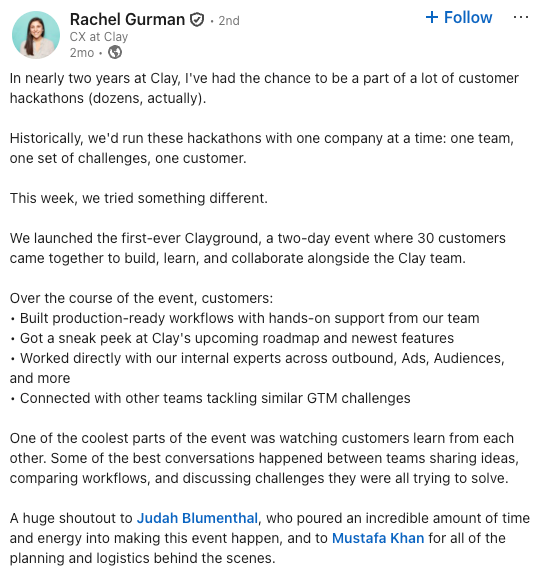
A software engineer might write about solving a technical challenge; a customer success manager may celebrate helping a client achieve an important outcome; a recruiter might reflect on welcoming new hires; a graduate employee could share lessons from their first year with the business.
Each story offers a small window into the organization. As more employees share their own experiences, those individual experiences come together to give prospective candidates a fuller picture of the culture, the work, and the people behind the company.
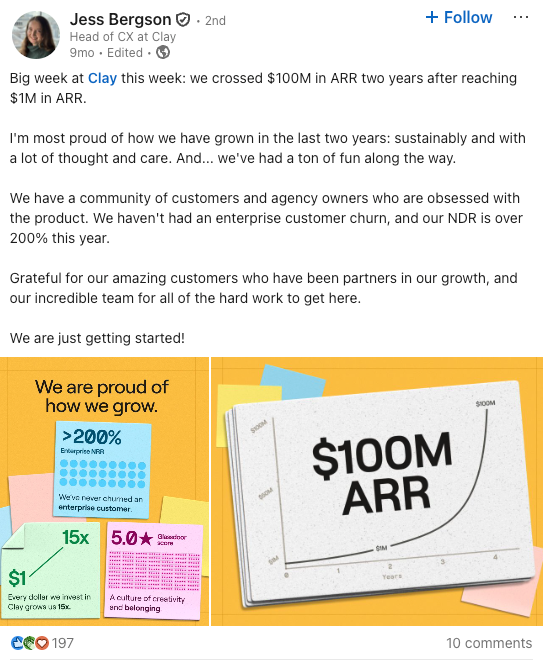
The Employer Branding Operating Model
A strong employer brand develops through consistent, coordinated communication over time, not only when recruitment activity increases or a new hiring campaign begins.
Consistency does not require executives to follow scripts or employees to publish the same content. Their individual voices are an important part of what makes the employer brand credible.
An operating model provides the structure around those voices. It aligns leadership, employees, and the Company Page around a shared employer narrative while giving each group the freedom to communicate in its own way.
A practical employer branding operating model includes five core components.
1. Quarterly Employer Brand Themes
Every quarter, define three to five themes that reflect what candidates should consistently see across LinkedIn.
Unlike campaign topics, these themes represent ongoing aspects of the employee experience, such as:
- Career growth and learning
- Product innovation
- Customer impact
- Leadership and decision-making
- Collaboration across teams
- Community involvement
- Workplace flexibility
- Employee wellbeing
The themes provide a common direction without dictating exactly what people should post. Executives, employees, and the Company Page can approach each theme from their own perspective, creating natural connections across the organization's LinkedIn presence.
2. Clear Roles Across the Organization
Employer branding shouldn't sit exclusively with HR or Marketing. Different voices across the organization give candidates insight into different aspects of the employee experience.
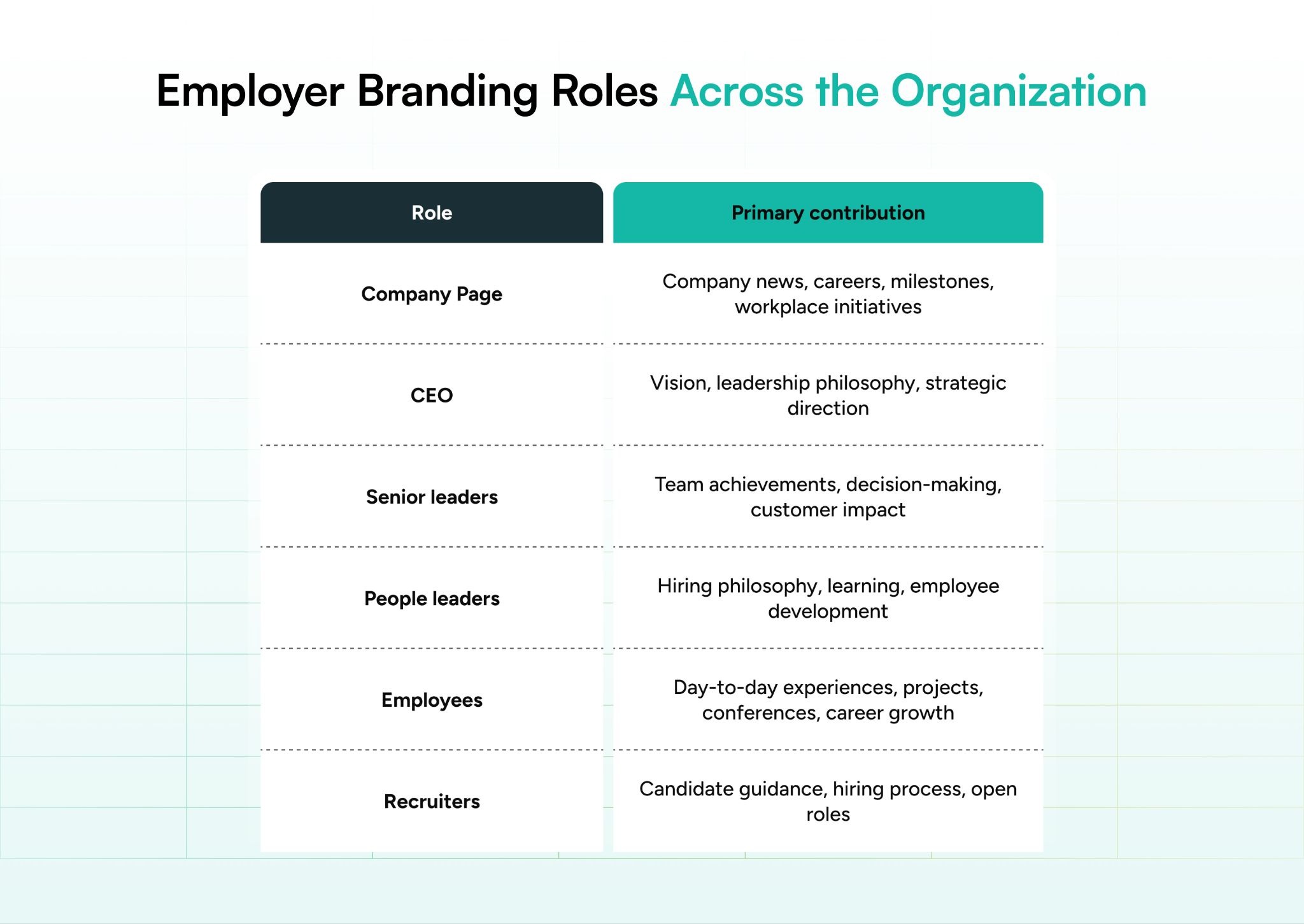
This distributed approach creates a richer, more believable employer brand than relying on a single spokesperson.
3. Build an Editorial Rhythm
Many organizations create social media calendars, but few create an employer branding rhythm.
Rather than scheduling isolated posts, think about maintaining a healthy mix of perspectives every month.
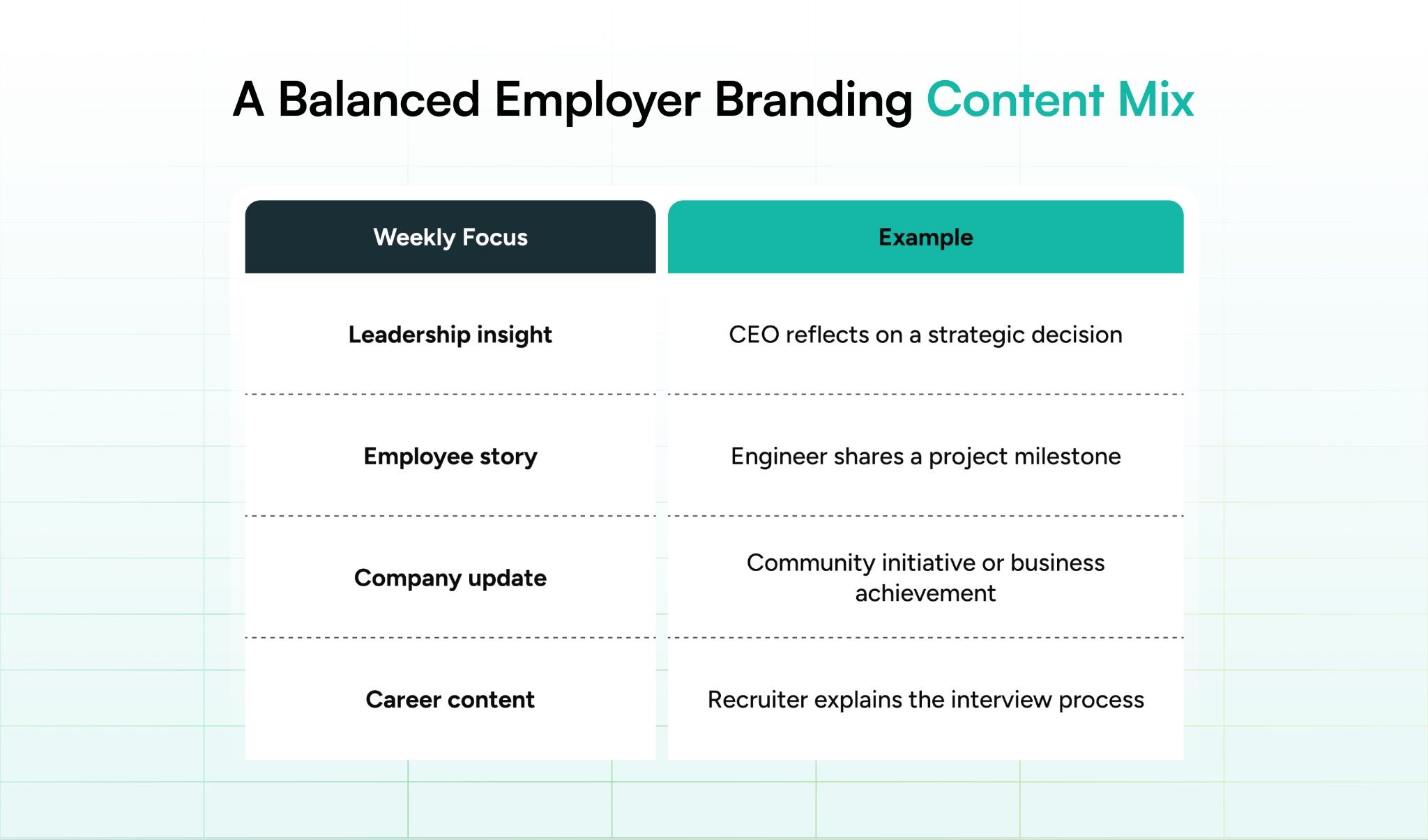
This ensures candidates regularly encounter different aspects of the organization rather than seeing recruitment content clustered around hiring campaigns.
4. Encourage Advocacy, but Don't Script It
Employee advocacy works best when it feels genuine. That authenticity is lost when employees are given pre-written captions or expected to share every company announcement.
Instead, organizations should create the conditions that make advocacy easy:
- Share photography from company events
- Provide optional content ideas, not mandatory posts
- Celebrate employees who naturally share their work
- Offer LinkedIn training for those who want it
- Recognize contributions without making participation an expectation
The goal is to give employees the resources and confidence to share their own experiences in their own words. That creates more opportunities for candidates to discover genuine stories from across the organization.
5. Focus on Hiring Outcomes More Than Social Metrics
Employer branding isn't a popularity contest. A post with modest engagement may influence a highly qualified candidate who applies weeks later. Conversely, a viral post may have little impact on recruitment.
Include KPIs that show what is happening further along the hiring journey. Consider tracking:
- Qualified applications per vacancy
- Time to hire
- Offer acceptance rate
- Employee referral rate
- Career page visits from LinkedIn
- Growth in employee advocacy participation
- Candidate feedback on employer perception
- Share of applicants mentioning LinkedIn as an influence
These measures help organizations understand whether their employer branding efforts are improving candidate quality and recruitment efficiency and not just increasing visibility.
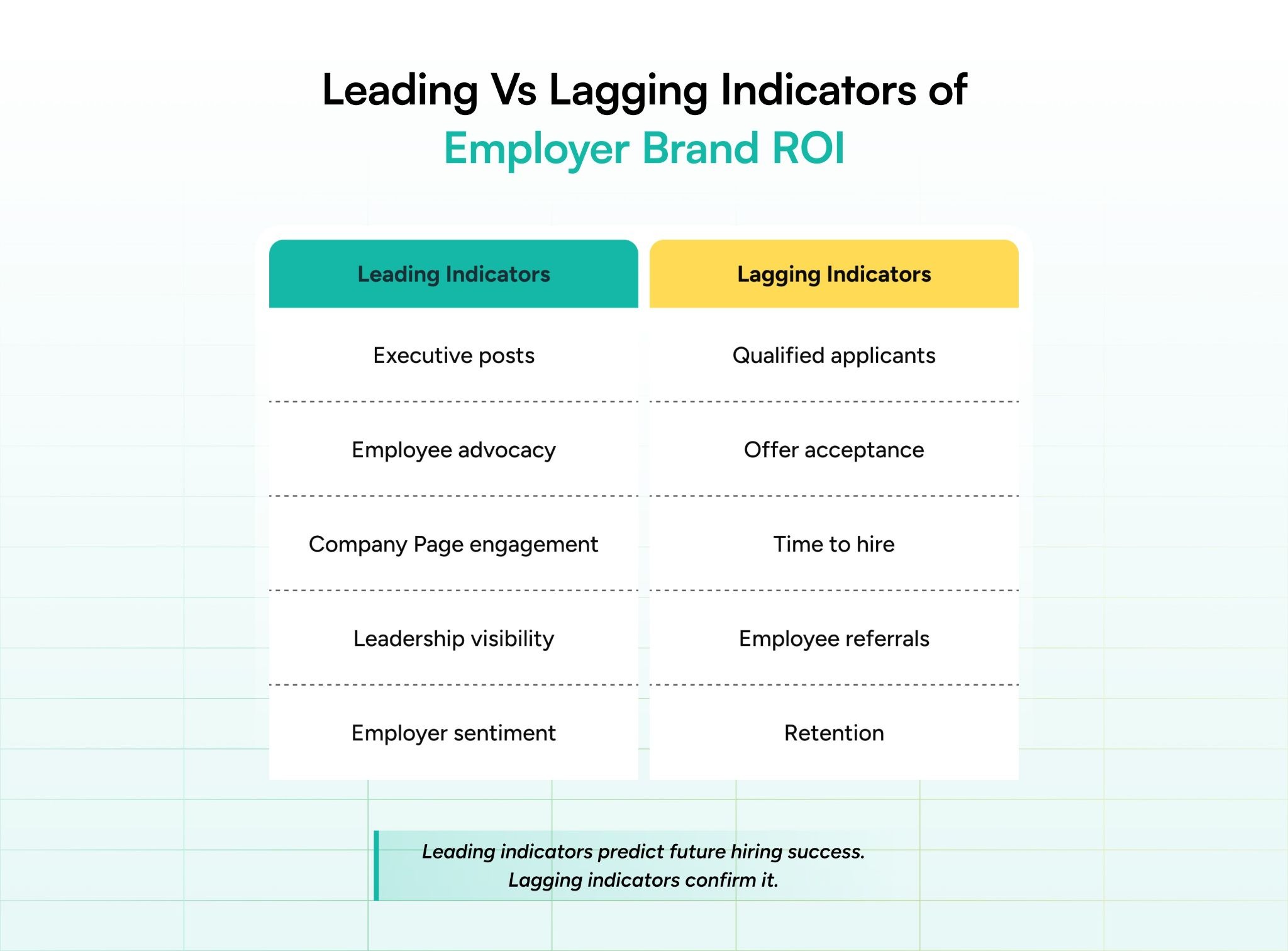
Measuring Employer Brand ROI
Employer branding is easy to dismiss as difficult to measure because its impact isn't always immediate.
A candidate may discover your CEO's LinkedIn profile today, follow the Company Page next week, read employee posts over several months, and only apply when the right opportunity appears. Unlike paid recruitment campaigns, employer branding influences perception gradually through repeated exposure and accumulated trust.
That doesn't mean its impact can't be measured.
1. Qualified Applicants
A useful measure of employer branding is the quality of applicants it helps attract.
When candidates have a clearer picture of the organization before applying, they have more information to decide whether the role, leadership, culture, and working environment are a good fit for what they're looking for.
Track the number and proportion of applicants who meet the requirements for each role over time. This can help you see whether stronger employer visibility is accompanied by a healthier pool of qualified candidates.
2. Application Completion Rate
A strong employer brand reduces uncertainty. Candidates who trust what they've learned about an organization are more likely to complete lengthy application processes rather than abandoning them midway.
3. Time to Hire
Candidates who are already familiar with an organization may enter the recruitment process with more context about its leadership, culture, and work. An established LinkedIn presence can help build that familiarity before a role becomes available.
Track time to hire alongside employer branding activity to see how quickly qualified candidates move from application to acceptance.
4. Offer Acceptance Rate
An accepted offer can be one of the clearest indicators that employer branding is working.
Candidates who have already developed confidence in leadership, culture, and the employee experience are more likely to accept an offer when it arrives.
If offer acceptance remains low despite competitive compensation, employer perception may deserve closer attention.
5. Employee Referral Rate
Employees who genuinely believe in their organization are more likely to recommend it to friends, former colleagues, and professional contacts.
High referral rates often indicate something deeper than recruitment efficiency. They suggest employees are willing to put their personal reputation behind the organization.
6. Retention
Employer branding doesn't end when a candidate accepts an offer.
If the external employer narrative accurately reflects the internal employee experience, organizations are more likely to retain the people they attract.
A growing gap between the promise candidates see on LinkedIn and the reality they experience after joining often leads to disengagement and higher turnover. Retention therefore serves as a long-term measure of employer brand credibility.
7. Employer Brand Sentiment
Numbers only tell part of the story. Monitor how candidates and employees describe the organization across LinkedIn comments, candidate surveys, interview feedback, and employer review platforms.
Look for recurring themes:
- Do candidates mention leadership visibility?
- Are employees talking about growth opportunities?
- Do new hires describe the recruitment process positively?
- Are the same cultural strengths appearing consistently across different channels?
Sentiment helps organizations understand not just whether people are talking about the employer but what they're saying.
Conclusion
Every organization has an employer brand, whether it actively manages it or not. Today's candidates have access to far more than recruitment campaigns and Careers pages when forming an impression of a prospective employer. On LinkedIn, they can see how leaders communicate, what employees share about their work, and whether those signals support the culture and values the company presents publicly.
That makes employer branding something organizations need to build consistently over time. Leadership visibility, employee advocacy, Company Page activity, and the candidate experience all contribute to the picture prospective employees form before they decide to apply.
Building a credible employer brand requires a clear strategy across these different touchpoints, with enough consistency for candidates to understand who the organization is, what it values, and what working there might actually be like.
If your organization wants to strengthen its employer brand through executive thought leadership and a more strategic LinkedIn presence, GrowedIn can help. Schedule a call to discuss how we can build a LinkedIn presence that gives the right candidates more reasons to know, understand, and consider your organization.

Frequently Asked Questions
What is employer branding on LinkedIn?
Employer branding on LinkedIn is how an organization presents itself as a place to work through its Company Page, executive activity, employee advocacy, recruiter presence, and other interactions. Together, these signals help determine how potential candidates perceive the organization before applying.
Why is LinkedIn important for employer branding?
LinkedIn gives candidates access to multiple sides of a prospective employer in one place. They can explore company updates, leadership activity, employee experiences, workplace culture, and recruitment content before deciding whether an organization and opportunity align with their career goals.
How does executive thought leadership influence employer branding?
Executive thought leadership gives candidates insight into the people leading an organization. By sharing perspectives on business decisions, industry developments, company priorities, and employee achievements, leaders can help candidates better understand the organization's direction, values, and leadership approach.
What role does employee advocacy play in employer branding?
Employee advocacy gives candidates another perspective on the workplace beyond official company messaging. When employees voluntarily share projects, achievements, learning experiences, and team successes, their posts can offer useful glimpses into the work, people, and culture within the organization.
What should companies post on LinkedIn to strengthen their employer brand?
Companies can share workplace initiatives, employee stories, team achievements, career development opportunities, industry expertise, company milestones, and recruitment updates. Executive and employee activity can complement Company Page content, giving candidates different perspectives on the organization and its culture.
How can organizations measure employer branding success?
Organizations can track metrics such as qualified applicants, application completion rate, time to hire, offer acceptance rate, employee referrals, advocacy participation, retention, and employer brand sentiment. Visibility and engagement metrics can provide additional context when considered alongside these recruitment and workforce measures.
What are the biggest employer branding mistakes companies make on LinkedIn?
Common mistakes include appearing only when vacancies need to be filled, leaving leadership largely invisible, relying heavily on corporate messaging, scripting employee posts, and evaluating employer branding solely through likes, impressions, or follower growth.
Employer Branding on LinkedIn
- Employer branding has shifted from recruitment marketing to continuous reputation building on LinkedIn.
- Candidates evaluate leadership, employees, and company culture long before submitting an application.
- Executive thought leadership builds trust by demonstrating values, decision-making, and organizational vision.
- Employee advocacy provides authentic culture proof that candidates trust more than corporate messaging alone.
- Strong employer brands combine Company Pages, leadership visibility, employee advocacy, and positive candidate experiences.
- Effective employer branding requires a coordinated operating model rather than isolated LinkedIn activity.
- Success should be measured through hiring outcomes such as qualified applicants, offer acceptance, and retention, not social media vanity metrics.
- Organizations that consistently demonstrate their culture on LinkedIn are better positioned to attract, engage, and retain top talent.


Insights Hub

The Best Time To Post on LinkedIn In 2026
Personal Branding vs. PR: What Should Executives Prioritize?