
When Does Building Your Brand Become Bragging?

What You’ll Learn in this Issue
- Sharing achievements isn't bragging unless the content repeatedly exaggerates success or offers little value to the audience.
- Build credibility by documenting your professional journey, including challenges, decisions, lessons, and perspectives.
- Keep promotional content occasional and relevant, leading with insights and giving readers a reason to engage beyond buying.
Many executives and companies hesitate to build their presence on LinkedIn because they worry about coming across as too loud or self-promotional.
We even use terms like “brag post” because some content genuinely does come across that way.
But sharing your achievements, building your professional reputation, and promoting your business aren't necessarily the same thing.
Understanding the difference can make it easier to talk about your work without feeling like you're constantly selling yourself.
In this issue of North Star, we'll break down these differences and look at how you can build your presence more comfortably and effectively.
What is Bragging?
Talking about your achievements doesn't automatically mean you're bragging.
There's nothing wrong with sharing a promotion, an award, a business milestone, or something you've worked hard to accomplish.
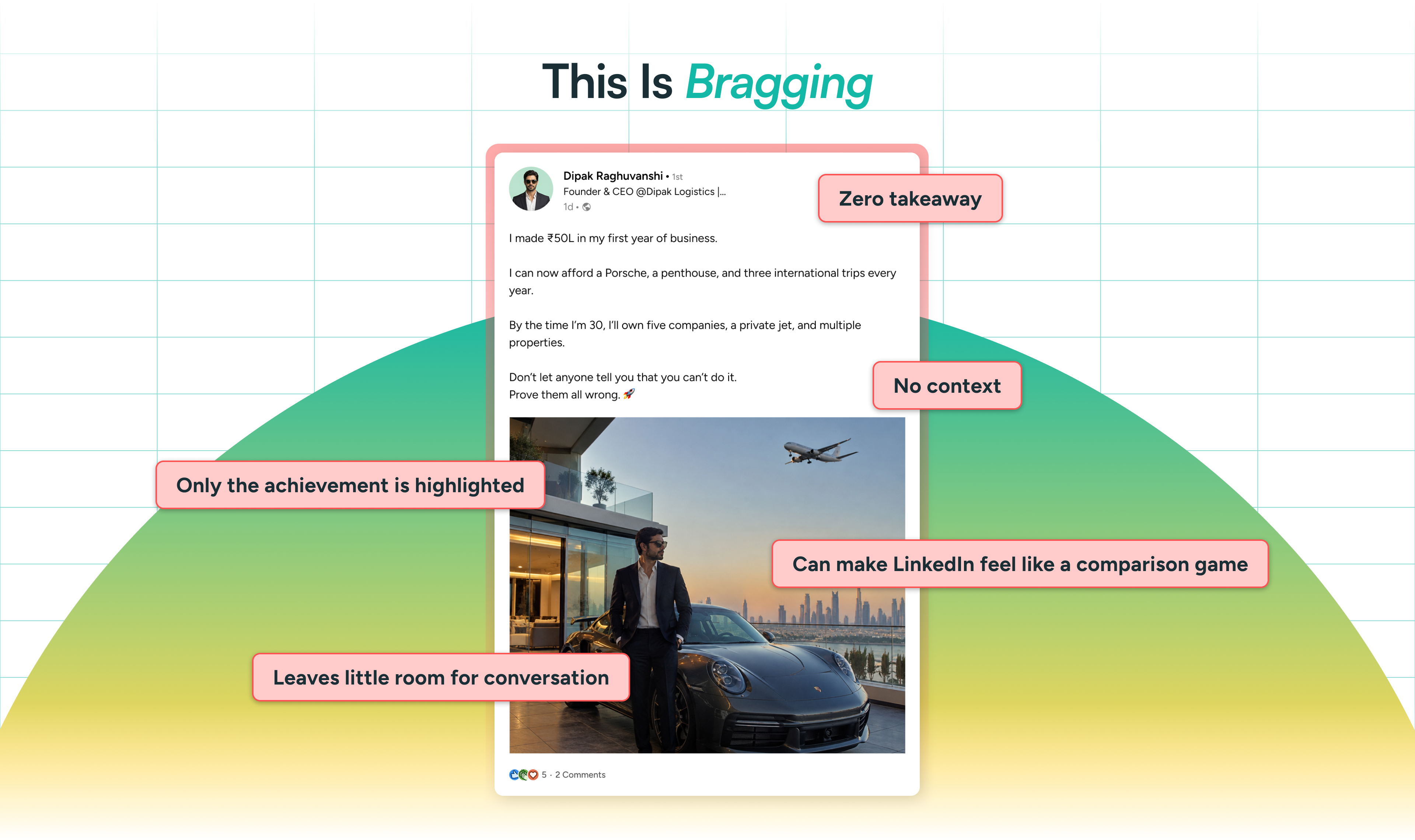
The problem arises when most of your content centers on how successful you or your company are, with little context or consideration for the people reading it.
It can also come across as bragging when every achievement is presented as extraordinary, contributions are exaggerated, or the content creates an unrealistic impression that you or your company have never experienced setbacks.
The difference often lies in how you communicate an achievement and what you want people to take away from it.
How is Building Different?
A good LinkedIn strategy involves building your professional reputation gradually and realistically.
This works especially well when you document your experiences, share your perspectives, and help people understand how you approach your work.
Even if you're a successful executive who has already achieved what many people aspire to, once you start on LinkedIn, you're still building something. You're helping a wider audience understand your experience, expertise, and professional judgment.
So when you document your professional life, include both the upward and downward hills. Talk about the decisions that worked and the ones that made you reconsider your approach.
Share perspectives that people agree with, but also those that might challenge conventional thinking.
Can You Ever Promote?
You're building your company page and executive profile, at least in part, to support your business goals. So it only makes sense that you'd want to promote your products, services, and achievements occasionally.
The difference lies in how frequently you promote and whether your audience has a reason to care about what you're sharing.
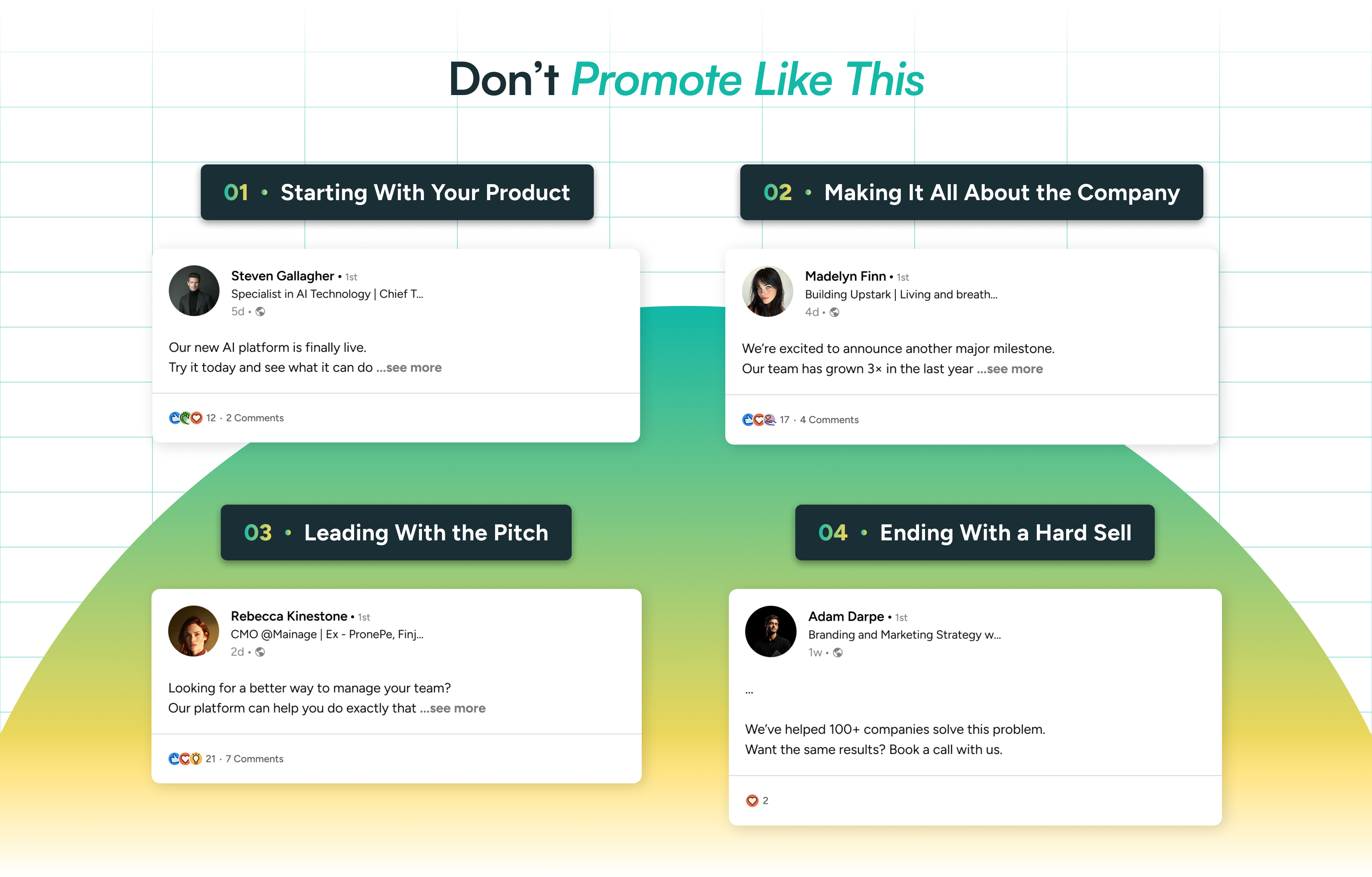
Content that is obviously promotional, especially on LinkedIn, can be a major repellent. So whenever you promote, keep it subtle, natural, and always leave some space open for conversation.
A few actionable tips to keep your content from sounding promotional:
→ Lead with an insight, not your product or service.
→ Talk about the problem before talking about how you solve it.
→ Share the lessons from challenges and failures, not just the success.
→ Give people something to respond to beyond an invitation to buy.
Ultimately, building a professional brand doesn't mean you have to stop talking about yourself or your business.
It means being thoughtful about what you share, how you communicate it, and what your audience gets from following you.
Executive Spotlight
Vijay Shenoy brings 20+ years of experience across marketing, advertising, business strategy, and digital innovation.
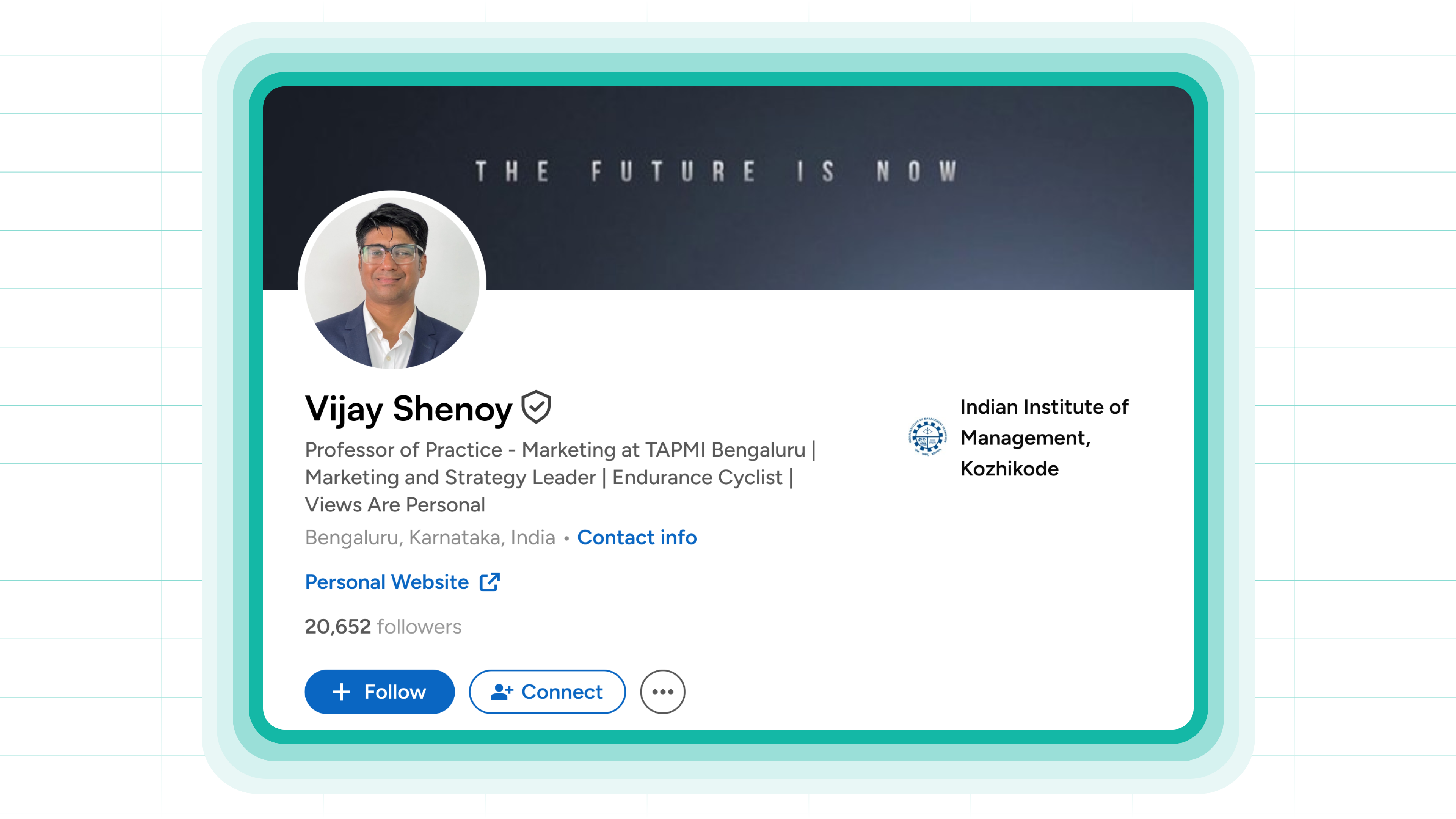
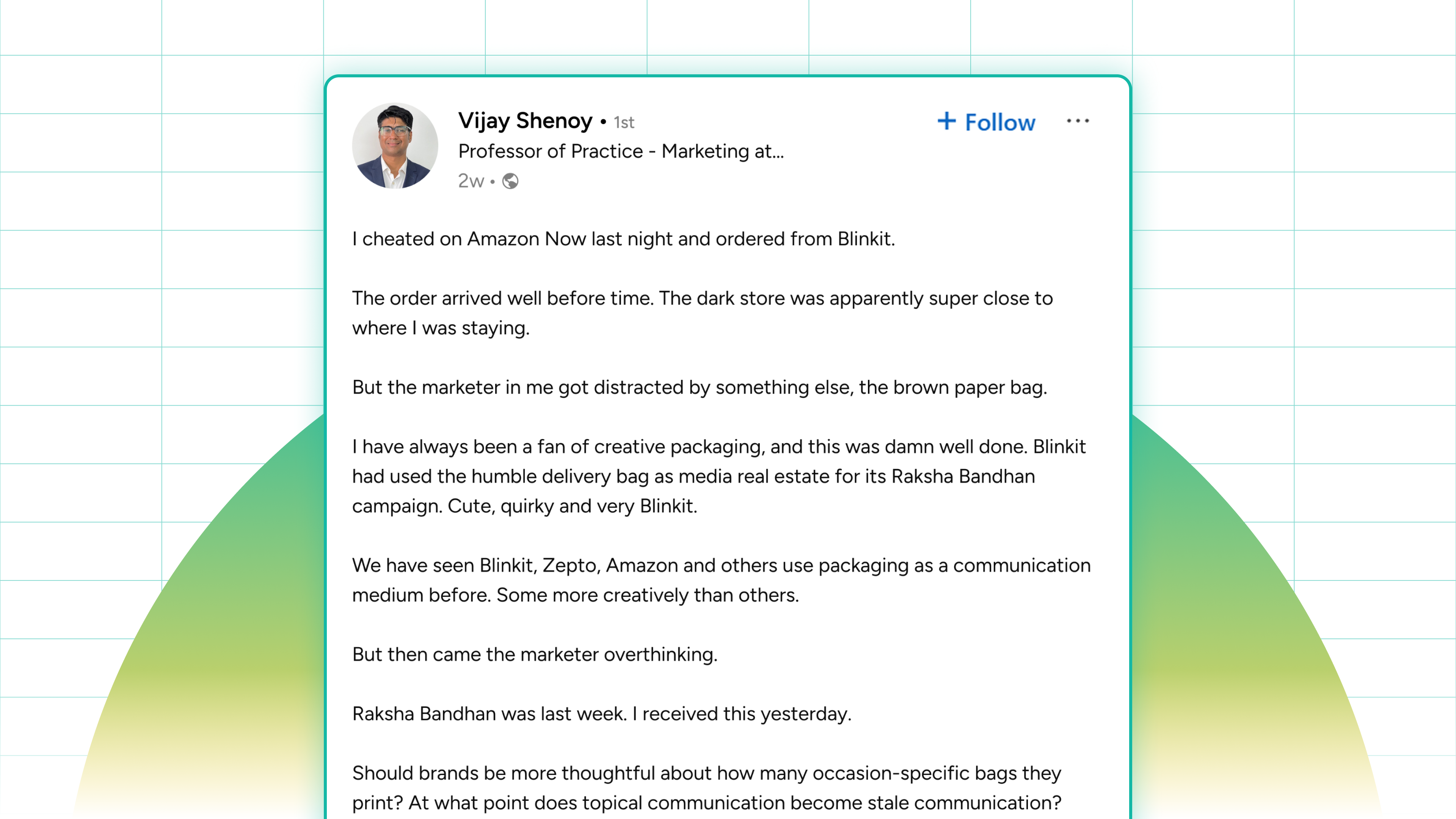
His LinkedIn content often takes everyday marketing moments and looks beyond the obvious campaign takeaway, connecting brand creativity with consumer behaviour and business impact.
One post about ordering from Blinkit captures this well. What starts with its creative Raksha Bandhan packaging turns into a sharper question of how much brand communication can influence preference when consumers ultimately choose based on speed, availability, and price.
For executives, his content is a reminder to look beyond what a campaign is designed to achieve and ask what it actually changes for the customer.
Resource of the Week
Adobe Express’s Caption Video tool automatically generates captions from your video’s audio, which can save time when repurposing video content for LinkedIn and other social platforms.
You can review the transcript, edit errors, and customize the caption style before downloading the finished video. It’s a simple way to make video content easier to follow, especially when people are watching without sound.


