
LinkedIn’s New “Seems Like AI Slop” Feature

What You’ll Learn in this Issue
- LinkedIn is adding a “Seems Like AI Slop” feedback option alongside stronger signals for identifying low-quality or overly automated content.
- The platform is not rejecting AI itself. It is distinguishing useful AI assistance from mass-produced content that lacks originality or genuine input.
- The challenge will be preventing genuine writing from being incorrectly flagged or the feedback feature from being misused against creators.
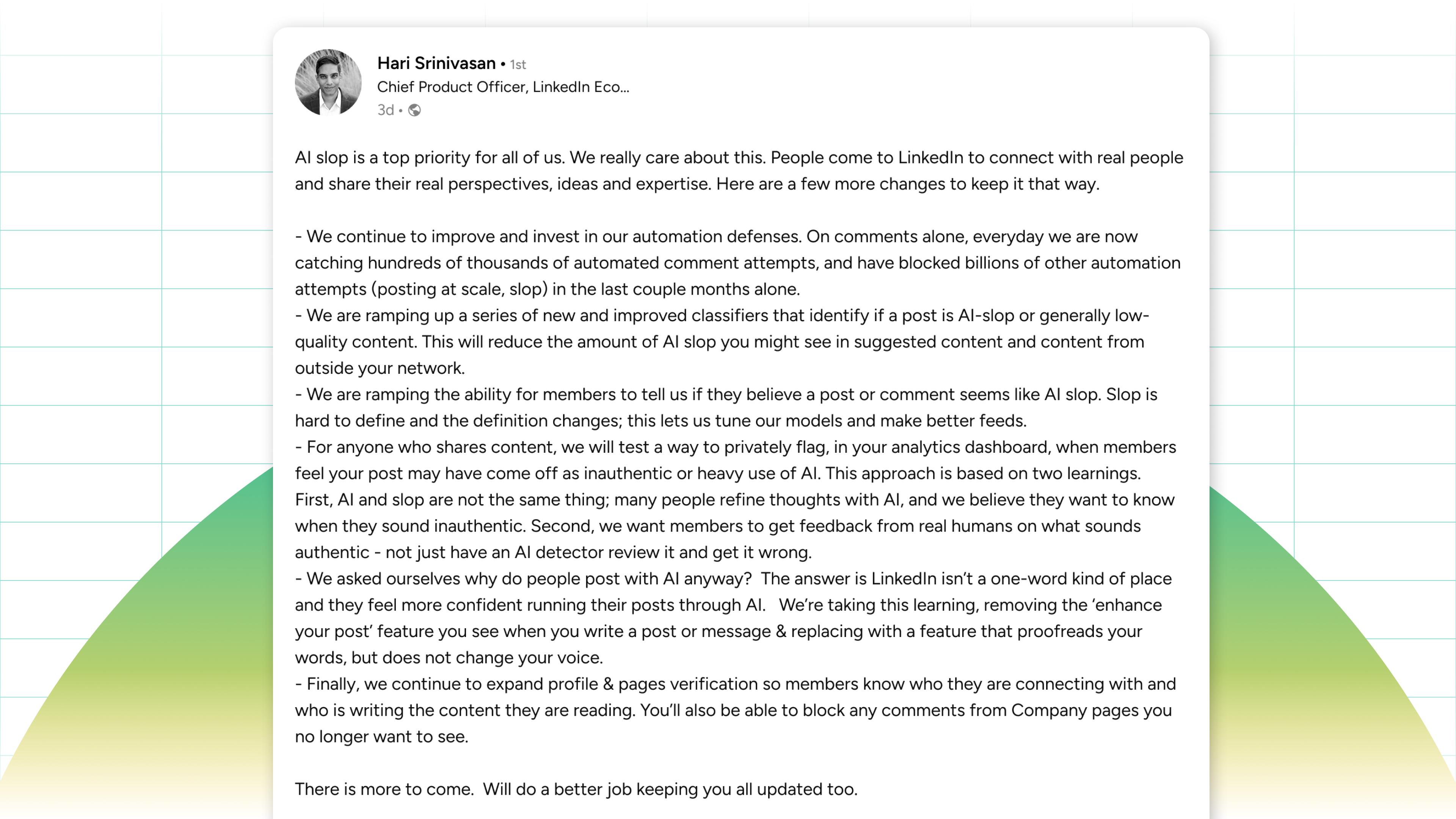
On July 30th, LinkedIn’s Chief Product Officer shared an update about a new feature being introduced on the platform. The “Seems Like AI Slop” feedback button.
He also explained why LinkedIn introduced it and how it fits into the platform's broader effort to tackle the growing volume of AI-generated, low-quality content.
As a company that closely follows LinkedIn’s evolution, we find updates like this genuinely exciting. In this issue of North Star, let’s take a look at this update and what it could mean.
They Are Hearing Us
LinkedIn’s product team has been unusually active in recent months, regularly asking for user feedback and following it up with visible updates.
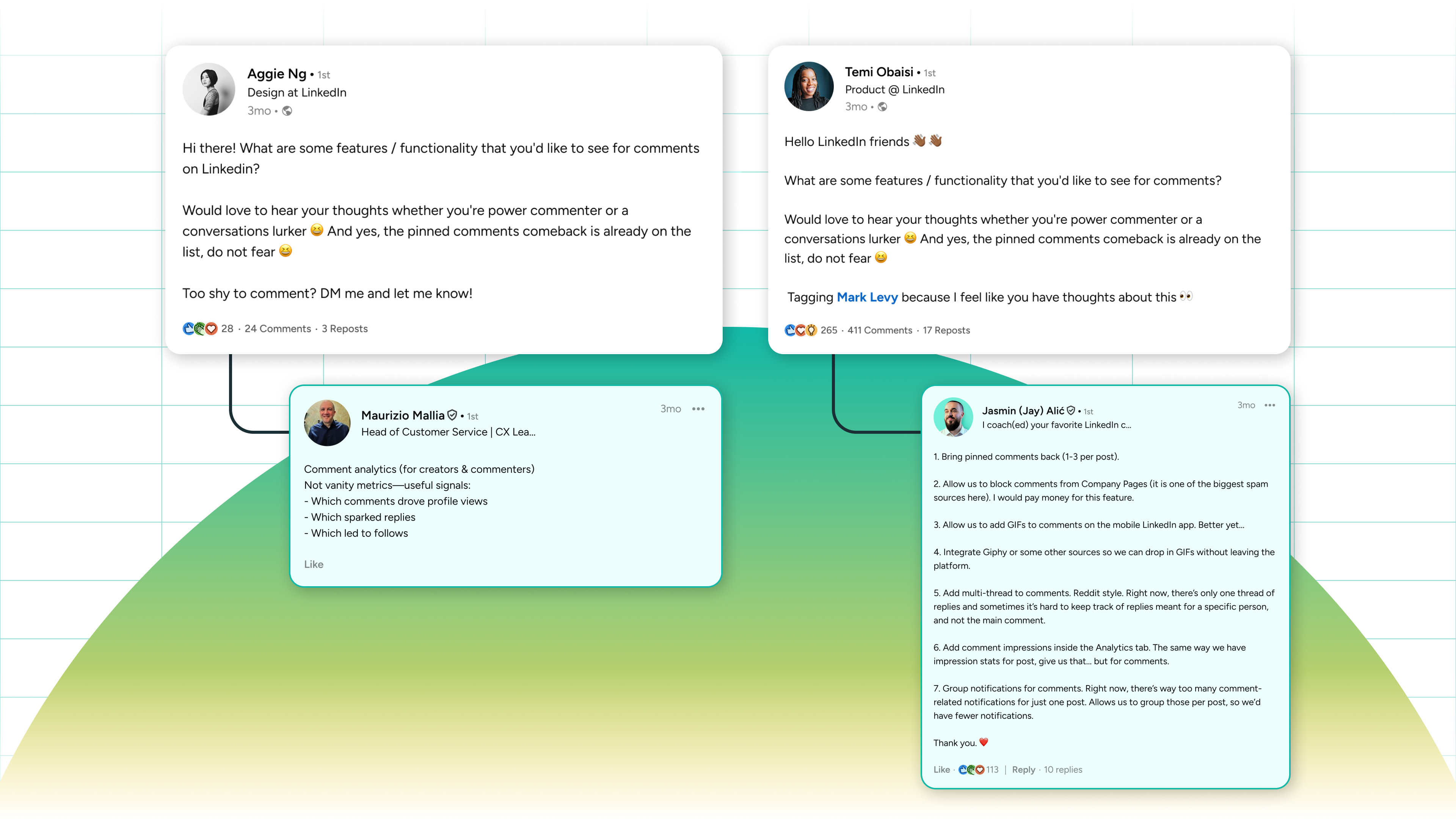
For example, Temi Obaisi and Travis Hutchinson, who are part of LinkedIn’s product team, recently posted asking what people would like to see more of in LinkedIn comments.
Soon after, the Chief Product Officer shared an update announcing GIFs in comments, a feature that had been highly requested in response to those earlier posts.
We’ve always believed that LinkedIn’s algorithm changes because user behavior changes.
When AI-generated content first became popular, people engaged with it heavily, so the platform naturally rewarded that behavior. Today, the mood is very different.
Frustration around AI slop, automated comments, and low-quality content has become impossible to ignore, and LinkedIn now appears to be actively addressing those concerns rather than overlooking them.
Does This Mean LinkedIn Is Against AI?
Not at all.
Many of us already use AI for brainstorming, refining ideas, summarizing thoughts, fixing errors, or improving structure.
LinkedIn’s update makes an important distinction between using AI as a writing assistant and using AI to mass-produce generic, low-quality content.
The post clearly states that AI and slop are not the same thing. In fact, they are replacing the old “Enhance Your Post” feature with a lighter proofreading-style feature that focuses on correcting language without changing the creator’s voice.
What’s Going to be Different?
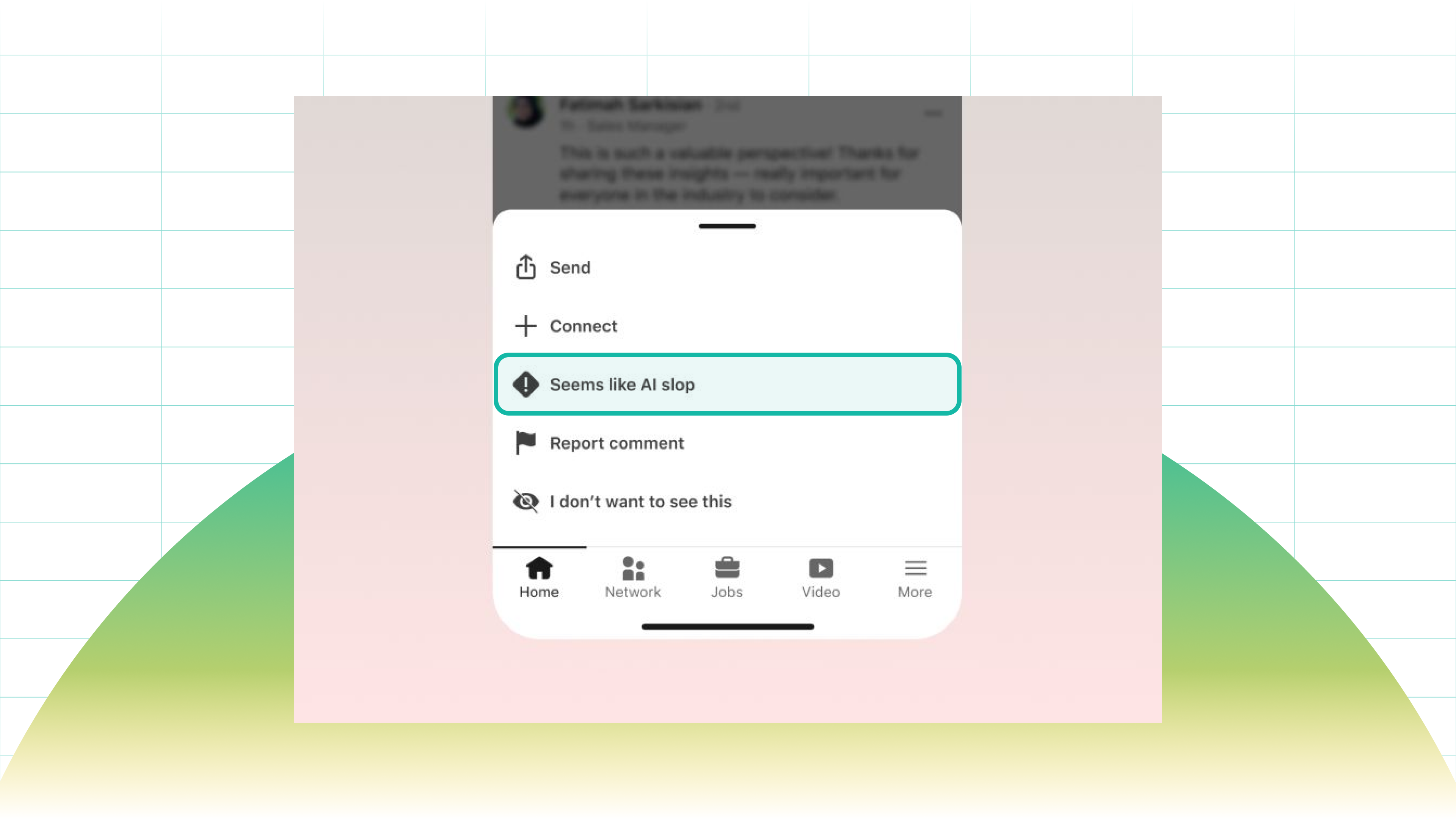
According to the update, LinkedIn is introducing several new signals:
• A “Seems Like AI Slop” feedback option available through the three-dot menu on posts and comments.
• Improved systems that identify low-quality or overly automated content.
• A private signal inside post analytics where creators may be informed if members felt a post came across as inauthentic or heavily AI-generated.
• Expanded profile and page verification to make it clearer who is behind the content people are reading.
Will This Be Enough?
Reporting AI slop alone can never be the complete solution to what the algorithm has become. The platform also needs to get better at understanding what made people love LinkedIn in the first place while still making room for new advancements.
Recent updates such as better analytics, personalized feeds, and feedback signals around inauthentic content suggest that LinkedIn is trying to move in that direction.
Where Could This Backfire?
While many users appreciate LinkedIn’s attempt to reduce AI slop, the feature also raises valid concerns.
→ What if genuine writers get flagged?
→ Could users abuse the reporting option against competitors or people they disagree with?
→ Will niche technical writing or highly structured professional content be mistaken for AI-generated text?
Many comments on the update post pointed out that slop is not always AI-generated, and that authenticity is much harder to measure than grammar or formatting.
The biggest challenge for LinkedIn will be drawing a clear line between helpful AI assistance and low-quality content.
For now, the effort is encouraging, but only time will show whether this becomes a useful signal or creates new problems of its own.
Executive Spotlight
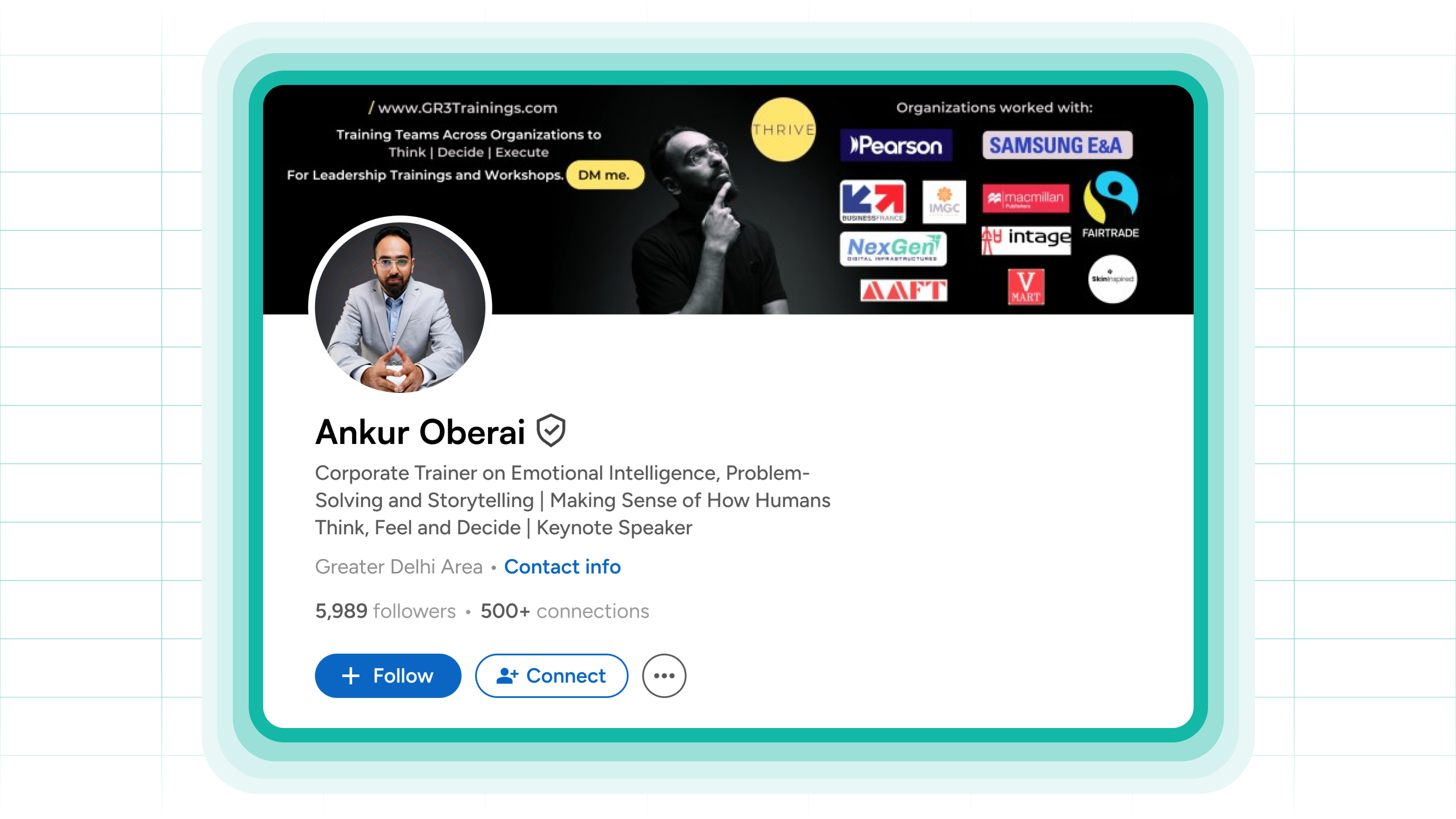
Ankur Oberai is a corporate trainer whose work combines emotional intelligence, storytelling, and decision-making. This is reflected in his LinkedIn presence and is what makes it stand out. He turns everyday moments into practical leadership lessons that professionals can immediately relate to.
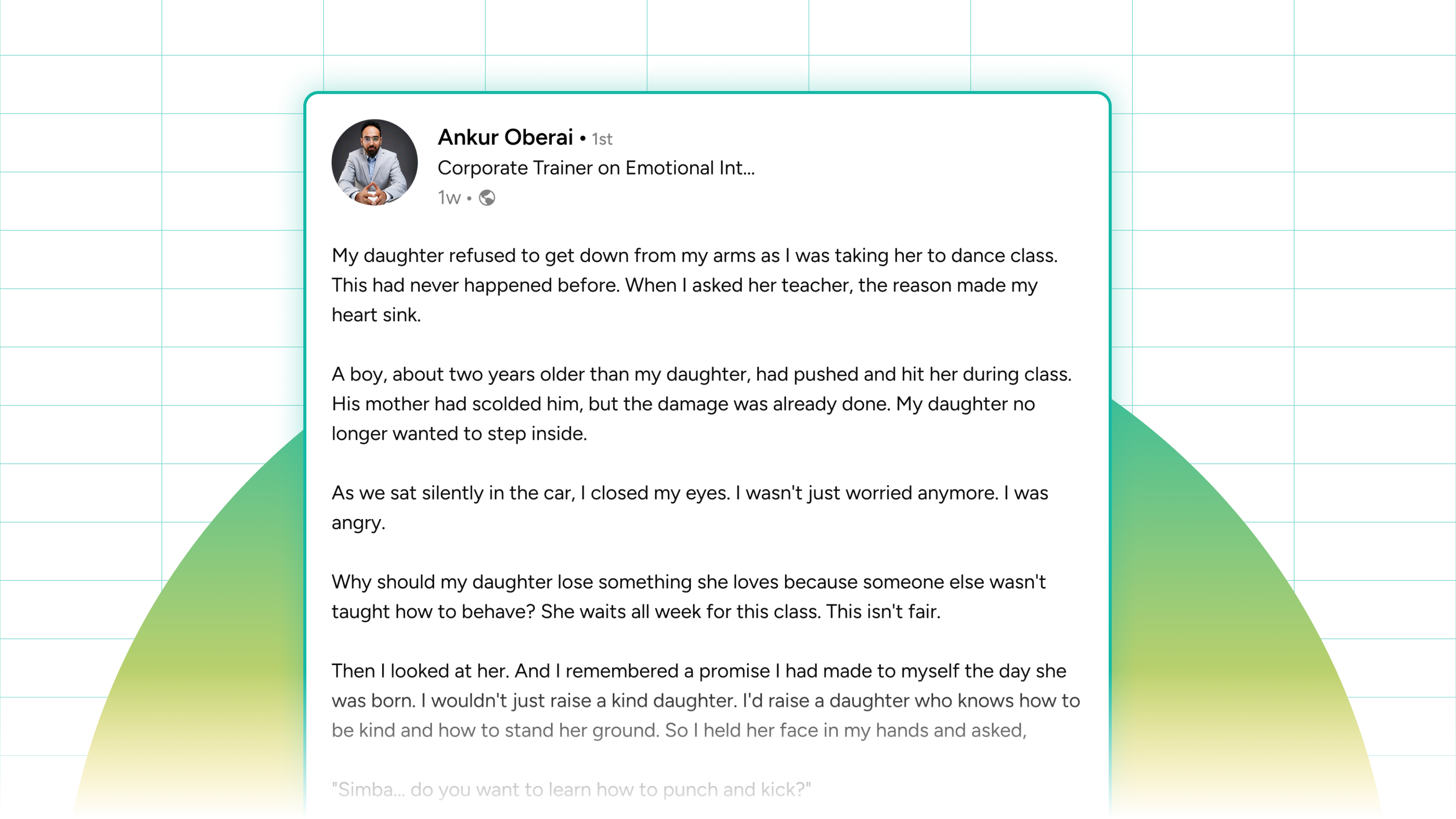
In one post, he shares how his daughter's fear after being pushed in dance class led him to enroll her in martial arts. Instead of presenting it merely as a parenting story, he reframes it as a lesson in raising children to be both kind and capable of standing their ground.
His profile is a strong example of using personal experiences to teach broader ideas without sounding preachy.
Resource of the Week
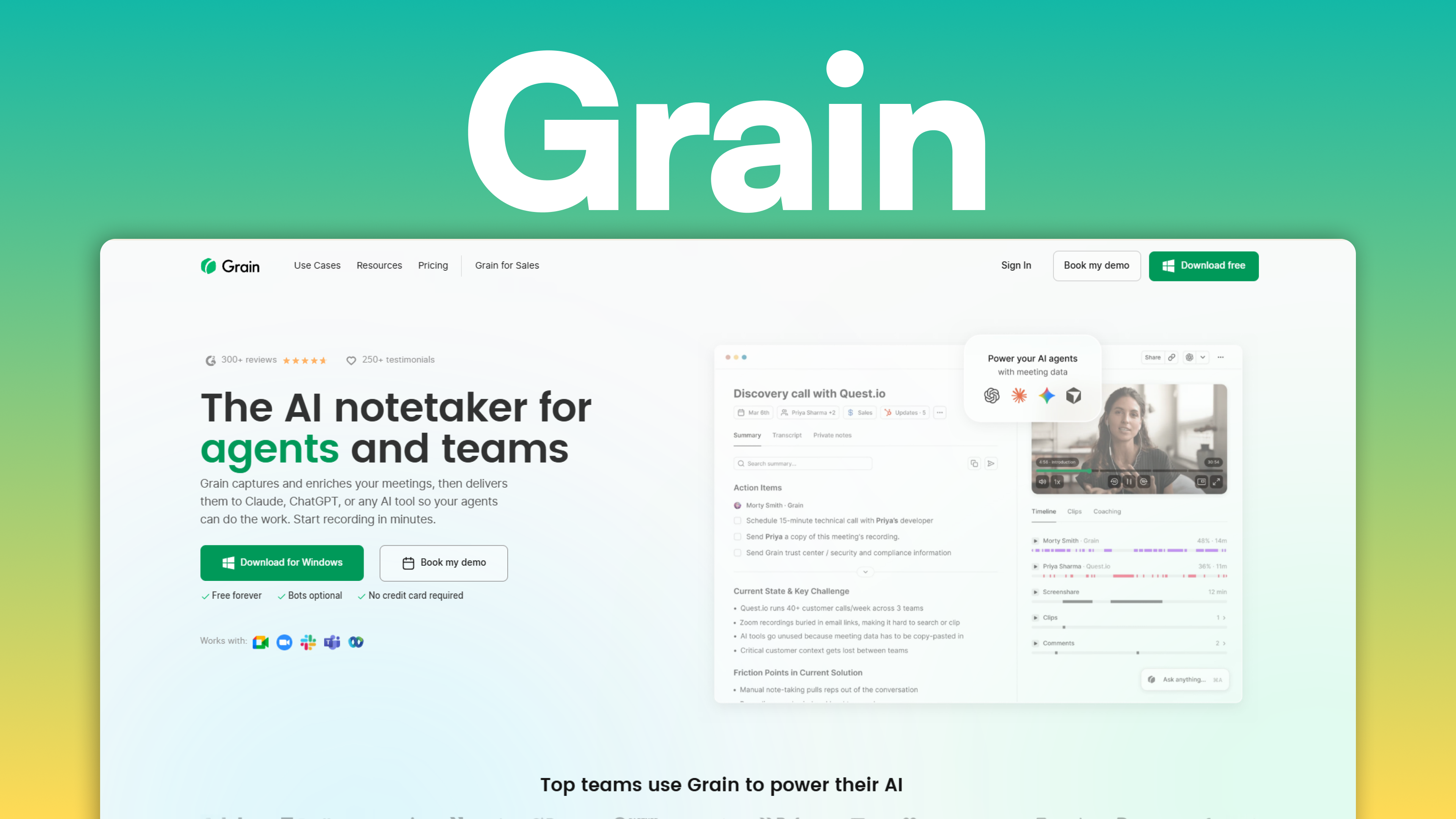
If your workday is filled with meetings, Grain is one tool we genuinely appreciate internally.
It records calls, generates AI summaries, captures action items, and creates searchable transcripts. It works across Zoom, Google Meet, Microsoft Teams, Webex, and Slack huddles, making it especially useful for teams that collaborate across multiple meeting platforms.
Coming Up Next…
LinkedIn hasn't felt the same over the last few months, and we have to acknowledge that. In the next issue of North Star, we're going to share some raw and honest thoughts on LinkedIn over the past year and what we can do about it.
Till then, authenticity is still the safest LinkedIn strategy.


