
Do External Links Hurt LinkedIn Reach?

What You’ll Learn in this Issue
- External links aren't necessarily the problem. Posts that offer little value beyond asking readers to click are more likely to struggle.
- Placing links in comments can make them harder to find, especially when LinkedIn sorts comments by relevance.
- Use your Featured section, profile links, or newsletters when conversions are the priority, keeping posts focused on engagement and value.
If there is one piece of advice that many professionals on LinkedIn have followed religiously for a long time, it is to avoid putting external links in their posts.
LinkedIn wants people to stay on its platform, so posts that direct users elsewhere are believed to receive less visibility.
Over time, this belief has become an almost unquestioned rule of LinkedIn content strategy. Yet, there has also been growing debate about whether external links actually hurt post performance or whether the advice has been exaggerated.
So, how much truth is there to it?
In this issue of North Star, we take a closer look at what we know about external links on LinkedIn and how to approach them without compromising your content strategy.
The Purpose Behind the Link
When people put links in their posts, they generally do it in two ways.
The first opens with: “Download our new report here” and gives readers little reason to engage before clicking.
The second shares a genuinely useful observation, develops an idea, and then adds a link for readers who want to explore it further.
Both contain an external link, but are asking the reader to behave very differently.
This is where the old advice can become misleading.
An external link can make it harder for a post to perform, particularly when the link is the main reason the post exists. But that doesn’t mean every post containing a URL is automatically destined for poor reach.
The bigger question is what role the link plays.

The Risk of Links in Comments
Many of us put external links in the comments because it feels like a safer option for protecting reach.
But the downside is that the comment may not appear under LinkedIn’s default “Most Relevant” setting, meaning readers may have to take several steps to find the link. Creators remain unaware of this because it is still visible to them as the first comment.

The Link Isn't Always the Problem
LinkedIn is still a feed built around native content and conversation. If your post gives people no reason to stop, read, or respond, adding (or avoiding) a link certainly won't help.
A better approach is to make the post valuable enough that people pause, engage, and spend time with it before deciding whether to click away.
Instead of avoiding external links, make the post valuable enough that the link becomes the next step.

Better Places for Your Links
If your goal on LinkedIn is conversion rather than reach, your post isn't always the best place for the link.
Your Featured section, profile link, newsletter, or a relevant LinkedIn page can give interested readers a clearer path to take action without making the post carry both the content and conversion burden.

Executive Spotlight
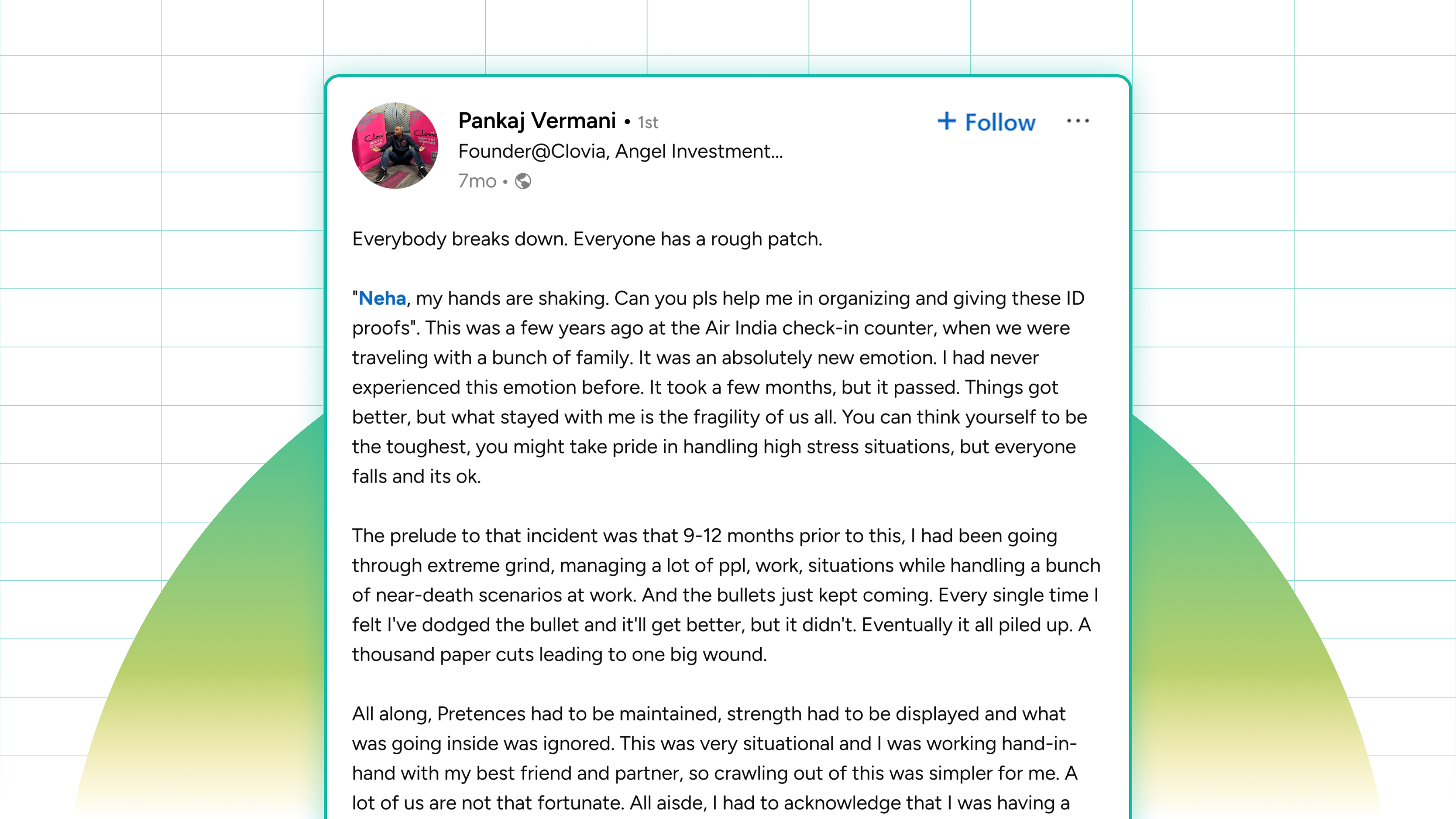
Pankaj Vermani, founder of Clovia, brings a strong mix of entrepreneurial experience and personal reflection to LinkedIn.

His content moves beyond talking about building a well-known brand to sharing the realities behind the journey. While some of his posts talk about Clovia and the evolution of India’s startup ecosystem, one post opens up about experiencing a breakdown after years of sustained pressure.
That balance makes his content feel both credible and human, like a reminder that executive presence can come from sharing not just what you built, but what you learned along the way.
Resource of the Week
ElevenLabs turns written content into realistic AI-generated audio, making it useful for repurposing content into podcasts, voiceovers, or audio summaries.
Its free plan offers 10,000 credits per month, premade voices, 32+ languages, and tools like Voice Design and Speech-to-Text. The free tier is for personal, non-commercial use, making it a good way to experiment before investing in audio workflows.


