
What Makes People Want to Follow a Company Page?

What You’ll Learn in this Issue
- Define your company page’s purpose around audience needs, business goals, and long-term brand credibility.
- Showcase employees, company culture, and diverse perspectives to build an identity beyond individual leaders.
- Establish two or three recurring content themes that give followers consistent value and clear expectations.
LinkedIn company pages generally attract fewer followers than executive profiles and often lack the personal touch that individual profiles bring. This is one reason why founders often take the lead in building their company's presence on LinkedIn through their own profiles.
But company pages still play a crucial role in building credibility and establishing an institutional presence.
And while a company page may have fewer followers, the people who choose to follow it have made a more deliberate decision to stay connected. That makes them a valuable audience to build a relationship with.
In this issue of North Star, let’s look at what makes people follow a company page.

Positioning Your Company Page
Like any social media presence, your company page needs a clear purpose.
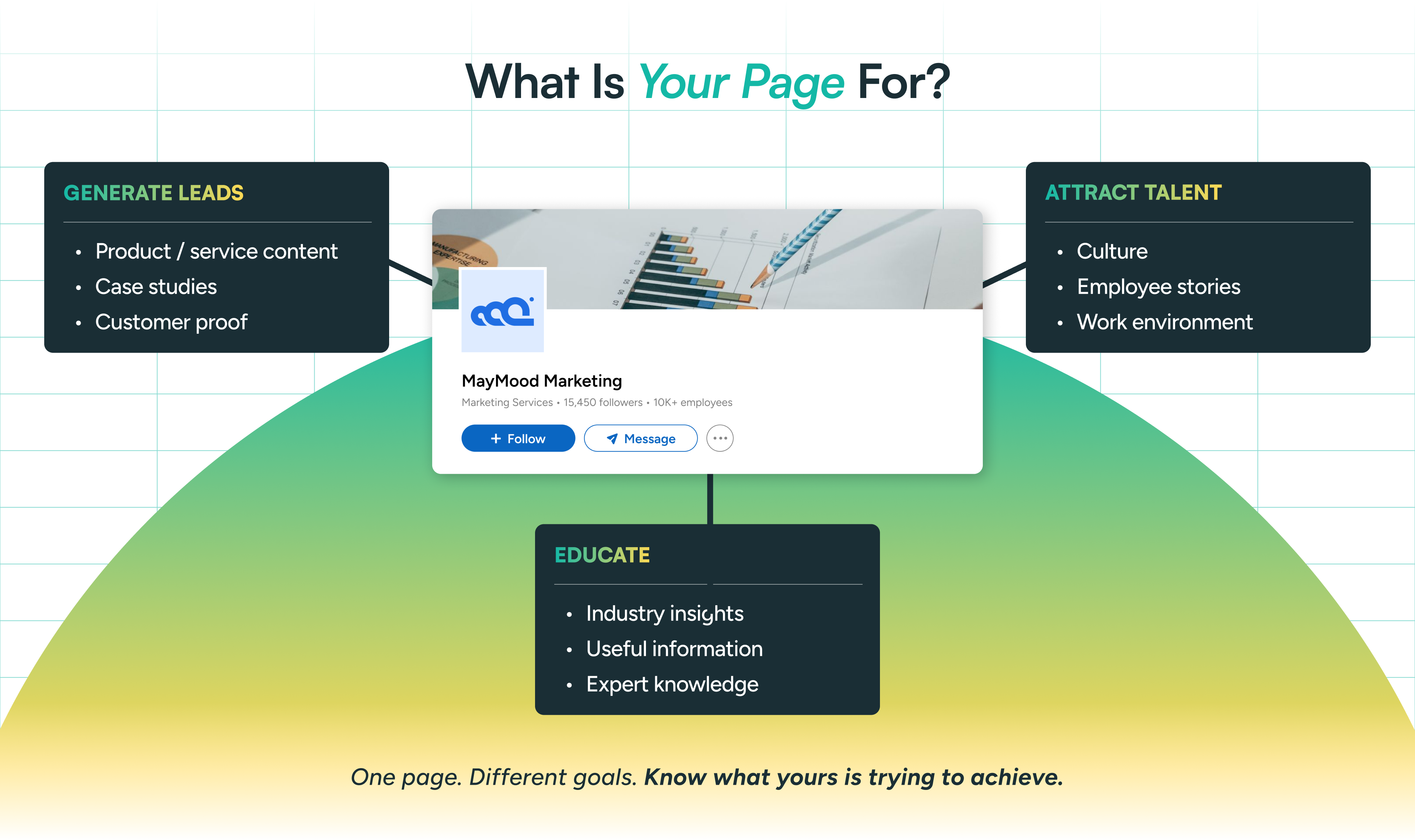
What do you want to achieve with it? Do you want to generate leads, educate your audience, attract talent, or do all three?
Beyond direct conversions, company pages can be a valuable channel for employer branding and sharing industry knowledge. This kind of content gives people a reason to follow your page, while helping them become more familiar with your company over time.
The Advantage of Not Relying on One Personality
While individuality is an advantage for personal profiles, company pages have the advantage of not being tied to a single person's personality.
A company page can reflect the culture and values of the company as a whole, giving the brand more room to communicate through different people, teams, and perspectives.
It can also give people a broader understanding of how the company works and what they can expect from it. Employee stories, behind-the-scenes updates, and insights from across the company can give people a reason to follow the page beyond simply checking its credibility.

Make the Follow Worth It
People don’t follow a company page just to receive updates. They follow when the page consistently gives them something worth staying connected to.
That could be:
→ Useful information
→ Industry insights
→ A clear sense of what the company stands for
The strongest pages usually have a mix of all three.
But value also needs consistency. People should know what they’ll get when they follow your page. Having 2-3 recurring content territories can give them a reason to keep coming back and help them associate certain ideas with your company.
Think about what someone expects after clicking “Follow.” Give them a reason to stay.
Executive Spotlight
Chris Silver, CRO at Parloa, brings deep experience across enterprise sales, GTM strategy, AI, and customer experience.
His LinkedIn content blends personal career lessons with observations on sales, leadership, and customer behaviour. He often uses everyday experiences to unpack broader business ideas.

In one post, he explores how different generations prefer different communication channels, then goes a step further. Customer behaviour is often situational, shaped by what people are doing and how urgently they need help.
For executives, his content shows how personal expertise can become a lens for understanding an industry.

Resource of the Week
Lindy is an AI assistant that can take on repetitive work across email, calendars, meetings, research, and other workflows. Instead of simply answering prompts, you can set up AI agents to handle recurring tasks and trigger actions across the tools you already use.
For executives managing multiple priorities, it’s worth exploring as a way to delegate some of the administrative work that tends to fill the day.


